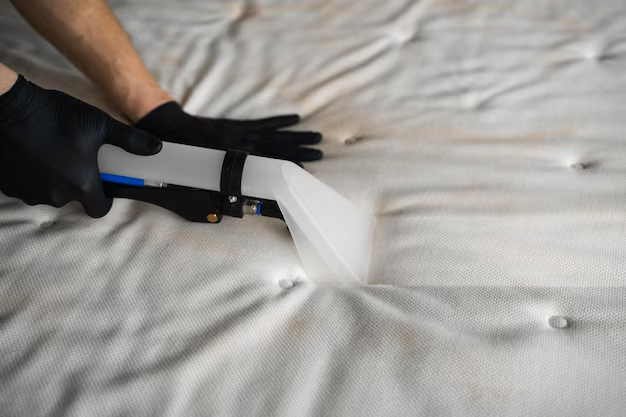
Will Lysol Kill Scabies On Mattress? What You Really Need To Know
If you’re wondering “Will Lysol kill scabies on mattress?”, you’re likely dealing with a stressful situation and want clear, practical guidance. This FAQ-style guide focuses on what happens on the mattress surface, what sprays and cleaning can and cannot do, and how to care for your sleep space safely and sensibly.
What exactly are scabies, and why is my mattress a concern?
Scabies are caused by tiny mites that burrow into the skin. While they mainly live on people, they can survive for a short period on fabrics and soft surfaces, including:
- Mattresses
- Bedding and pillows
- Upholstered furniture
That’s why many people worry about sleeping on a mattress after scabies exposure and look for ways to clean and sanitize it.
Will Lysol Kill Scabies On Mattress?
The direct question “Will Lysol kill scabies on mattress?” does not have a simple yes-or-no answer.
Surface disinfectant sprays are designed to reduce or kill many microbes on hard, non-porous surfaces. A mattress, however, is:
- Soft and porous
- Layered with fabric and foam
- Difficult to saturate evenly
Because of this, using a common household spray on a mattress is unlikely to be a reliable, stand‑alone method for dealing with scabies concerns. It may help with general surface cleaning, but:
- It may not reach deeper layers where mites could be hiding.
- Coverage is often uneven on large, soft surfaces.
- The spray may not stay in contact long enough in all areas.
So, while a spray can be part of a broader cleaning routine, it should not be relied on as the only measure for addressing scabies on a mattress.
Is it safe to spray my entire mattress?
Spraying a mattress heavily with any cleaner or disinfectant raises a few issues:
- Odor and residue: Strong scents or residues may linger and be unpleasant to sleep on.
- Moisture buildup: Over-wetting a mattress can lead to dampness and possible musty smells over time.
- Fabric sensitivity: Some mattress fabrics or foams may not respond well to strong chemical sprays.
If you choose to use a spray on your mattress:
- Apply light, even mists only to the outer fabric.
- Allow complete drying before putting on sheets.
- Test a small, hidden area first to check for discoloration or damage.
What are better ways to handle a scabies-exposed mattress?
When people are concerned about scabies and mattresses, they often use multiple simple steps rather than relying on one product.
1. Focus on bedding first
Wash all removable items that touch your skin:
- Sheets
- Pillowcases
- Blankets and comforters
- Mattress protectors
Use the warmest water and drying settings the fabric care labels allow. Heat from a full drying cycle is commonly used as part of household cleaning practices.
2. Use a mattress protector
A zippered, fully encasing mattress protector can help:
- Create a barrier between you and the mattress surface.
- Make future cleaning easier — you wash the protector instead of the entire mattress.
Once the mattress is encased and the protector is laundered regularly, many people feel more comfortable returning to normal use.
3. Allow time and airflow
Scabies mites do not thrive away from human skin. Leaving a mattress:
- Uncovered for a while in a well-ventilated room
- Exposed to fresh air and dry conditions
is often used as a simple, supportive step in a larger cleaning routine.
Should I replace my mattress if it was exposed to scabies?
In most everyday situations, people do not automatically replace their mattress after scabies exposure. Instead, they tend to:
- Thoroughly wash all bedding.
- Clean the mattress surface.
- Use a full encasement cover.
Replacing a mattress is usually considered only when it is old, heavily soiled, or already due for an upgrade for other reasons. For many, careful cleaning and protective covers provide enough peace of mind.
How can I keep my mattress cleaner and more protected long-term?
Even after the specific concern has passed, it’s understandable to want a fresher, more hygienic sleep setup. Common long-term habits include:
- Using a washable mattress protector at all times.
- Washing sheets and pillowcases regularly.
- Vacuuming the mattress surface occasionally with a clean upholstery attachment.
- Allowing the mattress to air out when changing bedding.
These simple steps help keep your mattress more comfortable and can make it easier to manage future spills, dust, or other issues.
✅ Quick Mattress Takeaways
Key points consumers should understand about “Will Lysol Kill Scabies On Mattress”
- Sprays alone are not a dependable solution for scabies on a mattress, especially on thick, porous materials.
- Bedding should be washed and dried thoroughly following fabric care labels.
- Mattress protectors and full encasements help create a barrier and simplify cleaning.
- Airflow and time are commonly used as supportive steps, since mites do not do well away from human skin.
- Replacing the mattress is not usually necessary for most people, unless it is already worn out or heavily damaged.
Understanding what cleaning products can and cannot do — and combining them with good bedding hygiene and protective covers — helps you feel more confident about your mattress after a scabies concern. While the question “Will Lysol kill scabies on mattress?” often comes from understandable worry, a calm, step-by-step approach to mattress care usually offers the most practical reassurance.