Where Is Mattress Firm? Understanding Mattress Firmness in Everyday Use and Care
If you’ve ever typed “Where Is Mattress Firm” into a search bar, you might be trying to figure out where your mattress feels firm (or soft), whether it’s too firm in certain spots, or how to adjust firmness for better comfort. This FAQ-style guide explains how firmness works, how it can change over time, and what you can do about it.
What Does “Where Is Mattress Firm” Really Mean?
In the context of mattress use and care, “Where is mattress firm” usually refers to:
- Where on the mattress surface it feels the most supportive or hardest
- Which areas feel softer, sagging, or uneven
- How to locate and adjust the zones of firmness to match how you sleep
Mattress firmness is not always uniform. Many mattresses have zones that feel slightly different from head to foot or from one side to the other. Over time, body impressions and wear can also make some areas feel softer than others.
How Can I Tell Where My Mattress Is Firmest?
To understand where your mattress is firm, try these simple checks:
- Lie in your usual sleeping position and notice where your body feels the most support or pressure.
- Move toward the edges and center to see if firmness changes.
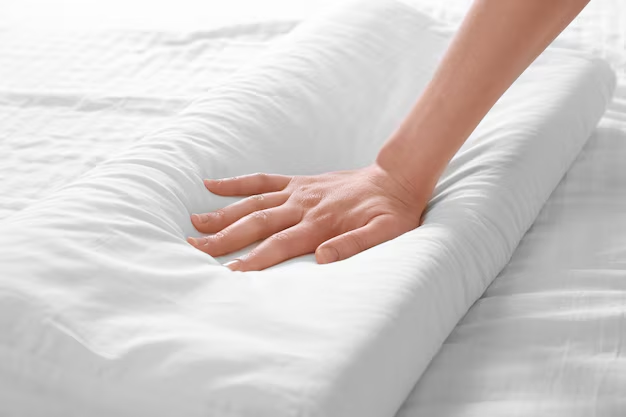
- Press down with your hand or forearm in different spots; firmer areas push back more, softer areas compress more easily.
- Compare your side with the other side if two people use the bed regularly.
A quick way to think about it:
- Firm areas: feel more supportive, less “sink-in.”
- Soft areas: compress quickly, may feel like you are sinking or rolling toward a dip.
Why Does Firmness Vary Across My Mattress?
If you notice that one part of the mattress feels firmer than another, it can be due to:
- Zoned design: Some mattresses are intentionally built with firmer support under the hips and softer cushioning under the shoulders.
- Body weight distribution: Heavier body parts can compress foam or springs more over time, making those spots feel softer.
- Sleeping habits: If you always sleep on one side or in one position, that zone can break in faster.
- Edge vs. center: Some mattresses are reinforced at the edges, making the perimeter feel firmer than the middle.
Understanding where your mattress is firm helps you decide how to rotate, flip (if possible), or adjust your sleep position to even out wear.
How Do I Check If My Mattress Is Too Firm or Too Soft in Certain Areas?
Ask yourself a few simple questions while lying on the bed:
- Do I feel pressure or discomfort in my shoulders, hips, or lower back?
- Do I wake up feeling stiff in specific areas that rest on the firmer sections?
- Do I sink more in one spot than another, making it feel uneven?
If you notice:
- Too firm in specific areas: You may feel pressure points, especially at shoulders and hips when side sleeping.
- Too soft in specific areas: You may feel like you are sagging or not getting enough support under your lower back or midsection.
What Can I Do If One Part of My Mattress Is Firmer Than I Like?
You can often fine-tune how firmness feels without replacing the mattress. Common approaches include:
- Rotate the mattress (head-to-foot) to spread out wear and shift firmer/softer zones.
- Flip the mattress only if it is designed to be used on both sides.
- Use a mattress topper to soften a surface that feels too firm.
- Adjust your sleep position slightly to rest more on comfortable zones.
🔧 Simple adjustments can make a noticeable difference in how firm the mattress feels under key pressure points.
How Does Mattress Care Affect Where the Mattress Stays Firm?
Regular care can help keep firmness more consistent across the surface:
- Rotate regularly (commonly a few times a year) to reduce deep body impressions.
- Use a supportive base so the mattress doesn’t sag in the middle or at the edges.
- Avoid sitting in the same edge spot for long periods, which can over-compress that area.
- Use a protector to keep materials cleaner, which helps them age more predictably.
These habits help reduce the contrast between firmer and softer zones as the mattress breaks in.
Is It Normal for My Mattress to Feel Firmer in Some Spots Over Time?
Yes. Over time, most mattresses develop:
- Slight softening in areas where you sleep most
- Comparatively firmer areas where there is less frequent pressure
This doesn’t always mean the mattress is worn out. It often means your body has broken in the materials where you lie. The key question is whether that change is comfortable and supportive, or whether it leads to noticeable dips and discomfort.
✅ Quick Mattress Takeaways
Key points consumers should understand about “Where Is Mattress Firm”
- “Where is mattress firm” usually refers to which parts of the mattress feel harder, softer, or uneven.
- Firmness can vary naturally due to design (zoned support) or develop over time due to body impressions and habits.
- You can find where your mattress is firmest by lying on it, pressing different spots, and comparing edges to center.
- If certain areas feel too firm, a topper, rotation, or position change can help.
- If certain areas feel too soft or sagging, rotation, flipping (if allowed), and proper support underneath are useful steps.
- Regular care helps keep firmness more balanced across the whole surface.
Understanding where your mattress is firm and how that changes with use helps you make simple, practical adjustments so your bed stays comfortable and supportive for as long as possible.