Where Are Tempur Mattresses Made? Origins, Quality, and What It Means for You
If you’re asking “Where are Tempur mattresses made”, you’re usually trying to understand more than just geography. You may be curious about quality control, materials, ethics, and what the mattress’s origin means for long-term use and care. This guide answers those questions in a clear, FAQ-style format.
Where are Tempur mattresses typically manufactured?
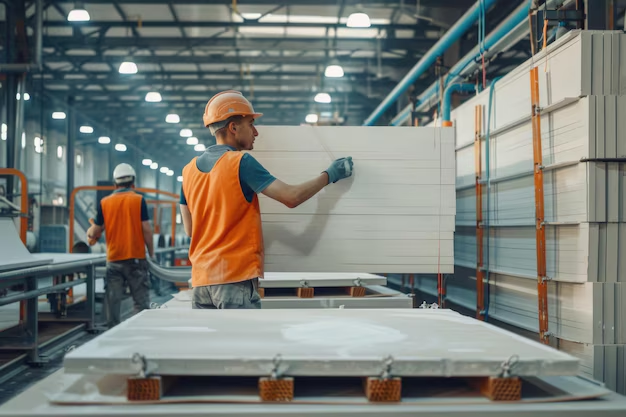
Tempur-style mattresses are usually manufactured in specialized foam production facilities that focus on:
- Creating viscoelastic (memory) foam
- Precisely controlling density and firmness
- Maintaining consistent quality from batch to batch
These facilities are often located in regions with strong manufacturing standards for consumer goods, including strict regulations around materials, emissions, and safety. In many cases, different regions have their own production plants to serve local markets more efficiently.
For example, it’s common for:
- North American markets to be supplied by regional manufacturing centers within that region
- European or other international markets to be supplied by separate facilities closer to those areas
This setup helps reduce shipping times, limit damage during transport, and keep product specifications consistent across large geographic areas.
Why does the manufacturing location matter for a Tempur-style mattress?
Knowing where Tempur mattresses are made can help you understand:
- Quality control: Regions with stricter consumer product rules often require careful testing for durability, emissions, and safety.
- Material standards: Some markets require mattresses to meet specific certifications or flammability standards, which can influence the construction.
- Environmental considerations: Local rules may govern how foam is produced, how waste is handled, and what kinds of chemicals are allowed.
- Origin labeling: The “made in” information on the law tag and packaging helps confirm you’re getting an authentic product that meets the standards of your region.
For many shoppers, a clear manufacturing origin can build confidence that the mattress has followed consistent production and inspection steps before reaching their bedroom.
How can I find out where my Tempur mattress was made?
If you already own a Tempur-style mattress, you can usually confirm its origin by checking the labels and documentation.
1. Law tag or fabric label
Most mattresses include a sewn-in law tag (often near the head or foot of the bed, on one side). This tag usually lists:
- Country or region of manufacture
- Date of manufacture
- Model or batch details
2. Original packaging or paperwork
If you still have:
- The plastic wrap or box
- The owner’s booklet or warranty card
They may list the manufacturing location or at least the regional office responsible for that product line.
3. Retailer information
If the origin is not obvious on the label, some retailers can look up the batch or model code and identify:
- The production facility used
- The approximate production date
Does where Tempur mattresses are made affect performance?
The core feel and performance of a Tempur-style mattress are usually designed to be consistent across regions, but the exact origin can still influence certain details:
- Foam formulation: The base concept (slow-response, contouring foam) tends to be similar, but exact formulas can be adapted to local regulations or climate expectations.
- Cover fabrics: Outer covers may be sourced from different textile suppliers depending on the region, which can slightly change texture or appearance.
- Firmness options: Some markets offer slightly different firmness levels or models based on local preferences.
In general, reputable brands aim for very similar user experience no matter where the mattress is made, while still complying with regional requirements.
Are there differences between Tempur mattresses made for different regions?
Sometimes, yes. Even when made under the same overall brand standards, regional versions can differ in:
- Thickness of comfort layers
- Type of cover (for example, cooler-feeling fabrics in warmer climates)
- Labeling and tags (languages, regulatory marks, safety symbols)
- Fire barrier methods, depending on local laws
These differences are usually about compliance and comfort preferences, not about one region being better or worse.
How does the origin affect mattress care and longevity?
When thinking about mattress use and care, knowing where Tempur mattresses are made can guide you in a few ways:
- Care instructions: Some labels include region-specific guidance (for example, airing out the mattress, room ventilation, or compatible bases).
- Climate considerations: In very humid or very dry environments, memory foam may feel slightly different. Regional versions are often adjusted to cope better with the typical climate where they’re sold.
- Warranty and support: Service and warranty procedures are usually tied to the region of purchase and production, so origin can help you know which support center applies to you.
🧼 For day-to-day use, the location of manufacture matters less than following the recommended care steps: using a suitable base, rotating if advised, keeping the cover clean as instructed, and allowing adequate ventilation.
✅ Quick Mattress Takeaways
Key points consumers should understand about “Where Are Tempur Mattresses Made”
- Production is regional: Tempur-style mattresses are commonly produced in regional manufacturing facilities to serve nearby markets.
- Origin is on the tag: You can usually find where your mattress was made on the law tag or sewn-in label, plus any original packaging.
- Standards matter: Manufacturing locations are chosen to align with local regulations, safety rules, and quality expectations.
- Small differences by region: Foam feel and overall design are meant to be consistent, but covers, certifications, and some details can vary region to region.
- Care is universal: Regardless of origin, proper support, ventilation, and cleaning are key to keeping your mattress feeling comfortable over time.
Understanding where Tempur mattresses are made helps you make more informed decisions about authenticity, expectations, and long-term care—so you know what’s behind the mattress you sleep on every night.