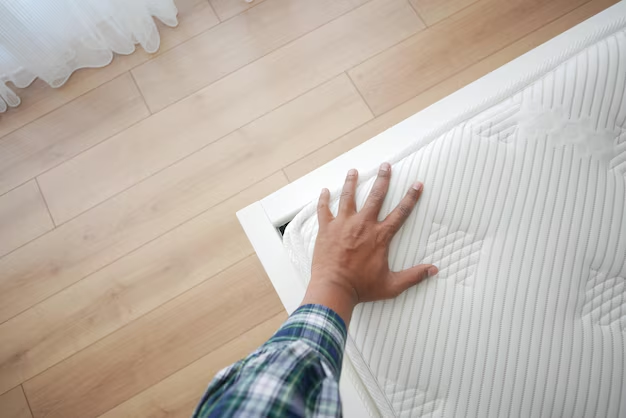
Is a Firm Mattress Good For You? How to Tell What Really Works for Your Body
If you’re asking “Is a Firm Mattress Good For You”, you’re likely trying to solve aches, stiffness, or restless nights by changing how your bed feels. The short answer: a firm mattress can be good for some sleepers, but not for everyone. The right choice depends on your body, sleep position, and comfort preferences.
This FAQ-style guide explains what “firm” really means, who tends to do well on a firmer surface, and what to watch out for.
What Does “Firm Mattress” Actually Mean?
Mattress firmness is about how hard or soft a mattress feels when you lie on it. A “firm” mattress usually:
- Compresses less under your body weight
- Keeps you more “on top” rather than “in” the bed
- Has less surface cushioning and sink
In everyday terms, a firm mattress feels solid and supportive, with minimal give under your hips and shoulders.
Is a Firm Mattress Good For You in General?
There is no one-size-fits-all answer to “Is a Firm Mattress Good For You”. A firm mattress can be good for you if it matches your body type, sleep position, and comfort needs.
A firmer mattress may be a good fit if you:
- Prefer a stable, supportive feel without much sink
- Sleep mostly on your back or stomach
- Have a heavier body weight and want to avoid sinking too deeply
However, a mattress that’s too firm can feel uncomfortable and may:
- Create pressure points at the shoulders, hips, or knees
- Make it harder to relax fully and fall asleep
- Lead to waking up feeling stiff or sore
The key is balanced support plus enough cushioning for your joints.
Who Typically Benefits Most from a Firmer Mattress?
Back sleepers
Many back sleepers appreciate a medium-firm to firm surface because it can:
- Help keep the spine in a more neutral line
- Prevent the lower back from sinking too deeply
- Provide a steady, level feel under the torso
Stomach sleepers
Stomach sleepers often do better with a firmer feel because:
- A soft mattress can let the midsection sag, which may feel uncomfortable
- A firmer surface keeps the hips more level with the shoulders
Heavier sleepers
People with higher body weight sometimes prefer a firmer mattress since:
- Softer beds can compress quickly and feel unsupportive
- Firmer models may feel more stable and durable over time
Who Might Find a Firm Mattress Uncomfortable?
A firm mattress is not ideal for everyone. You might struggle with a very firm bed if you:
- Sleep mostly on your side
- Have bony or sensitive joints
- Prefer a plush, cradling feel
Side sleepers, in particular, often need more cushioning so the shoulders and hips can sink in slightly, reducing pressure.
How Do I Know If My Firm Mattress Is Too Firm?
A firm mattress may be too firm for you if you notice:
- Numbness or tingling in shoulders, arms, or hips
- “Pins and needles” when you wake up
- Difficulty getting comfortable, needing to toss and turn often
- Feeling like you are lying on a board, rather than on a supportive cushion
On the other hand, if you feel well-supported, wake up without unusual soreness, and sleep through the night, your firmness level is likely in a good range for you.
Firm vs. Soft: What Should I Consider?
Here’s a simple comparison to help you think through firmness:
| Feature | Firmer Mattress | Softer Mattress |
|---|---|---|
| Feel | Solid, stable, less sink | Plush, cushioning, more sink |
| Often preferred by | Back & stomach sleepers, heavier bodies | Side sleepers, lighter bodies |
| Pressure relief | Less contouring | More contouring at shoulders/hips |
| Ease of movement | Easier to change positions | Can feel more “hugged” or enveloped |
Neither option is “better” overall; the right choice is the one that keeps you comfortable and supported.
Can I Adjust a Mattress That Feels Too Firm?
If your mattress feels firmer than you’d like, you may be able to fine-tune the feel without replacing it:
- Add a mattress topper with extra cushioning
- Use softer, thicker bedding to reduce the “board-like” sensation
- Check your pillow height; the wrong pillow can make any mattress feel less comfortable
These changes can create more pressure relief while keeping the underlying support.
How Long Should I Test a Firm Mattress?
Your body may need some time to adjust to a new surface. It can be useful to:
- Give the mattress several nights to a few weeks of consistent use
- Notice whether initial stiffness improves or gets worse
- Pay attention to how you feel in the morning, not just when you first lie down
If discomfort continues or increases over time, the firmness level may simply not be right for you.
✔️ Quick Mattress Takeaways
Key points consumers should understand about “Is a Firm Mattress Good For You”:
- There is no universal answer — a firm mattress can be good for you only if it matches your body, sleep position, and comfort needs.
- Back and stomach sleepers and those with higher body weight often prefer firmer surfaces for added stability.
- Side sleepers and people with sensitive joints may find very firm mattresses too hard and uncomfortable.
- A mattress is likely too firm if you regularly wake with numbness, sharp pressure points, or feel like you’re lying on a rigid surface.
- You can often soften the feel of a firm mattress with a topper or softer bedding while keeping underlying support.
- The best firmness is the one that lets you wake up feeling rested, supported, and relatively free of new, mattress-related discomfort.
By focusing on how your body actually feels over time, you can decide for yourself whether a firm mattress is good for you and adjust your sleep setup accordingly.