How To Treat Mattress For Bed Bugs: Step‑By‑Step FAQ Guide
If you’re searching for “How To Treat Mattress For Bed Bugs”, you’re likely worried about protecting your bed and getting your sleep back. This guide walks through what to do, what to avoid, and how to tell if your mattress can be saved, all in a clear FAQ format.
What are the signs of bed bugs in a mattress?
Before you decide how to treat mattress for bed bugs, confirm that bed bugs are actually present. Common signs include:
- Small dark spots on the mattress seams or sheets (droppings)
- Rust-colored stains from crushed bugs
- Tiny white eggs or eggshells in crevices
- Live bugs hiding along seams, piping, or under tags
Inspect the mattress seams, tufts, edges, and the area around the bed frame with a flashlight. Bed bugs often hide in tight spaces, not just on the sleep surface.
Can I keep my mattress if it has bed bugs?
In many cases, a mattress with bed bugs can be treated and kept, especially if the infestation is caught early and contained. However, a mattress may be harder to save if:
- The infestation is severe, with many bugs and eggs across the whole surface
- The mattress is torn or heavily worn, giving bugs deep hiding spots
- Bed bugs are also widespread in headboards, frames, baseboards, and furniture
If the mattress is heavily infested and damaged, some people choose to replace it after treatment of the room to avoid re-infestation. The steps below focus on how to treat mattress for bed bugs when you want to salvage it.
How To Treat Mattress For Bed Bugs: What’s the first step?
1. Isolate and prepare the bedding
- Strip all bedding (sheets, blankets, pillows, protectors).
- Immediately bag each item in sealed bags to prevent bugs from spreading.
- Wash washable items in hot water and dry on the highest heat setting that is safe for the fabric. Heat is one of the most reliable ways to kill bed bugs and their eggs on textiles.
Do not carry loose bedding through the home, as this can spread bugs to other rooms.
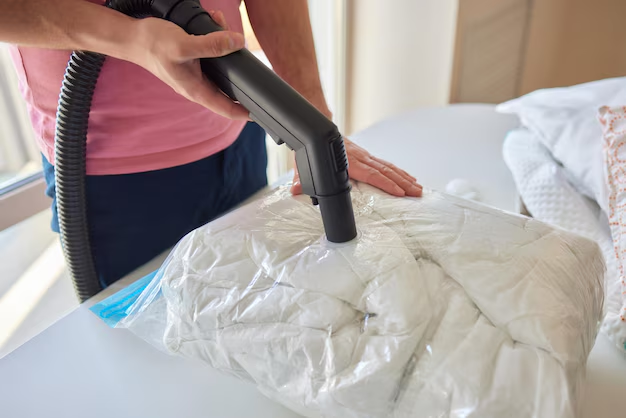
2. Vacuum the mattress thoroughly
Use a vacuum with a crevice tool and:
- Go slowly over seams, tufts, edges, and around the label
- Pay attention to buttons and piping, where bugs like to hide
- After vacuuming, seal and discard the vacuum bag or empty the canister outdoors
Vacuuming helps remove bugs, eggs, and debris, but it usually does not eliminate the problem on its own. It is a preparation step.
Should I use sprays or chemicals on my mattress?
Many people wonder how to treat mattress for bed bugs using sprays. Here are key considerations:
- Some insecticides are not safe to apply directly to surfaces you sleep on.
- Always check the product label to confirm if it is allowed for use on mattresses and follow directions carefully.
- Avoid soaking the mattress. Light, targeted applications—when permitted by the label—are typically recommended around seams and tufts, not across the entire surface.
Because incorrect use of chemicals can be unsafe or ineffective, many households rely on non-chemical methods for the mattress itself and use treatments around the bed instead.
How do mattress encasements help with bed bugs?
A bed bug–proof mattress encasement can be a crucial part of treatment.
Once you’ve vacuumed and allowed any safe treatments to dry:
- Fully enclose the mattress in a tightly woven encasement designed to block bed bugs.
- Zip it completely and use any built-in zipper locks if present.
- Keep the encasement on for an extended period so any bugs or eggs trapped inside cannot feed and eventually die.
Encasements do not instantly remove bugs inside, but they prevent them from biting you and help keep new bugs from hiding in the mattress.
Do I need to treat more than just the mattress?
Yes. Even when you focus on how to treat mattress for bed bugs, it’s rare for bed bugs to live only on the mattress. They often hide nearby:
- Bed frame and headboard
- Box spring or foundation
- Baseboards, cracks, and joints near the bed
- Nightstands and nearby furniture
To reduce the chance of re-infestation, many people:
- Vacuum around the bed and along floor edges and baseboards
- Reduce clutter near the bed so bugs have fewer hiding spots
- Move the bed slightly away from the wall and avoid bedding touching the floor
When should I consider professional help?
You may want to seek professional assistance if:
- You see bed bugs regularly even after careful cleaning and encasing
- Multiple rooms or pieces of furniture are affected
- You are unsure how to safely use any treatments
Professionals can inspect hiding spots that are hard to access and apply targeted, approved methods.
✅ Quick Mattress Takeaways
Key points consumers should understand about How To Treat Mattress For Bed Bugs
- Confirm the problem first: Look for live bugs, dark spots, stains, and eggs on seams and edges.
- Start with isolation: Bag bedding, wash hot, and dry on high heat to kill bugs on fabrics.
- Vacuum carefully: Focus on seams, tufts, and labels, then discard vacuum contents securely.
- Be cautious with chemicals: Only use treatments labeled as safe for mattresses and follow directions closely.
- Use a mattress encasement: It helps trap existing bugs and prevents new hiding spots.
- Treat the whole area: Bed frames, nearby furniture, and baseboards often need attention too.
- Severe or persistent cases: Professional help can be useful when the infestation is widespread or recurring.
Knowing how to treat mattress for bed bugs can make the process feel more manageable. By confirming signs, cleaning methodically, using encasements, and paying attention to the surrounding area, many people are able to protect their mattress and move toward a calmer, more comfortable sleep space.