How To Terminate Bed Bugs Mattress: Practical Answers to Common Questions
If you’re searching for “How To Terminate Bed Bugs Mattress”, you’re likely worried about tiny insects hiding where you sleep. This FAQ-style guide explains how bed bugs interact with your mattress, what you can realistically do yourself, and when to involve a professional, all in clear, calm language.
What does “terminating bed bugs in a mattress” actually involve?
When people ask How To Terminate Bed Bugs Mattress, they usually mean one of two things:
- Killing the bugs currently living on or in the mattress
- Preventing remaining bugs from reaching or re‑infesting the mattress
True “termination” is not just killing a few visible bugs. Bed bugs often hide in seams, tufts, under labels, and in the bed frame or nearby furniture. That means mattress-focused steps need to be part of a wider approach to the sleeping area.
How can I check if my mattress really has bed bugs?
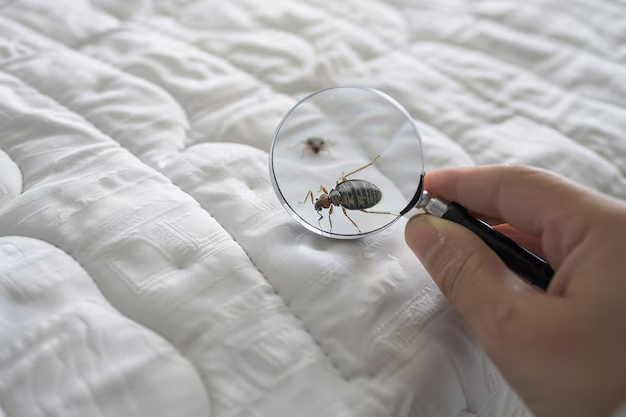
Before you decide how to terminate bed bugs in your mattress, confirm they’re actually there. Look for:
- Small reddish-brown insects in seams or folds
- Tiny white eggs or pale nymphs in crevices
- Dark spots that may be dried waste
- Shed skins along piping or around the head of the bed
Use a flashlight and slowly inspect:
- Mattress seams, tufts, and edges
- Around handles, labels, and zippers
- The top and bottom of the mattress
- The box spring or bed base
If you do find signs, assume more bugs may be hiding nearby, not only on the surface.
What are the main ways to terminate bed bugs in a mattress?
For the specific question How To Terminate Bed Bugs Mattress, common consumer-level methods focus on:
1. Heat-based approaches
Bed bugs are sensitive to high temperatures. Common heat-related steps include:
- Thoroughly drying washable bedding on high heat
- Using steam on mattress seams and surfaces with a suitable steamer
- Ensuring heat reaches folds, buttons, and edges, where bugs like to hide
Heat applied correctly can be effective, but it is important that the temperature is high enough and sustained long enough across the entire surface and edges. Uneven heating may leave some bugs or eggs alive.
2. Careful vacuuming
Vacuuming does not guarantee full termination, but it can reduce the number of bugs and eggs on:
- Mattress seams and piping
- The surface of the mattress
- The bed frame, headboard, and nearby floor area
Use a crevice tool and work slowly. After vacuuming, empty the contents directly into a sealed bag and dispose of it properly to avoid moving bugs elsewhere.
3. Mattress encasements
A full mattress encasement designed to resist small insects can:
- Trap any bugs already inside the mattress, cutting them off from you
- Prevent new bugs from hiding inside the mattress in the future
- Make inspection easier, since the outer surface is usually smooth and light-colored
Encasements do not kill every bug instantly, but over time, sealed bugs cannot easily feed and eventually die. This is a long-term part of handling How To Terminate Bed Bugs Mattress, not a same-day solution.
Do I have to throw away my mattress?
In many cases, a mattress can be kept if:
- The infestation is caught early
- There is no heavy structural damage
- You combine cleaning, vacuuming, heat/steam, and encasement
People often discard mattresses out of frustration or worry, but removal alone does not solve the overall problem. If bugs are also in the bed frame, baseboards, or nearby furniture, they can move into a new mattress later.
When should I call a professional for bed bugs in a mattress?
DIY steps may be enough for very early or minor issues, but consider professional help if:
- You see bed bugs repeatedly after basic cleaning
- There are large numbers of bugs, eggs, or stains on or around the bed
- Multiple rooms or pieces of furniture show signs of activity
Professionals may use specialized treatments and equipment that go beyond standard home cleaning methods. A combined approach is often the most reliable way to truly address How To Terminate Bed Bugs Mattress and the surrounding area.
How can I protect my mattress from future bed bugs?
Once you’ve taken steps to terminate or reduce an infestation, prevention and monitoring are essential:
- Keep a mattress encasement on long term
- Inspect the mattress seams and bed frame regularly
- Reduce clutter under and around the bed where bugs can hide
- Be cautious when bringing in second-hand furniture or bedding
- After travel, inspect luggage and clothing before placing items near your bed
These habits make it easier to spot problems early, when they are usually simpler to manage.
✔️ Quick Mattress Takeaways
Key points consumers should understand about How To Terminate Bed Bugs Mattress
- Inspection comes first: Carefully check seams, edges, and nearby furniture before deciding on any plan.
- Use multiple methods together: Heat, vacuuming, and encasements each help in different ways; none is perfect alone.
- Encasements are long-term tools: They trap existing bugs in the mattress and help prevent new hiding spots.
- Throwing out the mattress is not always necessary: Many mattresses can be kept with thorough treatment and monitoring.
- Treat the whole sleeping area, not just the mattress: Bed bugs often live in frames, nearby furniture, or cracks in walls and floors.
- Regular checks reduce surprises: Ongoing inspections and simple prevention steps support a cleaner, more comfortable sleep space.
With a calm, step-by-step approach, How To Terminate Bed Bugs Mattress becomes more manageable, and you can focus on restoring a sense of comfort in your sleeping environment.