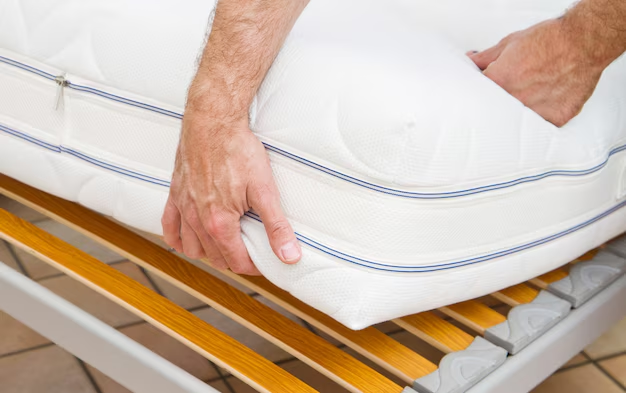
How To Take Apart a Mattress: Step‑by‑Step FAQ Guide
If you’re searching for “How To Take Apart a Mattress”, you’re usually trying to move it more easily, dispose of it responsibly, or recycle its parts. This FAQ-style guide walks through what to expect, how to do it safely, and when it may not be a good idea.
What does it actually mean to “take apart” a mattress?
To take apart a mattress means to carefully break it down into its individual components—such as fabric, foam, and springs—rather than keeping it as one bulky piece.
This might involve:
- Removing the outer cover and quilting
- Cutting and separating foam layers or padding
- Detaching or flattening inner springs or coils
People most often want to do this to make disposal or recycling easier, fit the mattress into a smaller vehicle, or reduce the space it takes up in the trash.
Is it safe to take apart a mattress at home?
It can be done safely with planning, but there are risks. You’ll be dealing with:
- Sharp tools (utility knives, scissors, sometimes wire cutters)
- Metal coils or staples that can snap or scratch
- Dust, fibers, and allergens released from the interior
To reduce risk:
- Work in a well‑ventilated, clear area
- Wear cut‑resistant gloves, long sleeves, and closed‑toe shoes
- Consider a dust mask and safety glasses, especially with older or very dusty mattresses
If the mattress seems unusually heavy, has visible mold, or a strong odor, it may be safer to avoid cutting into it and look for bulk pickup or recycling options instead.
What tools do I need to take apart a mattress?
For most standard mattresses, you’ll want:
- A sharp utility knife or heavy-duty scissors
- Pliers (for staples, threads, or wires)
- Wire cutters (for innerspring coils if needed)
- Work gloves and optional mask/eye protection
- Large trash bags or boxes to separate materials
Having everything ready before you start makes the process smoother and reduces the chance of rushing or cutting unsafely.
Step‑by‑step: How To Take Apart a Mattress
1. Prepare the space
Lay the mattress on a flat surface, ideally on a tarp or old sheet. Clear enough room to move around it and to sort materials into piles (fabric, foam, metal).
2. Remove bedding and accessories
Strip off all sheets, protectors, and toppers. These are usually easier to handle and can be dealt with separately from the mattress itself.
3. Cut and peel back the outer cover
Carefully:
- Make a small cut in the side seam of the mattress cover with your utility knife.
- Extend the cut along the seam, going slowly to avoid cutting the foam inside.
- Peel the fabric back and cut away any quilting or padding that is attached.
Many mattresses have multiple layers of fabric and fiber padding. Work layer by layer, setting each type of material into its own pile or bag.
4. Separate foam, padding, and comfort layers
Once the inner layers are exposed:
- Gently pull apart any loose foam or fiber layers
- Cut larger foam pieces into manageable sections if you plan to dispose of them
- Roll or fold padding materials to save space
If you plan to reuse any foam (for cushions, pet beds, or projects), set those pieces aside and avoid cutting them into very small bits.
5. Access and handle the springs (for innerspring mattresses)
If your mattress has coils:
- Continue removing padding until the spring unit is fully visible.
- Check how the springs are attached—often with wire, fabric, or clips.
- If you need to separate or flatten them, use wire cutters and pliers, working slowly to avoid sharp edges snapping back.
Many people simply remove as much fabric and foam as possible and leave the spring unit as a single piece to recycle or discard, since it’s already more compact than the full mattress.
6. Bag, bundle, and label materials
To keep everything manageable:
- Bag soft materials like foam and fiber
- Roll and tie fabric covers
- Stack or bundle metal parts separately
Labeling bags (e.g., “foam,” “fabric,” “metal”) can be helpful if you’re taking them to different disposal or recycling points.
Can every type of mattress be taken apart the same way?
Not exactly. The basic idea is the same, but details vary:
- Innerspring mattresses: Usually have fabric, padding, and a spring core. The metal unit may be reusable or recyclable.
- Foam or latex mattresses: Typically no metal springs, but multiple layers of foam glued or sewn together. A sharp knife or scissors is often enough.
- Hybrid mattresses: Combine springs with foam layers; you’ll go through both types of materials.
- Mattresses with zippers or removable covers: Start by unzipping to see how much comes off without cutting.
In all cases, go slowly and observe how each layer is attached before cutting.
What should I do with the parts after I take apart a mattress?
Options depend on what’s available locally, but common approaches include:
- Disposal: Bagged foam and fabric may go with regular trash if allowed; metal coils sometimes require separate handling.
- Recycling: Some areas accept metal springs and certain foams.
- Reuse: Larger foam pieces or fabric can sometimes be repurposed for crafts, padding, or pet bedding.
Avoid burning mattress materials or leaving them outdoors, as that can be unsafe and may violate local rules.
When is it better not to take apart a mattress yourself?
Consider skipping the process if:
- The mattress is very old, damp, moldy, or heavily soiled
- You don’t have safe tools or protective gear
- You have limited space to work or store materials
- Local regulations require mattresses to be disposed of intact or handled by specific services
In those situations, bulk pickup or designated drop‑off services may be more practical and safer.
✅ Quick Mattress Takeaways
Key points consumers should understand about How To Take Apart a Mattress
- Plan for safety first: Gloves, careful cutting, and a clear workspace are essential.
- Work layer by layer: Remove the cover, then padding, foam, and finally springs (if present).
- Match your method to the mattress type: Innerspring, foam, and hybrid beds come apart differently.
- Sort and bag materials: Separate fabric, foam, and metal to make transport and disposal easier.
- Know when to stop: Mattresses that are moldy, structurally unusual, or heavily contaminated are often better handled intact by disposal services.
With patience and basic tools, understanding How To Take Apart a Mattress helps you manage its end of life more safely, more compactly, and often in a more environmentally considerate way.