How To Remove Scabies From Mattress: Practical FAQ Guide
If you’re searching for “How To Remove Scabies From Mattress”, you’re likely worried about keeping your sleep space clean and preventing further spread. This guide focuses on what you can do for your mattress and bedding, without offering medical advice.
What exactly are scabies, and why do they matter for your mattress?
Scabies are tiny mites that live on human skin. While they primarily affect the skin, anything that touches the body frequently — like mattresses, bedding, and pillows — can play a role in spreading them.
The main concern with your mattress is not that mites live deep inside the foam or springs, but that they may be present on:
- Sheets and mattress protectors
- Pillowcases and blankets
- The surface of the mattress itself
Keeping your mattress and bedding clean is one part of managing possible exposure.
How To Remove Scabies From Mattress: Where should you start?
When thinking about how to remove scabies from mattress surfaces, it helps to break the process into two stages: soft bedding and the mattress itself.
1. Focus on all removable bedding first
Anything that can be washed should be treated as a priority:
- Remove sheets, pillowcases, duvet covers, and mattress protectors.
- Wash them in hot water according to the care label.
- Dry them on a high heat setting if the fabric allows.
Higher wash and dry temperatures are commonly used for general hygiene and are often recommended for items that may have come into close contact with skin.
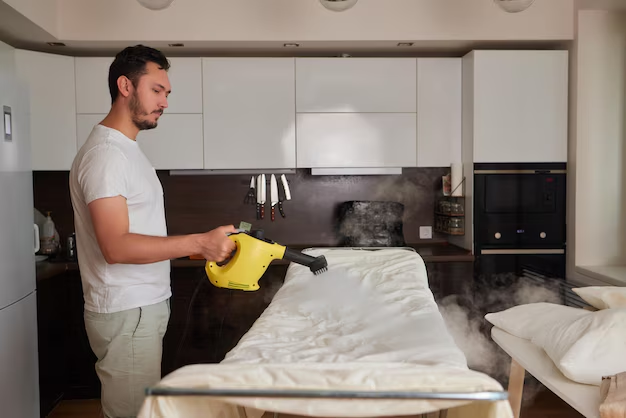
2. Treat the mattress surface
Even though scabies are not known for burrowing deep into mattress materials, it’s reasonable to clean the outer surfaces carefully.
Basic steps many people use include:
Vacuum the mattress:
- Use a clean vacuum attachment.
- Pay attention to seams, tufts, and edges where skin flakes or dust may collect.
Clean with a light spray:
- Lightly mist the surface with a suitable fabric-safe cleaning or disinfecting spray, following the product’s instructions.
- Avoid soaking the mattress; excess moisture can damage foam and encourage mold.
Allow full drying time:
- Air the mattress out thoroughly.
- Open windows or use fans to speed up drying.
Do you need to replace the mattress if scabies have been present?
In many everyday situations, people do not automatically replace their mattress after scabies exposure. Instead, they focus on:
- Treating bedding and soft furnishings that contact skin directly
- Cleaning the mattress surface and surrounding area
- Following healthcare guidance for personal treatment and prevention
However, some people choose to replace older or heavily soiled mattresses for peace of mind or for overall hygiene and comfort reasons, especially if the mattress is already sagging or stained.
How long can scabies survive on a mattress?
While specific timeframes can depend on conditions like temperature and humidity, scabies are generally understood to survive longer on the body than on dry surfaces.
Because of this, many standard cleaning approaches emphasize:
- Heat (for washable items)
- Vacuuming and airing (for non-washable items like mattresses and upholstery)
- Limiting close contact with contaminated items until they are cleaned
Allowing some time before reusing unwashed items is often part of general cleanliness routines when dealing with pests or infestations in the home.
Can mattress protectors help with scabies concerns?
A mattress protector can be a useful layer between your body and the mattress. While it is not a treatment or medical device, it can:
- Create a washable barrier for sweat, skin flakes, and general debris
- Make it easier to clean your sleep surface regularly
- Provide some reassurance that you can remove and wash what your skin directly touches
If scabies have been present, washing the mattress protector with the rest of your bedding on a warm or hot cycle is a common step.
How should you clean surrounding bedroom items?
When exploring how to remove scabies from mattress and bedding, it makes sense to extend your cleaning to other commonly used items:
- Pillows: Wash if machine-washable, or air out and vacuum if not.
- Blankets and throws: Launder according to care labels.
- Upholstered furniture: Vacuum and lightly clean surface areas that have frequent skin contact.
- Soft toys or small items: If washable, launder; if not, some people choose to seal them in a bag for a period of time to limit contact until they’re confident the risk has passed.
✔️ Quick Mattress Takeaways
Key points consumers should understand about How To Remove Scabies From Mattress
- Start with bedding: Wash all sheets, pillowcases, and protectors in warm to hot water and dry on high heat if the fabric allows.
- Clean the mattress surface: Vacuum carefully, especially seams and edges, then lightly treat with a fabric-safe cleaner and let it dry fully.
- No automatic need to replace: Many people keep their mattress and focus on thorough cleaning unless the mattress is already old or damaged.
- Use washable barriers: A mattress protector can make future cleaning easier and add a practical layer between you and the mattress.
- Extend cleaning to the whole sleep area: Pillows, blankets, and nearby seating should be considered in any scabies-related cleaning routine.
- Combine with professional health guidance: Mattress care helps with cleanliness, but personal treatment and prevention decisions belong with a qualified professional.
By understanding how to remove scabies from mattress surfaces and bedding, you can approach the situation calmly and keep your sleep environment as clean and comfortable as possible.