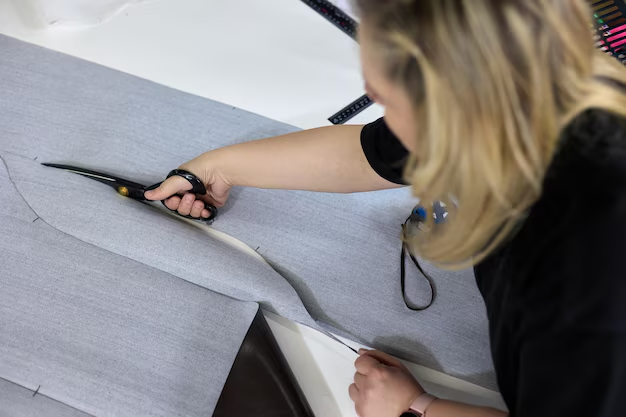
How To Remove a Mattress Suture: Safe Options and What It Really Means
If you’re searching for “How To Remove a Mattress Suture”, you’re likely looking at visible stitching, a tufting thread, or a repair seam on your mattress and wondering whether it can or should be taken out. This guide explains what a mattress “suture” usually is, why it’s there, and what your realistic options are for dealing with it without damaging your bed.
What Is a “Mattress Suture”?
On a mattress, a “suture” typically refers to visible stitching or thread that holds layers together. It may appear as:
- A line of strong stitches along a seam or edge
- A tufting thread with buttons or knots on each side
- A repair stitch where the fabric was previously torn
These stitches are not decorative only. In most cases, they are part of the mattress’s internal structure, helping keep padding evenly distributed and the cover properly secured.
Can You Remove a Mattress Suture?
Most of the time, removing a mattress suture is not recommended. Those stitches are usually:
- Structural – they keep layers from shifting or bunching
- Part of the cover – removing them can create openings or frayed edges
- Connected to the inner materials – once cut, fibers and foam can move out of place
If you remove them, you might notice:
- Lumps or dips forming over time
- The cover loosening or gaping
- Increased risk of tears or exposed internal materials
For most sleepers, it’s safer to leave sutures in place unless the stitching is broken, causing discomfort, or obviously defective.
When Might You Consider Removing or Altering a Suture?
There are a few situations where people start asking how to remove a mattress suture:
1. The suture is poking, scratching, or uncomfortable
Sometimes a knot, button, or rough stitch can be felt through sheets. In this case, people may think cutting it out will fix the problem.
Non-destructive options to try first:
- Add a mattress protector or thicker fitted sheet
- Use a thin mattress topper to smooth the surface
- Rotate or slightly adjust the mattress so the spot isn’t under high-pressure areas
2. The stitching has already come loose
If the suture is half-detached and hanging, you might be tempted to pull it off. While it can be visually annoying, pulling loose stitches can widen the opening.
A gentler approach is to trim only the excess loose thread close to the surface, avoiding any deep pulling or cutting into the fabric.
3. Old repair work looks messy
Some mattresses have “aftermarket” repairs: hand-sewn seams, added tufts, or patched sections. While you may want to tidy these up, removing them can reopen holes or weaken the area again.
How To Remove a Mattress Suture (If You Decide to Proceed)
If you still choose to remove a visible mattress suture, keep the focus on minimizing damage to the cover and inner materials.
Step-by-step general approach
Identify the type of stitch
- Is it a surface seam? A tufted button? A simple knot?
- Avoid deep stitches that obviously hold multiple layers together.
Gather gentle tools
- Small scissors or a seam ripper
- Tweezers for pulling tiny threads
- A vacuum nearby to collect loose fibers
Work from the outside only
- Carefully snip only the surface thread you can clearly see.
- Do not dig into the fabric or foam.
Go slowly and check often
- After removing a few stitches, pause and gently tug the area.
- If the fabric begins to spread apart or an opening forms, stop immediately.
Secure the area if needed
- If a gap appears, you may need light hand-stitching or an upholstery-style patch to prevent further tearing.
Because mattress covers and inner layers are under tension, even minor changes can have noticeable long-term effects on feel and durability.
Will Removing a Mattress Suture Affect Comfort or Longevity?
It can. Sutures and tufting are usually used to:
- Keep comfort layers from shifting
- Maintain a flatter, more stable surface
- Reduce long-term sagging or bunching
Once removed, you may feel:
- Slight unevenness around the area
- More movement in the padding when you sit or lie down
- Over time, a soft spot or visible dip where support has loosened
For many users, covering or padding over an annoying suture is a lower-risk solution than cutting it out.
Alternatives to Removing a Mattress Suture
Instead of focusing on How To Remove a Mattress Suture, consider these less invasive options:
- Mattress protector or pad: Adds a smooth barrier over rough stitching.
- Thin foam or fiber topper: Helps mask small bumps or knots.
- Rotating the mattress: Moves problem areas away from key pressure points like shoulders or hips.
- Local padding: A folded cloth under the sheet just in the problem zone can reduce the feel of a bump.
These strategies aim to improve comfort without altering the mattress structure.
✅ Quick Mattress Takeaways
Key points consumers should understand about How To Remove a Mattress Suture
- Most mattress sutures are structural, not just decorative; removing them can change how the mattress feels and wears.
- If a suture is uncomfortable, try adding layers (protector, pad, topper) before cutting anything.
- If you still choose to proceed, cut only the visible surface thread, go slowly, and stop if fabric begins to separate.
- Trimming loose or hanging threads is usually safer than fully removing a stitched line or tuft.
- Any removal may lead to shifting, bunching, or minor sagging around the area over time.
- For many sleepers, covering or cushioning the suture is the most practical and low-risk approach.
By understanding what those stitches actually do, you can make a more informed choice about whether and how to remove a mattress suture while protecting both comfort and mattress life.