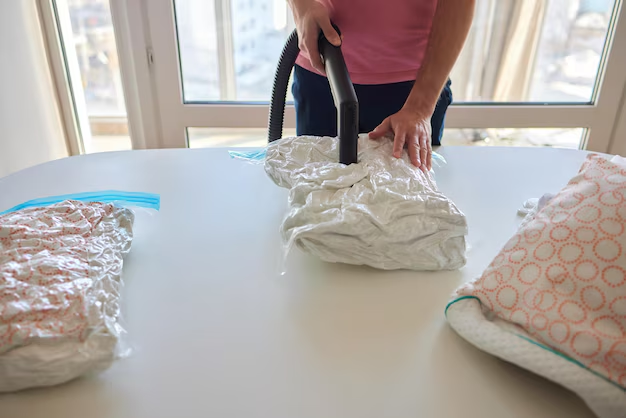
How To Pack Mattress For Moving: Step‑By‑Step FAQ Guide
If you are searching for “How To Pack Mattress For Moving”, you are likely worried about keeping it clean, undamaged, and easy to move. This guide walks through the process in clear steps and answers the most common questions so your mattress arrives in good shape.
What’s the best way to pack a mattress for moving?
To pack a mattress for moving, you generally want to protect it from dirt, moisture, and bending, then secure it for transport. The most common method is:
- Strip and clean the mattress surface.
- Slip it into a protective bag or wrap.
- Seal all openings tightly.
- Add padding to corners and edges if needed.
- Load and secure it in the moving vehicle.
Doing this carefully reduces the risk of stains, tears, and sagging.
What supplies do I need to pack a mattress?
For most moves, these basics are useful:
- Mattress bag or cover (sized for twin, full, queen, king, etc.)
- Packing tape or strong sealing tape
- Plastic wrap or stretch wrap (optional extra layer)
- Moving blankets or soft padding for corners
- Straps or ropes to keep it from shifting in the vehicle
A fitted mattress bag is often the most important item. It helps keep out dust, moisture, and odors while you move.
Step‑by‑step: How To Pack Mattress For Moving
1. Prepare the mattress
- Remove all bedding: Take off sheets, blankets, protectors, and toppers.
- Let it air out briefly: If possible, allow a short time for any moisture to evaporate before sealing it in plastic.
- Check for existing damage: Note any sagging, rips, or stains so you do not confuse them with moving damage later.
2. Choose the right protective cover
A key part of learning How To Pack Mattress For Moving is selecting a proper cover.
- For short local moves, a basic plastic bag or cover is often enough.
- For longer moves or storage, a thicker, more durable bag or multiple layers of wrapping can offer extra protection.
Avoid leaving the mattress in thin plastic for long periods in very hot or damp spaces, as trapped moisture may affect the materials.
3. Bag and seal the mattress
- Slide the mattress into the bag while it is standing upright or slightly tilted.
- Seal all openings with strong tape. Focus especially on corners and seams where dust or moisture can enter.
- For extra security, you can wrap stretch wrap around the bag to hold everything tightly in place.
Should I move my mattress flat or on its side?
Both can work, but there are a few considerations:
- Many mattresses can safely travel on their side for a short time, which often makes loading easier.
- Flat and well-supported is generally kinder to the mattress for longer trips, especially for heavier models.
- Avoid folding or sharply bending the mattress unless it is specifically designed to be folded.
Whenever possible, keep the mattress on a flat, even surface with no objects underneath that could create pressure points.
Can you fold a mattress to move it?
Most traditional mattresses are not designed to be folded. Bending them:
- Can damage internal springs or support layers
- May cause permanent creases, lumps, or sagging
- Could void certain product protections if they exist
If a mattress is labeled as “rollable” or designed for compressing, follow the manufacturer’s instructions. Otherwise, keep it as flat and straight as possible.
How do I protect my mattress during loading and transport?
Prevent dirt, tears, and pressure spots
- Avoid dragging: Lift the mattress rather than sliding it over rough surfaces to reduce the risk of rips.
- Protect corners: Use moving blankets, towels, or cardboard on sharp edges of walls, stair rails, or truck interiors.
- Secure it in the vehicle: Use straps or ropes to keep it from tipping, bending, or sliding onto other items.
A simple approach is to place the mattress against a flat wall in the moving vehicle and strap it tightly, or lay it flat on top of a stable, even layer of boxes (not on fragile items).
How should I unpack my mattress after moving?
- Carefully remove tape and coverings, avoiding cuts near the fabric.
- Check for new damage such as tears, punctures, or unusual sagging.
- Allow the mattress to air out for a short time before putting on fresh bedding, especially if it was wrapped in plastic for an extended period.
If the mattress feels slightly compressed or misshapen from the move, giving it some time on a flat surface can help it settle back into its normal shape.
✅ Quick Mattress Takeaways
Key points consumers should understand about How To Pack Mattress For Moving:
- Use a fitted mattress bag to keep out dust, dirt, and moisture.
- Do not fold or sharply bend the mattress unless it is specifically designed to be folded.
- Seal all openings in the cover with strong tape, especially at corners and seams.
- Lift, do not drag, to avoid tears in the fabric or cover.
- Support the mattress flat or on its side without obstructive items underneath that can create pressure points.
- Secure it with straps or ropes in the moving vehicle so it cannot slide or collapse onto other belongings.
Handled with a bit of planning and care, packing a mattress for moving can be straightforward, and you can arrive at your new place ready for a familiar, comfortable sleep surface.