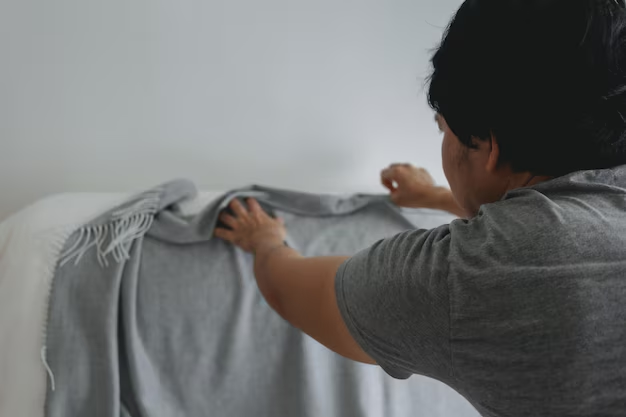
How To Move Mattress Alone: Safe, Simple Steps You Can Actually Do
If you’re wondering How To Move Mattress Alone—whether for a room switch, a new home, or just rearranging furniture—you’re not the only one. Mattresses are bulky, awkward, and often heavier than they look. The good news: with the right preparation and technique, many people can move a mattress by themselves safely.
Below are clear answers to the most common questions about moving a mattress solo, plus practical tips to protect both you and your mattress.
Is It Safe To Move a Mattress By Yourself?
Moving a mattress alone can be safe if:
- The mattress is a size and weight you can reasonably handle
- You prepare a clear path
- You use basic tools and proper lifting techniques
If a mattress feels too heavy, unstable, or you have to navigate steep stairs or tight corners, it’s safer to get help. Never force it—protecting your body and avoiding damage to your home are more important than finishing the move quickly.
What Should I Do Before I Start Moving the Mattress?
Preparation makes the biggest difference when you’re figuring out How To Move Mattress Alone.
1. Clear the path
Remove anything you might trip over:
- Rugs that can slide
- Side tables, lamps, or floor decor
- Shoes, boxes, or cables
2. Measure doorways and hallways
Check that your mattress can pass through without getting stuck. If space is tight, plan to angle the mattress.
3. Strip the bed
Take off all bedding, pillows, and toppers so the mattress is lighter and easier to grip.
4. Protect the mattress
If possible, put it in a mattress bag or wrap it in plastic or blankets. This helps prevent:
- Dirt and dust
- Tears in the fabric
- Moisture exposure during transport
What Tools Help When Moving a Mattress Alone?
You don’t need complex equipment, but a few simple items can make a big difference:
- Mattress bag or plastic cover – for protection
- Moving straps or rope – to create handholds or secure the mattress
- Furniture sliders – useful on hardwood or tile floors
- Dolly or hand truck – especially for long distances or heavier mattresses
- Tape – to keep protective covers in place
Having just one or two of these tools can turn a difficult solo move into a more controlled, manageable process.
How To Move Mattress Alone: Step‑by‑Step
Step 1: Stand the mattress upright (if possible)
Lean the mattress on its side against a wall or the bed frame. This often makes it easier to:
- Turn corners
- Move through doorways
- Slide along the floor
For very flexible foam mattresses, keep a hand on it so it doesn’t fold in on itself.
Step 2: Use sliding instead of lifting when you can
Sliding is usually safer than carrying the full weight.
- On hard floors, place furniture sliders, a blanket, or a rug under the mattress edge and gently push or pull.
- On carpet, you may need to tilt and drag one end at a time, shifting it in short, controlled movements.
Always keep your back straight and use your legs to push.
Step 3: Lifting and carrying safely
When you must lift:
- Bend your knees, not your back
- Keep the mattress close to your body
- Avoid twisting while holding it
- Take small, stable steps
If your mattress is large, like a queen or king, you may be able to “walk” it: hold one edge and pivot it forward a little at a time, like moving a large board.
Step 4: Navigating doors and hallways
- Go edge first through doorways.
- Angle the mattress slightly to clear door frames.
- In narrow hallways, keep it on its side and move it forward in short increments.
If you need to switch grips, set the mattress down gently instead of trying to adjust while holding all the weight.
Step 5: Getting it into a vehicle
For car or truck loading:
- Stand the mattress upright against the open trunk or tailgate.
- Lift the bottom edge up first, then push from below to slide it in.
- If you need to tie it down, use straps or rope and secure it at multiple points.
Avoid folding a mattress unless you’re certain the type allows it, as some support systems can be damaged by bending.
Can I Fold or Roll My Mattress To Move It Alone?
It depends on the type:
- Memory foam or all-foam mattresses can sometimes be lightly bent or strapped for short periods, but extreme folding can cause creasing or damage.
- Innerspring or hybrid mattresses usually should not be folded sharply, as the coils and internal structure may be affected.
If you do bend a mattress:
- Keep the bend as gentle as possible
- Avoid leaving it folded for long periods
- Lay it flat again as soon as you can
How Do I Protect My Back While Moving a Mattress Solo?
When working out How To Move Mattress Alone, your body mechanics matter as much as your planning:
- Don’t rush; slow, steady movements reduce strain
- Keep the mattress close to your center of gravity
- Take breaks if you feel tired
- If anything feels painful or unstable, stop and adjust your plan
Listening to your body is essential. A small delay is better than an injury.
✔️ Quick Mattress Takeaways
Key points to remember about How To Move Mattress Alone
- Plan first: clear the path, measure spaces, and remove all bedding.
- Protect the mattress with a bag, plastic, or blankets to avoid dirt and damage.
- Use tools, not just strength: sliders, straps, and dollies can make solo moves much easier.
- Slide when you can and lift only when necessary, using your legs instead of your back.
- Avoid sharp folding, especially with innerspring and hybrid mattresses.
- Know your limits: if the mattress is too heavy or the route is too difficult, getting assistance is the safer option.
With a bit of preparation and the right technique, How To Move Mattress Alone becomes a manageable task rather than a frustrating challenge, helping you protect both your mattress and yourself.