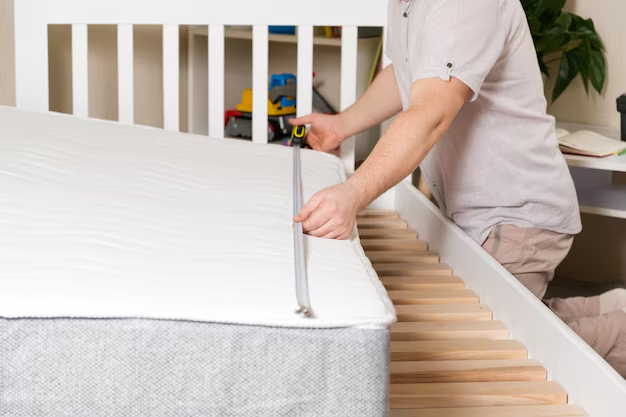
How To Measure a Mattress For Sheets: Simple Steps for a Great Fit
If you’re searching for “How To Measure a Mattress For Sheets”, you’re likely tired of fitted sheets that pop off, bunch up, or never quite reach the corners. Getting accurate mattress measurements is the key to choosing sheets that actually fit and stay in place.
This guide explains how to measure a mattress for sheets step by step, what each dimension means, and how to handle thicker mattresses, toppers, and unusual sizes.
What Does It Mean to Measure a Mattress for Sheets?
When people ask how to measure a mattress for sheets, they’re usually trying to match their bed to the correct sheet size and pocket depth.
You’ll need three basic measurements:
- Length – head to foot
- Width – side to side
- Height (thickness) – bottom to top
Length and width help you choose between standard sizes (twin, full, queen, king, etc.), while height tells you whether you need deep-pocket or extra-deep-pocket sheets.
How To Measure a Mattress For Sheets: Step-by-Step Guide
1. What tools do I need?
You only need a few basics:
- A flexible tape measure
- A flat surface (strip off thick comforters and duvets)
- A notepad or phone to record measurements
If possible, remove bulky bedding so you’re measuring the mattress itself, plus any permanent topper you plan to keep on all the time.
2. How do I measure mattress length and width?
Length
- Place the tape at the head of the mattress.
- Pull it straight to the foot.
- Record the number in inches or centimeters.
Width
- Place the tape on one side edge of the mattress.
- Stretch it across to the opposite side edge.
- Record the number.
Many mattresses will be close to standard sizes, for example:
- Twin: about 38" x 75"
- Full: about 54" x 75"
- Queen: about 60" x 80"
- King: about 76" x 80"
Slight variations are common, so go by your actual measurements, not just the labeled size.
3. How do I measure mattress height (thickness)?
This is the step people often skip, and it’s the main reason sheets fit poorly.
- Place the tape at the bottom edge of the mattress (where it rests on the foundation or base).
- Pull the tape straight up to the highest point of the mattress surface.
- Include any topper or pad you plan to keep under your fitted sheet.
- Record this measurement as the mattress height or thickness.
Most standard mattresses range from about 8" to 14", but some are taller. If you use a thick topper, your total height might be even greater.
How does mattress height affect pocket depth?
Pocket depth is how deep the corners of a fitted sheet are. To choose the right pocket depth, compare it to your mattress height.
As a general guideline:
- If your mattress height is up to about 12" → many standard-pocket sheets may work.
- If your mattress is around 13"–16" → you may need deep-pocket sheets.
- If your mattress is 17" or more (including toppers) → look for extra-deep-pocket sheets.
📝 Simple pocket depth guide
| Mattress Height | Suggested Sheet Type |
|---|---|
| Up to ~12" | Standard pocket |
| ~13"–16" | Deep pocket |
| 17"+ | Extra-deep pocket |
You’ll usually want the fitted sheet’s pocket depth to be 1–3 inches deeper than your mattress height so it can wrap securely under the corners.
Common Questions About Measuring a Mattress for Sheets
Do I measure with or without a mattress topper?
If you always sleep with a topper or mattress pad under your fitted sheet, include it in your height measurement. Your sheets need to cover the total thickness of everything under them.
If you use a topper only occasionally, you might not want to size sheets around it, as very deep sheets can feel loose on a thinner mattress.
What if my measurements don’t match a standard size?
Some mattresses are non-standard or custom sizes. If your measurements are a little off from standard dimensions, aim for:
- Length and width as close as possible to your actual numbers
- Sufficient pocket depth based on your height measurement
You may find that some sheets labeled for a standard size still fit as long as your dimensions are close and the pocket depth is appropriate.
How precise do I need to be?
It’s helpful to measure to the nearest half inch. Precision matters most for:
- Height (to avoid too-shallow pockets)
- Very thick or unusually shaped mattresses
For most standard beds, being off by a small amount in length or width won’t ruin the fit, but underestimating height often leads to corners slipping off.
Tips to Get Better-Fitting Sheets
- Measure twice to confirm your numbers.
- Check both mattress and topper height together.
- Watch out for pillow-top mattresses, which often need deeper pockets.
- If you’re between depths, many people prefer slightly deeper sheets over too-shallow ones, as long as elastic is strong.
✅ Quick Mattress Takeaways
Key points consumers should understand about How To Measure a Mattress For Sheets
- Measure three dimensions: length, width, and especially height (thickness).
- Use a flexible tape measure and record measurements in inches or centimeters.
- Include any mattress pad or topper you use under your fitted sheet.
- Match length and width to the closest standard mattress size, but rely on your actual measurements.
- Pocket depth is crucial: choose standard, deep, or extra-deep pockets based on your mattress height.
- Aim for fitted sheets with a pocket depth slightly greater than your mattress thickness so corners tuck securely.
- Re-check your measurements before buying new sheets to avoid loose, tight, or popping corners.
Understanding how to measure a mattress for sheets only takes a few minutes, but it can make a noticeable difference in how smoothly your bedding fits and stays in place night after night.