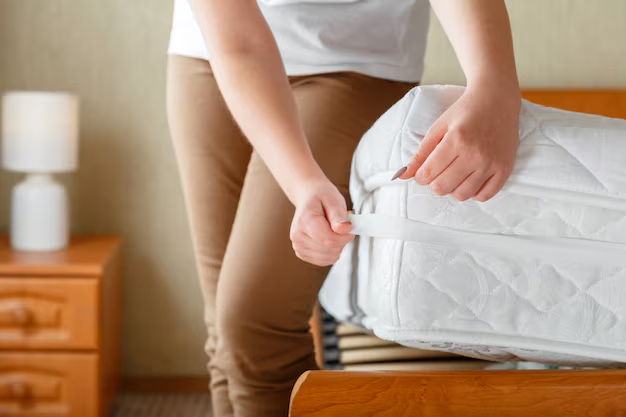
How To Make Mattress Softer: Practical Ways To Ease a Too-Firm Bed
If you’re searching for “How To Make Mattress Softer”, you’re likely dealing with a bed that feels too firm, stiff, or unforgiving. The good news: in many cases, you can make a mattress feel more comfortable without replacing it right away.
Below is a clear FAQ-style guide to softening a mattress safely and effectively, plus what to watch for so you don’t accidentally damage your bed.
Why does my mattress feel too firm?
A mattress can feel overly firm for several reasons:
- New mattress break‑in: Fresh materials often feel stiffer during the first few weeks.
- Body weight and sleep position: Lighter-weight sleepers and side sleepers usually prefer more cushioning.
- Foundation issues: A very rigid base can make a mattress feel harder.
- Material changes over time: Some mattresses become firmer as comfort layers compact.
If the mattress is new, some firmness is normal at first. If it’s older and feels hard and flat, it may be losing comfort rather than just being “too firm.”
How To Make Mattress Softer: What should I try first?
Start with simple, reversible steps before making permanent changes.
1. Give the mattress time to break in
New mattresses often need a break‑in period.
- Sleep on it consistently for a few weeks.
- If possible, rotate the mattress every few weeks during this period (head to foot, not flipped, unless the mattress is designed for flipping).
- Some people find that sitting or gently walking (in socks) across the surface can help loosen new comfort layers, but avoid harsh pressure or jumping.
2. Use a mattress topper for extra cushioning
A topper is one of the easiest ways to change how a mattress feels without replacing it.
Common options include:
- Plush foam toppers for contouring softness
- Fiber or down-alternative toppers for a pillowy, cushioned feel
- Latex toppers that add softness while staying a bit more responsive
Choose a thickness and firmness that matches what you’re missing. A thicker, softer topper usually adds more pressure relief for shoulders and hips.
Can bedding and foundations make my mattress feel softer?
Yes. The way you set up your bed can noticeably affect comfort.
3. Check your base or foundation
A very rigid or incompatible base can make a mattress feel firmer than intended.
- Solid surfaces (like some boards) may reduce the give of the mattress.
- A slatted base with appropriate spacing often allows more flex.
- Ensure the base is supportive but not overly stiff for your mattress type.
If your mattress sits directly on the floor, it might feel firmer and less responsive. Raising it onto a suitable foundation can help.
4. Adjust your bedding
Your sheets and blankets can subtly influence feel:
- Overly tight fitted sheets can compress comfort layers and make the surface feel hard. Try a deeper-pocket sheet or a looser fit.
- Extra layers (like a thick mattress pad plus a topper) can increase softness and cushioning.
- Breathable materials can keep you more comfortable overall, even if they don’t directly soften the foam.
Are there sleep position changes that can help?
Sometimes the question isn’t only How To Make Mattress Softer, but also how to work with the mattress you have.
- Side sleepers usually need more cushioning at shoulders and hips. A soft topper or added padding at those zones can help.
- Back sleepers may prefer moderate softness: too firm can cause pressure, too soft can feel unsupportive.
- Stomach sleepers often need a slightly firmer feel to keep from sinking too much, so drastic softening may not be ideal.
Small adjustments to pillow height and where you place extra cushions (such as between or under knees) can distribute weight more comfortably.
Can I flip or rotate my mattress to make it softer?
It depends on its design.
Rotate (head to foot):
Many mattresses can be rotated. This can help even out wear and sometimes makes the surface feel more forgiving.Flip (top to bottom):
Only mattresses designed as double‑sided should be flipped. Single‑sided mattresses often have support layers on the bottom and a comfort layer on top. Flipping them can make the bed feel much firmer and could shorten its usable life.
Check any care instructions that came with your mattress before flipping.
When is it time to stop trying to soften and consider replacement?
If you’ve tried toppers, rotation, and foundation adjustments and the bed still feels:
- Uneven or saggy
- Lumpy or compressed in key areas
- Uncomfortable no matter how you sleep
then the problem may not be “too firm” but worn‑out materials. In that case, further softening attempts may not restore true comfort or support.
⚙️ Practical Dos and Don’ts for Softening a Mattress
Do:
- Add a suitable mattress topper for extra plushness
- Rotate your mattress regularly (if allowed)
- Ensure your foundation matches your mattress type
- Use looser, deeper-pocket sheets if tight ones feel restrictive
Don’t:
- Jump or aggressively bend the mattress to “break it in”
- Flip a single‑sided mattress
- Block airflow or trap moisture while adding layers
- Ignore clear signs of wear like deep indentations or broken-down foam
✔️ Quick Mattress Takeaways
Key points consumers should understand about How To Make Mattress Softer
- Start with simple fixes: rotation, looser sheets, and checking your base can make a firm mattress feel more comfortable.
- Toppers are the main tool for softening: choose thickness and material that match your preferred level of plushness.
- Foundations matter: an overly rigid platform can make any mattress feel harder than intended.
- Sleep position affects what “soft enough” means—side sleepers generally need more cushioning than back or stomach sleepers.
- Softening has limits: if your mattress is old, sagging, or uneven, adding softness may not restore comfort or support.
- Follow care guidelines: only flip if it’s designed for it, and avoid harsh methods that could damage the materials.
With these approaches, you can often tailor the feel of your bed and better understand how to make your mattress softer in a safe, controlled way that suits your sleeping style.