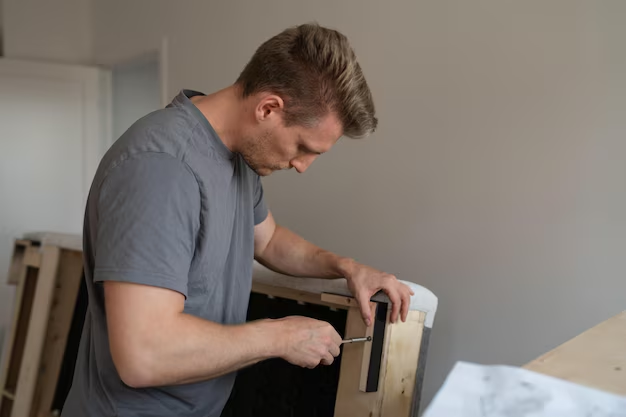
How To Make a Mattress Firm: Practical Ways to Add Support
If you’re wondering how to make a mattress firm without immediately replacing it, you’re not alone. Many sleepers notice their bed feeling softer over time, or realize they simply prefer a firmer, more supportive surface. This guide walks through simple, realistic options to make a mattress feel firmer and more stable.
Why Does a Mattress Start to Feel Too Soft?
Before changing anything, it helps to understand why your mattress feels less firm:
- Age and wear – Foams and fibers can compress, and support layers may soften with years of use.
- Unsuitable base – A sagging box spring or flexible slats can make even a new mattress feel too soft.
- Body changes or new preferences – Your firmness preference can shift over time, making your current bed feel different.
- Environment – Some foam materials feel softer in warm rooms and a bit firmer in cooler rooms.
Knowing the cause can help you choose the most effective way to make a mattress firm for your situation.
How To Make a Mattress Firm: Most Effective Fixes
1. Check and Upgrade the Bed Base
A soft or unstable foundation is one of the most common reasons a mattress feels too plush.
- Inspect your current base: Look for broken slats, sagging centers, or a bouncy box spring.
- Use a solid, supportive surface: Many mattresses feel firmer on a platform base or closely spaced slats.
- Add a bunkie board or plywood: Placing a flat, sturdy board between the mattress and the base can reduce flex and increase firmness.
👉 Tip: Always ensure any board is smooth, dry, and appropriately sized so it doesn’t damage the mattress fabric or materials.
2. Use a Firm Mattress Topper (Not Just for Softening)
Many people think toppers only make beds softer, but some are designed to add firmness and support.
- Look for high-density foam or latex-style toppers described as firm.
- Choose a thinner but dense topper rather than a very thick plush one.
- Make sure the topper covers the entire surface so you don’t feel edges or transitions.
A firm topper can be one of the easiest ways to change how a mattress feels without altering the mattress itself.
3. Adjust Where and How You Sleep
Sometimes small changes in sleep setup can impact how firm your mattress feels:
- Try sleeping closer to the center if the edges are softer from frequent sitting.
- Avoid placing heavy objects in one spot on the bed when not in use, which can increase uneven wear.
- If you share a bed, rotating who sleeps on which side can slightly even out softness over time.
These adjustments don’t transform the mattress, but they can help you get a more uniform, supportive feel.
4. Rotate or Flip (If Your Mattress Allows It)
Not every mattress is designed to be flipped, but many can be safely rotated:
- Rotate 180 degrees: Move the head end to the foot end. This can redistribute wear and may make the surface feel more supportive under your body.
- Flip only if double-sided: Some traditional or double-sided models can be turned over so each side wears more evenly.
Always check the care label or manufacturer instructions before flipping to avoid damaging one-sided designs.
5. Remove Extra Padding and Soft Layers
What sits on top of your mattress can make it feel softer than it actually is:
- Take off extra plush pads, thick comforters, or pillow-top protectors that add cushioning.
- Replace with a thin, smooth mattress protector if needed for hygiene, rather than a heavily padded one.
By stripping away excess softness, the natural firmness of the mattress can come through more clearly.
6. Consider Room Conditions
Certain foams become slightly firmer in cooler temperatures and softer when warm:
- If your room is very warm, gently lowering the temperature may make a foam mattress feel a bit firmer.
- Ensure good air circulation under the bed; trapped heat and humidity can affect how materials respond over time.
This isn’t a dramatic fix, but it can fine‑tune how your bed feels from night to night.
How Do I Know When I Need a New Mattress Instead?
There is a limit to how much you can make a mattress firm if it’s heavily worn out.
Signs these DIY steps may not be enough:
- Visible sagging that doesn’t disappear when no one is on the bed.
- Lumps, dips, or obvious body impressions that you can feel through toppers or boards.
- The mattress is well past a typical lifespan for its type and construction.
- You’ve tried several of the above ideas and it still feels unsupportive.
In these cases, adjustments may offer only short-term relief. A new, more suitable mattress might be the more practical long‑term solution.
✅ Quick Mattress Takeaways
Key points about how to make a mattress firm
- Start with the base: A solid, level foundation can instantly make many mattresses feel firmer.
- Use a firm topper: A high‑density or latex-style topper can add noticeable support on a soft bed.
- Rotate regularly: Turning your mattress can help reduce soft spots and keep firmness more consistent.
- Remove excess cushioning: Thick pads and plush covers can hide the mattress’s natural firmness.
- Fine‑tune the environment: Slightly cooler rooms may help certain foam mattresses feel a bit firmer.
- Watch for wear and sagging: Deep dips, lumps, or heavy wear often mean firmness fixes will be limited.
With these options, you can confidently explore how to make a mattress firm in ways that fit your bed, your budget, and your comfort preferences.