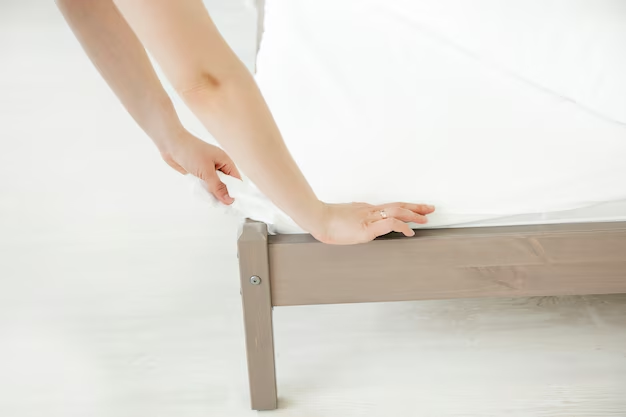
How To Keep Mattress From Sliding On Platform Bed: Practical FAQ Guide
If you’re searching for “How To Keep Mattress From Sliding On Platform Bed”, you’re likely tired of adjusting your mattress every morning. This guide explains why mattresses slide on platform beds and walks through simple, effective ways to keep them in place without damaging your bed or mattress.
Why does my mattress keep sliding on a platform bed?
Platform beds usually have a flat, solid surface or closely spaced slats with no side rails. This can make it easier for a mattress to move, especially if:
- The mattress cover is smooth or slick
- The bed surface is smooth, like finished wood or metal
- There’s no headboard, footboard, or side rails to keep it in place
- The mattress size and platform size don’t match perfectly
- You move a lot in your sleep or sit on the edge often
Understanding the cause helps you choose the least intrusive fix that works for your setup.
What are the simplest ways to keep a mattress from sliding?
Here are some of the most common, low-effort solutions for how to keep mattress from sliding on platform bed frames:
1. Use a non-slip pad or rug pad
Placing a non-slip pad between the mattress and the platform is one of the most popular options.
- It adds friction so the mattress doesn’t shift easily
- It’s usually thin, so it doesn’t change how the bed feels
- It can often be trimmed to fit your bed size
Look for a grippy, rubbery pad designed to go under rugs or mattresses, not something too thick or cushioned.
2. Add friction with a textured layer
Some people use everyday items to create more grip, such as:
- A tight, textured blanket or mat between mattress and platform
- A grippy fabric layer instead of a slippery one
These are more of a temporary or budget-friendly solution, but can work surprisingly well if positioned neatly and checked occasionally.
Are there hardware solutions that stop mattress sliding?
Yes, there are ways to physically block movement rather than just increase friction.
3. Install mattress stoppers or retainer bars
Some platform beds come with small brackets or stops near the head or foot of the bed. If yours didn’t:
- You can use simple corner brackets or low-profile blocks attached to the bed frame (not the mattress) to keep it from moving forward or sideways.
- These should be short enough not to be felt through the mattress or damage the cover.
Always check your bed frame instructions or warranty before drilling or adding hardware.
4. Use grip strips or non-slip tape (carefully)
Another option is to place non-slip strips along the platform:
- Some tapes or strips have a rubbery, textured surface
- They’re usually attached to the bed base only, never to the mattress fabric
- They can help if you don’t want to use a full-size pad
Make sure the adhesive is compatible with your bed’s material and won’t peel off paint or finish if you remove it later.
Does mattress type or bed size affect sliding?
5. Check that your mattress and platform are the same size
A common issue is using a mattress that is slightly smaller than the platform:
- A queen mattress on a “wide” queen platform, for example, can slide around because there’s extra space on the sides.
- The more “play” around the edges, the easier it is for the mattress to move.
In that case, friction solutions help, but you may still notice some shifting over time.
6. Consider the mattress cover fabric
Certain mattress covers are naturally more slippery:
- Slick, tight-weave or shiny fabrics tend to slide more on smooth wood or metal.
- Knitted or textured covers often grip better.
You can’t usually change the cover permanently, but you can compensate with a grippy layer underneath.
Is it okay to use Velcro or to glue the mattress down?
Many people wonder whether more “permanent” methods are a good idea.
- Velcro or strong adhesive directly on the mattress fabric can damage the cover, void warranties, or make cleaning difficult.
- Gluing or taping the mattress to the base can also make it hard to rotate or flip, which many manufacturers recommend for even wear.
In most cases, it’s better to use reversible, non-damaging solutions like non-slip pads, stoppers, or grip strips attached only to the bed frame.
How often should I adjust or re-check the setup?
Even the best solution for How To Keep Mattress From Sliding On Platform Bed may need occasional checks:
- When you rotate your mattress, reset pads or strips so they’re flat and centered.
- If you notice renewed sliding, inspect for folded pads, worn-out grip surfaces, or loose hardware.
A quick check every few months usually keeps things stable.
✔️ Quick Mattress Takeaways
Key points about how to keep mattress from sliding on platform bed:
- Identify the cause: slick mattress cover, smooth platform, size mismatch, or lots of movement.
- Start with gentle fixes:
- Use a non-slip mattress or rug pad between mattress and platform
- Add a textured layer to increase friction
- If needed, add physical barriers:
- Install low-profile stoppers or brackets on the bed frame
- Use grip strips or non-slip tape on the base (not on the mattress)
- Avoid permanent bonding: glues, strong adhesives, or Velcro on the mattress fabric can risk damage and warranty issues.
- Check alignment periodically: especially after rotating the mattress or moving the bed.
With the right combination of friction and support, you can keep your mattress securely in place on a platform bed and cut down on daily readjustments.