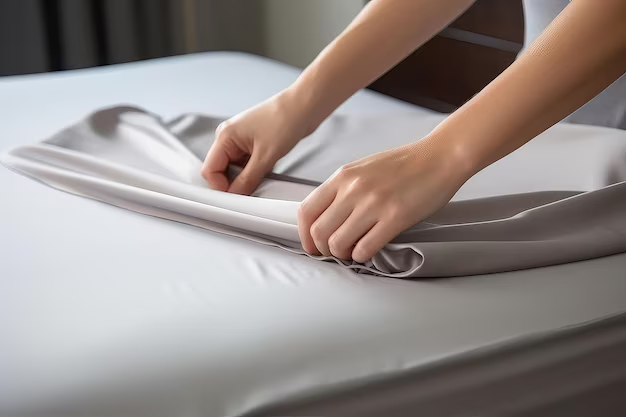
How To Keep Fitted Sheets On The Mattress: Simple Fixes That Actually Work
If you’re searching for “How To Keep Fitted Sheets On The Mattress”, you’re likely tired of corners popping off, sheets bunching up, or fabric sliding around every night. This guide walks through why fitted sheets slip and the most practical ways to keep them in place.
Why Do Fitted Sheets Keep Popping Off?
Several everyday factors can make fitted sheets slip:
- Wrong size sheet – A full sheet on a queen mattress or a standard depth sheet on a deep mattress will struggle to stay on.
- Thick or thin mattress profile – Pillow-top or extra-deep mattresses often need deep-pocket sheets, while very slim mattresses can leave extra loose fabric.
- Smooth mattress surfaces – Some mattress covers are slick, so sheets have less grip.
- Frequent movement in bed – Active sleepers naturally pull and stretch the corners.
- Old elastic – Over time, elastic can stretch out and lose tension.
Understanding the cause helps you choose the best solution for how to keep fitted sheets on the mattress in your specific situation.
How To Keep Fitted Sheets On The Mattress: Best Everyday Solutions
1. Make Sure You Have the Right Size and Depth
The most important step is checking size and pocket depth.
- Match sheet size to mattress size (twin, full, queen, king, etc.).
- Check mattress height from base to top, including any topper.
- Look for fitted sheets labeled with a depth that matches (or slightly exceeds) that measurement.
If the sheet is too shallow, it will keep snapping off. If it’s much deeper than the mattress, it will feel baggy and may shift.
2. Use Sheet Straps or Corner Suspenders
Sheet straps (sometimes called suspenders or sheet clips) connect underneath the mattress, pulling the corners of the fitted sheet tight.
They help:
- Hold each corner firmly in place
- Reduce slipping when you toss and turn
- Add tension to older sheets with weaker elastic
These are especially useful on thicker mattresses, adjustable bases, or split beds, where sheets move around more.
3. Try Mattress Grippers or Non-Slip Layers
A non-slip layer between the mattress and fitted sheet can add friction so the sheet doesn’t slide as easily.
Common options include:
- Non-slip pads or liners
- Textured mattress protectors
- Grippy underlays designed to prevent movement
These are helpful if your mattress surface is very smooth or if the bed is on a slick foundation.
4. Tuck and Wrap the Corners Correctly
Sometimes the solution is in how you put the sheet on:
- Start with one corner at the head of the bed and pull it fully over.
- Move diagonally to the opposite corner at the foot, stretching the elastic under the mattress.
- Do the remaining two corners, pulling the sheet tightly as you go.
- If extra fabric bunches at the sides, tuck it under the mattress for a snug fit.
For thinner mattresses, you can also wrap the corners by folding excess fabric under itself before tucking.
5. Choose Sheets With Stronger Elastic and Better Construction
Some fitted sheets hold better because of how they’re made:
- Elastic around the entire edge, not just at the corners, can give a more secure grip.
- Reinforced corners and thicker elastic bands often last longer before stretching out.
- Fabrics with a bit of weight and texture may shift less than very slick or very lightweight materials.
If you’re replacing old sheets and want to know how to keep fitted sheets on the mattress going forward, paying attention to these design features can make a difference.
6. Consider Your Mattress Accessories
Mattress toppers, protectors, and pads also affect sheet fit:
- A thick topper effectively increases mattress height, so you may need deep-pocket sheets.
- If you remove a topper, your existing fitted sheet may suddenly feel loose.
- A snug mattress protector with elasticized edges can create a stable base layer for the fitted sheet.
Checking the total height of your sleep surface (mattress + topper + pad) helps you choose sheets that actually fit.
Common Questions About Keeping Fitted Sheets in Place
Why do my fitted sheets slip on one corner only?
Often, one corner of the mattress may be slightly more rounded, or the sheet is not centered. Try:
- Re-centering the sheet before tucking
- Stretching that particular corner more tightly
- Using a single corner strap on the problem area
Do deep-pocket sheets always stay on better?
Not necessarily. Deep-pocket sheets are best only if your mattress is deep. On a standard or slim mattress, they can be too loose and more likely to shift. Matching pocket depth to mattress height is more important than going “deeper” by default.
Can washing and drying affect how well sheets stay on?
Yes. Over time, heat from dryers and repeated washing can loosen elastic or slightly change fabric shape. To preserve the fit:
- Avoid very high dryer heat
- Don’t overload the washer or dryer
- Replace old fitted sheets when the elastic feels stretched or slack
✔️ Quick Mattress Takeaways
Key points consumers should understand about How To Keep Fitted Sheets On The Mattress
- Correct size and pocket depth are essential – measure your mattress height and match it to the fitted sheet’s depth.
- Sheet straps and corner clips add extra security, especially for active sleepers or thick mattresses.
- Non-slip layers or textured protectors reduce sliding on smooth mattress surfaces.
- Proper corner tucking and wrapping can fix issues on thinner mattresses or with extra fabric.
- Quality elastic and reinforced corners help fitted sheets stay snug over time.
- Mattress toppers and pads change the total height, so adjust sheet choice accordingly.
When you understand the main reasons sheets slip and use a few simple tools or techniques, it becomes much easier to manage how to keep fitted sheets on the mattress night after night. A well-fitted, secure sheet can make your bed feel neater, more comfortable, and easier to maintain.