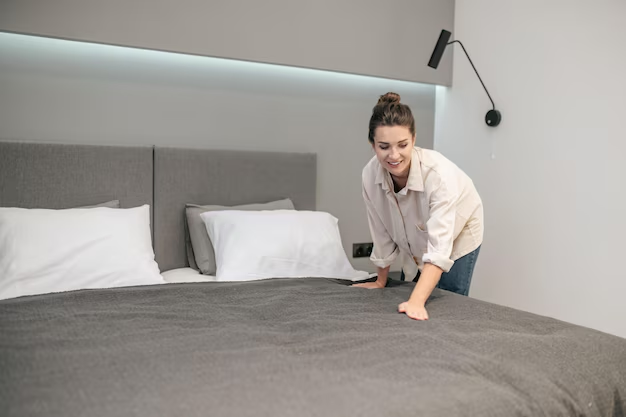
How To Keep a Mattress Pad From Sliding: Simple, Effective Fixes
If you’re tired of waking up to a bunched-up or crooked mattress pad, you’re not alone. Learning how to keep a mattress pad from sliding is a common question for anyone trying to protect their mattress and keep their bed neat and comfortable. This guide walks through why pads move, what you can do about it, and which solutions tend to work best.
Why Does My Mattress Pad Keep Sliding?
Several everyday factors can cause a mattress pad to shift:
- Smooth mattress fabrics (especially on newer mattresses) provide very little grip.
- Frequent movement in bed can pull the pad out of place over time.
- Incorrect fit (too loose or too small) makes it hard for the pad to stay secure.
- No anchoring features, like elastic corners or straps, allows more movement.
Understanding the cause helps you choose the best method for how to keep a mattress pad from sliding on your specific bed.
What Are the Easiest Ways to Stop a Mattress Pad From Sliding?
1. Make Sure the Mattress Pad Fits Properly
A good fit is the foundation of stability.
- Check the mattress depth and compare it to the pad’s pocket depth.
- If the pad is too shallow, it can pop off the corners.
- If it’s too deep or oversized, it may bunch or move during the night.
Key takeaway: A pad that hugs the mattress closely is far less likely to shift.
2. Use Corner Straps or an Elastic Skirt
Many mattress pads include:
- Elastic corner straps that loop under each corner of the mattress.
- A fitted-sheet-style skirt that wraps around the sides, like a fitted sheet.
If your pad has these features, make sure:
- All corners are fully anchored.
- The elastic is not worn out or overly stretched.
If it doesn’t have them, some people use separate elastic bands to secure the corners, similar to sheet suspenders.
3. Add a Nonslip Layer Between the Pad and Mattress
A simple, non-damaging way to keep a pad from sliding is to create more friction.
Common options include:
- A nonslip rug or shelf liner cut to size and placed between the mattress and pad.
- A thin grip mat designed to keep fabric layers from shifting.
These items are usually lightweight, breathable, and can be trimmed to match your mattress.
4. Use Sheet Tension to Your Advantage
Surprisingly, your fitted sheet can help hold the pad in place:
- Smooth out the mattress pad so it lies flat with no wrinkles.
- Pull the fitted sheet tightly over both the pad and the mattress.
- Make sure the fitted sheet is the correct size and not overly stretched or loose.
A snug fitted sheet adds an extra layer of tension that can significantly reduce sliding.
5. Consider Bed Frame and Base Factors
Sometimes the movement starts from below:
- A slippery bed frame surface can cause the whole mattress to move, taking the pad with it.
- A mattress sliding on its base can make it seem like the pad is the problem.
Using a nonslip pad between the mattress and its base can stabilize the mattress itself, which often reduces movement in the layers above.
Are There Methods I Should Be Careful With?
You may come across suggestions like adhesive strips or pins. These can sometimes cause issues:
- Adhesive tapes or strips may leave residue or damage certain fabrics.
- Pins or tacks might puncture the mattress or pad and create tears.
If you try any attachment method, test it in a small, hidden area first and avoid anything that could compromise the mattress surface.
How Do I Know Which Solution to Try First?
Think about your specific situation:
- Do you have a new, smooth mattress?
- Start with a nonslip layer and a snug fitted sheet.
- Is your pad too loose or popping off the corners?
- Focus on better fit, elastic straps, or fitted-skirt styles.
- Does the entire mattress move on the bed frame?
- Add grip between the mattress and base first.
Often, combining two simple strategies (like a nonslip liner plus a tight fitted sheet) gives the most reliable results.
✅ Quick Mattress Takeaways
Key points consumers should understand about How To Keep a Mattress Pad From Sliding
- Proper fit matters: Choose a mattress pad that matches your mattress size and depth.
- Anchor the corners: Use elastic corner straps or a fitted-sheet-style skirt when possible.
- Increase friction: Add a thin nonslip layer between the pad and mattress to reduce shifting.
- Use tight bedding: A snug fitted sheet over the pad helps hold everything in place.
- Check the base: If the mattress itself slides, stabilize it on the bed frame or foundation.
- Be gentle with fixes: Avoid methods that can damage fabric, such as sharp pins or harsh adhesives.
Keeping a mattress pad in place usually comes down to fit, friction, and anchoring. By combining a correctly sized pad, a nonslip layer, and well-fitted bedding, you can reliably address how to keep a mattress pad from sliding and enjoy a smoother, more comfortable sleep surface night after night.