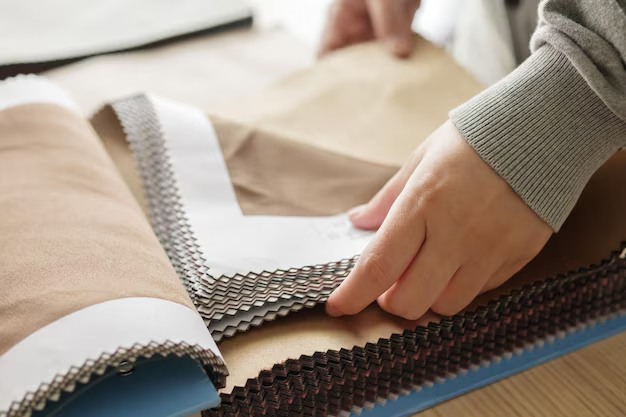
How To Do The Mattress Stitch: A Simple Guide for Neat Seams
If you’re searching for “How To Do The Mattress Stitch”, you’re likely trying to learn a clean, nearly invisible way to join two edges—most commonly in knitting, crochet, or upholstery seams. While the mattress stitch isn’t used on the inside of a mattress you sleep on, it is based on the same idea: bringing two layers together securely and neatly, so they line up smoothly without bulky ridges.
Below you’ll find a clear, FAQ-style guide explaining what the mattress stitch is, how to do it step by step, and how it relates to mattress use and care.
What is the mattress stitch?
The mattress stitch is a hand-sewing technique used to join two pieces of fabric or knitted panels edge to edge, so that:
- The seam is flat and discreet on the right side
- The pieces stay securely connected
- The join looks clean and continuous, rather than obviously stitched
It’s widely used in:
- Knitted garments and blankets
- Cushion covers and soft furnishings
- Upholstery seams, including some fabric covers related to mattress toppers or accessories
The name comes from the technique’s resemblance to the strong, hidden seams used in traditional mattress construction.
Why does the mattress stitch matter for bedding and mattress care?
In a mattress and sleep context, understanding How To Do The Mattress Stitch can help you:
- Repair small fabric tears on mattress protectors, encasements, or toppers
- Neaten joins on DIY bed accessories, such as knitted throws or covers
- Maintain a smooth surface, which can support comfort and make bedding easier to handle
While you should not open or alter the internal structure of a mattress, the mattress stitch can be useful for external fabric repairs and home sewing projects that live on or around your bed.
How To Do The Mattress Stitch: Step-by-step
1. What tools do I need?
You only need a few basic items:
- Tapestry or blunt needle (for knitting) or a hand-sewing needle (for woven fabric)
- Matching or coordinating yarn/thread
- Scissors
- Flat surface and good light
🧵 Tip: For mattress protectors or woven fabrics, choose a thread that matches both color and weight as closely as possible.
2. How do I line up the pieces?
Before you start stitching:
- Place pieces right side up (the side you want visible when finished).
- Align the edges you plan to join so the rows or patterns line up as evenly as possible.
- If you’re working with knitted or crocheted fabric, identify the edge stitches or bars you’ll be sewing through.
Keeping the pieces aligned is key to a smooth, even seam.
3. How do I actually do the mattress stitch?
Here’s the basic process for How To Do The Mattress Stitch on two edges:
Anchor your thread
- Knot or secure your thread at the bottom of the seam on one side.
- Bring the needle out to the front between the first and second stitch from the edge.
Pick up the first side
- Insert the needle under the horizontal bar (for knitting) or a small bit of fabric near the seam edge.
- Pull the thread through gently.
Move to the opposite side
- Insert the needle under the corresponding bar or small bit of fabric on the other piece, at the same height.
- Pull through, but don’t tighten completely yet.
Alternate sides
- Keep moving back and forth: one bar from the left piece, one bar from the right piece.
- Work several stitches (about 1–2 inches) in a loose, open ladder.
Tighten the seam
- Gently pull on the thread.
- The edges will draw together, and the join will “zip” closed, hiding most of the stitching.
Repeat until finished
- Continue up the seam, tightening every few stitches.
- Secure the thread with a small knot or by weaving in the end on the inside.
Done correctly, the seam should look almost invisible from the outside.
Common questions about the mattress stitch
Does the mattress stitch work on all fabrics?
- It works especially well on knitted or crocheted pieces.
- On woven fabric (like a mattress cover or protector), it still works, but you may need smaller stitches and a sharper needle.
- Avoid using it on areas under heavy internal tension, such as inside a mattress, where professional construction methods are used instead.
How strong is the mattress stitch?
When done with appropriate thread or yarn and good technique, the mattress stitch creates a secure, flexible seam that can handle regular handling and gentle movement.
For items frequently washed or pulled (like covers or blankets):
- Use strong, good-quality thread
- Keep stitches even and not overly tight, so the seam can flex with the fabric
Can I use the mattress stitch for mattress repair?
For How To Do The Mattress Stitch in a mattress-care setting:
It can be practical for small, surface-level repairs on:
- Fabric encasements
- Mattress protectors
- Toppers or decorative covers
It is not appropriate for opening or altering the inner structure of a mattress. Internal damage or structural issues are better handled by professional repair or replacement, depending on the situation.
✅ Quick Mattress Takeaways
Key points consumers should understand about How To Do The Mattress Stitch
- What it is: A hand-sewing method that creates a flat, nearly invisible seam between two edges.
- Where it helps: Useful for knitted blankets, covers, encasements, and toppers rather than the inside of the mattress itself.
- Basic steps:
- Align pieces right side up
- Alternate small stitches between each side
- Gently tighten to “zip” the seam closed
- Benefits:
- Produces neat, professional-looking joins
- Helps maintain a smooth surface on bedding and accessories
- Limitations: Best for fabric and soft furnishings, not for internal mattress structure or major damage.
Understanding How To Do The Mattress Stitch gives you a simple, versatile tool for keeping your bedding, protectors, and soft furnishings looking tidy and well-maintained. With a bit of practice on scrap fabric, many people find it becomes a go-to method whenever they need a clean, subtle seam around the bed.