How To Disinfect a Mattress From Bed Bugs: Step‑By‑Step FAQ Guide
If you’re searching for “How To Disinfect a Mattress From Bed Bugs,” you’re likely dealing with an unsettling situation and want clear, practical steps. This FAQ-style guide explains what “disinfecting” really means in the context of bed bugs, what you can safely do yourself, and when to involve a professional.
What does it mean to “disinfect” a mattress from bed bugs?
When people ask how to disinfect a mattress from bed bugs, they usually mean two things:
- Eliminate bed bugs and their eggs from the mattress.
- Clean and freshen the surface after an infestation.
Technically, disinfecting refers to killing germs like bacteria and viruses, while bed bug treatment is about removing insects. Standard disinfectants do not reliably remove an infestation, and a bed bug spray will not “sanitize” the mattress in the same way a disinfectant would.
The goal at home is to combine effective bed bug control methods with careful cleaning of the mattress surface and the surrounding sleep area.
How do I prepare my mattress and bedroom before treatment?
Proper preparation makes any method of disinfecting a mattress from bed bugs more effective.
Basic prep steps:
- Strip the bed completely. Put all sheets, pillowcases, and covers in sealed bags or directly in the washer.
- Launder bedding on the warmest appropriate settings. Then dry on a warm or hot cycle if the fabric allows.
- Clear clutter around the bed. Bed bugs like hiding in small gaps and piles of items.
- Move the bed slightly away from walls and furniture so all sides are accessible.
This preparation helps you see where bed bugs may be hiding and lets any cleaning or heat treatment reach more areas.
What are safe DIY methods to disinfect a mattress from bed bugs?
Here are common, home-friendly methods that can be part of How To Disinfect a Mattress From Bed Bugs.
1. Vacuuming the mattress thoroughly
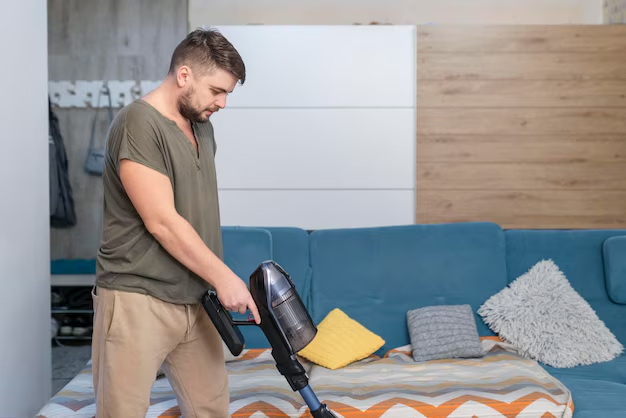
- Use a vacuum with a crevice or upholstery tool.
- Go slowly over seams, tufts, edges, and labels.
- Pay special attention to piping, buttons, and stitching, where bugs and eggs often hide.
- Immediately empty the vacuum canister or discard the bag into a sealed trash bag outside the home.
Vacuuming alone rarely removes every bug or egg, but it reduces the population and surface debris before other steps.
2. Using heat: one of the most effective approaches
Bed bugs are sensitive to high temperatures. Many people rely on heat as a key part of how to disinfect a mattress from bed bugs:
Steam cleaning:
- Use a steam cleaner designed for fabrics, following the machine’s instructions.
- Slowly pass the steamer along seams, tufts, and edges.
- Avoid soaking the mattress; too much moisture can lead to other problems.
Warm dryer cycles for removable items:
- Mattress protectors, toppers, and pillow covers can often be tumble-dried on warm or hot settings if the care labels allow.
Heat is commonly used because it penetrates fabric layers and can reach many hiding spots that sprays or wipes may miss.
3. Careful surface cleaning
After vacuuming and treating with heat, many people want to freshen and clean the surface:
- Lightly spot clean stains with a small amount of mild soap and water.
- Do not saturate the mattress; use as little moisture as possible.
- Allow the mattress to dry completely in a well-ventilated room before putting any covers back on.
Remember, standard household disinfecting sprays and wipes may help clean the surface but are not a standalone bed bug solution and should always be used according to label directions.
Should I use chemical sprays on my mattress?
Consumers often wonder whether part of How To Disinfect a Mattress From Bed Bugs is using chemical sprays directly on the mattress. A few key points:
- Read labels carefully. Only use products that state they are suitable for mattresses and follow all safety instructions.
- Consider that sprays may not reach deeply into the mattress where eggs or hidden bugs could be.
- Avoid over-saturating the mattress, which can trap moisture.
Many people choose to combine vacuuming, heat, and a protective encasement rather than relying solely on sprays.
Do I need a mattress encasement after treating for bed bugs?
A mattress encasement can be a helpful part of ongoing control after you disinfect a mattress from bed bugs:
- It fully surrounds the mattress (and sometimes box spring).
- It reduces hiding places on the mattress surface.
- It can help trap any remaining bugs inside, away from sleepers, until they eventually die.
When choosing an encasement, many people look for options that are tightly woven and zippered, designed to block small insects.
When should I call a professional for bed bugs in a mattress?
DIY methods can help, especially in early or minor infestations. However, consider professional treatment if:
- You keep seeing live bugs or new spots on bedding after cleaning.
- The infestation appears across multiple rooms or furniture pieces.
- You feel unsure about using any treatments safely or thoroughly.
Professionals often combine methods like targeted heat, precise chemical applications, and inspection tools that are not easily replicated at home.
✅ Quick Mattress Takeaways
Key points about How To Disinfect a Mattress From Bed Bugs
- “Disinfecting” for bed bugs means combining pest removal with careful cleaning, not just using a disinfectant spray.
- Vacuuming, steam (or other heat), and laundering bedding are core DIY steps.
- Do not rely solely on household disinfectants to solve a bed bug issue.
- Avoid soaking the mattress; use minimal moisture and allow full drying time.
- Mattress encasements can help protect and simplify future monitoring.
- Persistent or widespread infestations are best evaluated by a trained professional.
Understanding How To Disinfect a Mattress From Bed Bugs helps you respond calmly and methodically. By combining preparation, thorough cleaning, heat treatment, and protective measures—and seeking professional help when needed—you can restore your sleep space to a cleaner, more comfortable condition.