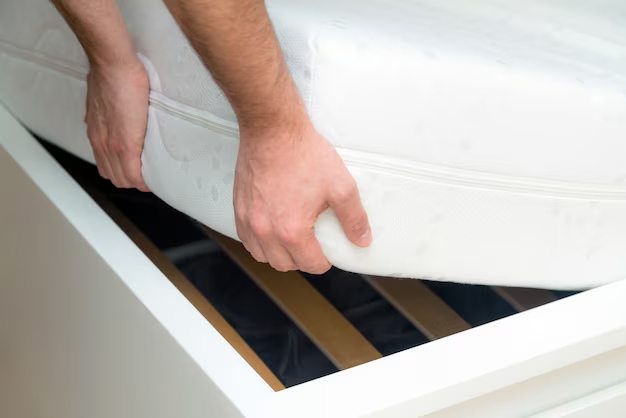
How Often To Turn Mattress: Simple Guidelines for Longer-Lasting Comfort
If you’re searching for “How Often To Turn Mattress”, you’re likely trying to keep your bed comfortable for as long as possible and avoid dips or sagging. This guide explains how often to turn or rotate a mattress, when it’s helpful, and when you should not do it—based on common mattress types and everyday use.
What Does It Mean To “Turn” a Mattress?
People often use “turn” to mean two different things:
- Flip – turning the mattress over so the bottom becomes the top.
- Rotate – spinning the mattress 180° so the head becomes the foot.
Modern mattresses are often one-sided, designed to be used only on the top surface. In those cases, you rotate but do not flip. Traditional double‑sided mattresses can usually be flipped and rotated.
Knowing which type you have is the first step in understanding how often to turn mattress surfaces for best results.
How Often To Turn Mattress By Type
Here are general, commonly used guidelines. Always check the care tag or manufacturer instructions if you have them.
| Mattress Type | Flip? | Rotate? | Typical Frequency |
|---|---|---|---|
| One-sided hybrid | No | Yes | Every 3–6 months |
| One-sided memory foam | No | Yes | Every 3–6 months |
| One-sided latex | No | Yes | Every 6 months |
| Traditional double-sided | Yes | Yes (alternate actions) | Every 3 months |
| Pillow-top one-sided | No | Yes | Every 3–6 months |
These timeframes are general care suggestions, not strict rules. Heavier sleepers, couples, or people who notice early impressions may benefit from rotating a bit more often.
Why Does Turning or Rotating a Mattress Matter?
Understanding how often to turn mattress surfaces is really about spreading out wear and pressure over time.
When you sleep in the same spot night after night:
- The comfort layers can compress where your shoulders and hips rest.
- The mattress may develop body impressions or a visible dip.
- The bed can start to feel less supportive in certain areas.
By regularly rotating (and flipping, if allowed):
- Pressure is redistributed to different parts of the mattress.
- Surface impressions may develop more slowly and evenly.
- The mattress can feel more consistent over a longer period.
How Do I Know If My Mattress Should Be Turned or Rotated?
1. Check the Label or Care Instructions
Look for phrases like:
- “No flip mattress” → Rotate only
- “Two-sided” or “double-sided” → Flip and rotate are usually fine
If there is no information, handle the mattress gently and avoid flipping if you’re unsure. Many modern designs are layered in a specific order and are not meant to be used upside down.
2. Look for Early Signs of Wear
Consider adjusting how often to turn mattress if you notice:
- A dip or impression where you usually sleep
- Feeling like you roll toward the middle
- One side feeling softer or more compressed than the other
Rotating at this stage may help distribute weight differently and can sometimes make the surface feel more balanced.
Step‑by‑Step: How to Rotate or Flip Safely
- Clear the bed: Remove pillows, sheets, and mattress protectors.
- Move slowly: Mattresses can be heavy and floppy; bending too sharply can damage internal materials.
- Use two people: Especially for larger sizes, this helps avoid strain and accidental tears.
- Rotate 180°: The head end becomes the foot end.
- If flipping is allowed, flip first, then rotate on the next scheduled care date, alternating between the two.
Does Every Mattress Need Regular Turning?
Some mattresses are marketed as “no-turn” or “no-flip.” In many cases this means:
- The internal layers are arranged for one-sided use.
- Flipping could make the mattress less comfortable or reduce performance.
Even with no‑flip models, rotating is still commonly suggested as a basic care habit, especially for:
- Couples with big weight differences
- Sleepers who tend to stay in one fixed position
- Guest mattresses that are used only occasionally but may see heavy use during visits
What If I Forget to Turn My Mattress for a Long Time?
If you haven’t rotated or turned your mattress for a year or more, it’s usually still worth starting now. You may not erase existing impressions, but you can:
- Help slow further uneven wear
- Potentially make the surface feel a bit more even
- Build a habit that supports more consistent comfort over time
If deep sagging or discomfort continues, turning alone may not fully solve the issue, but it is still a reasonable maintenance step.
✅ Quick Mattress Takeaways
Key points consumers should understand about How Often To Turn Mattress:
- Most modern mattresses should be rotated, not flipped.
- Typical rotation frequency is about every 3–6 months, depending on use and mattress type.
- Double‑sided mattresses can often be flipped and rotated, usually every 3 months.
- Check labels or instructions before flipping; many designs are one‑sided.
- If you notice dips, soft spots, or rolling toward the middle, it may be time to rotate, even if it’s earlier than your usual schedule.
- Always lift and turn carefully, ideally with two people, to protect both the mattress and yourself.
By understanding how often to turn mattress surfaces and following simple care habits, you can support more even wear and a more comfortable sleep surface over the life of your bed.