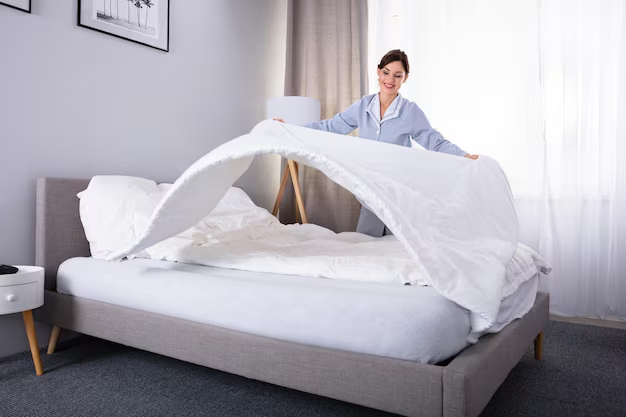
How Often Should I Turn My Mattress? A Simple Guide to Mattress Use & Care
If you’re asking “How Often Should I Turn My Mattress”, you’re likely trying to prevent sagging, extend its lifespan, and keep your bed feeling comfortable. The right answer depends on your mattress type, how it’s built, and how you use it.
This FAQ-style guide walks through when, why, and how to turn (and rotate) your mattress so it stays supportive for as long as possible.
What does “turning” a mattress actually mean?
Many people use “turning” to mean two different things:
- Rotating: Spinning the mattress 180° so the head end becomes the foot end.
- Flipping: Turning it over so the top sleeping surface becomes the bottom.
When you search “How Often Should I Turn My Mattress”, most modern mattresses are actually designed to be rotated, not flipped. Whether you should flip yours depends on how it’s constructed.
How Often Should I Turn My Mattress?
General rule of thumb
For many standard mattresses, a common guideline is:
- Rotate every 3–6 months during the first few years of use.
This helps spread out wear so the same areas aren’t compressed night after night, especially where your hips and shoulders rest.
However, there is no one schedule that works for every bed. The ideal frequency depends on:
- Mattress type (foam, hybrid, latex, innerspring)
- Whether it’s one-sided or double-sided
- Your body weight and sleep position
- Whether you sleep alone or with a partner
Should I flip my mattress or only rotate it?
One-sided vs. double-sided designs
Most newer mattresses are one-sided: they have a specific top comfort layer and a denser support core underneath. These are generally not designed to be flipped.
One-sided mattress
- Usually: Rotate only
- Flipping can make it uncomfortable and may affect how it wears over time.
Double-sided mattress (more common in older or specialty designs)
- Often: Both flip and rotate to even out pressure on each side.
If you’re unsure, look at the mattress tags or construction. If one side is clearly more cushioned or quilted, it’s likely one-sided and intended to stay facing up.
Recommended rotation frequency by mattress type
Use this table as a general guideline (always follow your care label first):
| Mattress Type | Flip? | How Often to Rotate? |
|---|---|---|
| One-sided foam | No | Every 3–6 months |
| One-sided hybrid | No | Every 3–6 months |
| One-sided innerspring | No | Every 3–6 months |
| Latex | Usually no flip | Every 6 months (or as needed) |
| Double-sided innerspring | Yes | Flip and rotate every 3–6 months |
These ranges answer “How Often Should I Turn My Mattress” in a practical way for most typical setups.
Why does turning a mattress matter?
Regular rotation (and flipping, when appropriate) helps:
- Even out body impressions so one area doesn’t break down faster
- Support your spine more consistently over time
- Delay visible sagging, lumps, or dips
- Maintain a more uniform feel across the entire surface
You may especially notice the benefits if:
- You sleep in the same spot every night
- There’s a noticeable weight difference between you and your partner
- You tend to sleep near the edge of the bed
Signs your mattress needs to be turned sooner
You don’t have to wait for a calendar reminder. Your mattress will often tell you it’s time:
- You see dips or impressions where you usually lie
- The bed feels softer or less supportive on one side
- You roll slightly toward the middle or into a “valley”
- One partner feels they are sleeping in a deeper groove than the other
If any of these show up before your usual schedule, it can be helpful to rotate earlier.
How to rotate or turn your mattress safely
To make the process easier and safer:
- Clear space: Move nightstands or lamps if needed.
- Use two people when possible, especially with heavier mattresses.
- Lift, don’t drag, to protect both the mattress and your bed frame.
- Rotate 180° so the head becomes the foot.
- If it’s double-sided, flip it over and then rotate for even wear.
Doing this carefully a few times a year can support long-term comfort without much effort.
Do all mattresses really need to be turned?
Not always. Some mattresses are designed with:
- Zoned support that’s meant to stay oriented a certain way
- Very dense or resilient materials that show little wear over time
In these cases, the manufacturer’s care instructions should take priority over generic advice about “How Often Should I Turn My Mattress”. If directions say “no rotation needed”, you can simply monitor for comfort changes and adjust only if you notice uneven wear.
✅ Quick Mattress Takeaways
Key points consumers should understand about How Often Should I Turn My Mattress:
- Most modern mattresses should be rotated, not flipped.
- A common guideline is to rotate every 3–6 months, especially in the first years.
- Double-sided mattresses may benefit from both flipping and rotating on a similar schedule.
- Watch for sagging, dips, or uneven comfort as signs to rotate sooner.
- Always check your mattress label or care instructions before flipping.
- Turning your mattress regularly can help even out wear and keep it feeling more consistent over time.
With a simple routine and a bit of attention to how your bed feels, you can answer “How Often Should I Turn My Mattress” for your specific setup and keep your mattress performing comfortably for longer.