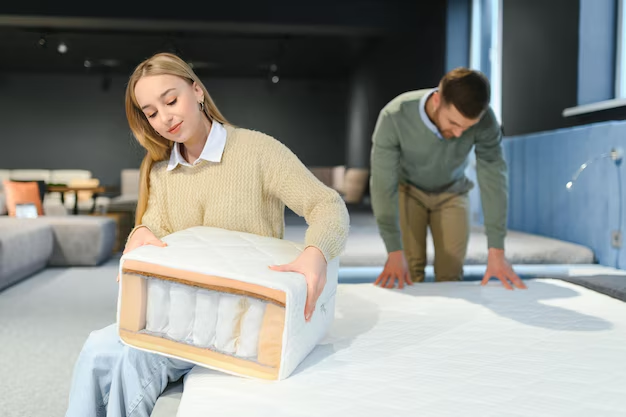
How Much Is a Good Mattress? Finding the Right Price for Lasting Comfort
If you’re asking “How Much Is a Good Mattress?”, you’re usually trying to balance comfort, durability, and budget. You don’t want the cheapest option, but you also don’t want to overspend on features you may not use. This guide walks through common price ranges, what you get at each level, and how to judge whether a mattress is actually good for you.
What Do People Mean by a “Good” Mattress?
When people ask “How Much Is a Good Mattress?”, they usually mean a mattress that:
- Feels comfortable for their preferred sleeping position
- Offers reliable support (not too saggy, not too hard)
- Holds up reasonably well over several years of regular use
- Fits their budget without obvious quality compromises
A “good” mattress is not necessarily the most expensive one. It’s a mattress where materials, construction, and price are balanced for your needs.
Typical Mattress Price Ranges (and What You Get)
Exact prices vary, but many consumers encounter similar tiers. For a standard adult mattress size:
| Price Range (approx.) | What You Usually Get | Things to Watch For |
|---|---|---|
| Budget (Very Low) | Thin foam or basic springs | Limited durability, minimal support |
| Lower Mid-Range | Basic memory foam, hybrid, or improved springs | Check edge support and motion isolation |
| Mid-Range | Thicker comfort layers, better coils or foams | Look for quality covers and stable support |
| Upper Mid-Range+ | More premium foams, zoned support, extra features | Make sure extras actually matter to you |
A “good” mattress for most everyday sleepers often falls in the lower mid-range to mid-range, depending on size and type. Very low prices can mean compromises in materials and lifespan, while very high prices may introduce features some sleepers never use.
How Much Is a Good Mattress for Different Types?
Foam Mattresses
Foam mattresses (including memory foam) can range widely in cost. A good foam mattress typically includes:
- Multiple layers with different firmness levels
- A thicker comfort layer for pressure relief
- A supportive base foam that resists sagging
In lower price ranges, the foam may be thinner or less dense, which can feel comfortable at first but may not keep its feel over time.
Innerspring and Hybrid Mattresses
These use coils, sometimes combined with foam comfort layers (hybrid).
A good innerspring or hybrid mattress often has:
- Individually wrapped coils for more tailored support
- Enough cushioning above the springs to avoid pressure points
- Decent edge support so you can use more of the surface
Hybrids tend to cost more than simple innersprings but may feel more balanced for people who like both bounce and contouring.
How Can I Tell If a Mattress Is Worth Its Price?
When thinking about “How Much Is a Good Mattress?”, focus less on the final number and more on value for use:
Key things to look for:
- Materials: Multiple foam layers, quality coils, and sturdy covers suggest better construction.
- Thickness: While thicker is not always better, extremely thin mattresses may feel less supportive for many adults.
- Support & Comfort Balance: You should feel supported without uncomfortable pressure on shoulders, hips, or lower back.
- Stability Over Time: A good mattress should feel relatively consistent, not dramatically softer or lumpier after short-term use.
If two mattresses are similarly priced, the “better” one usually has more thoughtful layering, stronger edge support, and a more durable feel.
Do I Need to Spend a Lot for a Guest or Kids’ Mattress?
Not always. For a guest room, where the bed is used occasionally, a simpler mattress in the lower mid-range can be perfectly adequate. For younger children, lighter body weight often puts less strain on the materials, so they may not need the same level of support that a heavier adult requires.
You might spend more on:
- A main mattress you use every night
- A mattress for someone with very specific comfort preferences
Meanwhile, infrequently used or temporary mattresses can often sit comfortably in lower price ranges without major issues.
How Long Should a “Good” Mattress Last at Its Price?
A common expectation is that a good mattress should feel supportive for several years of regular use. Lower-priced options may show signs of wear sooner, while better materials at moderate or higher prices may maintain their feel longer.
However, lifespan also depends on:
- Body weight and how many people use the bed
- How often the mattress is used (daily vs. occasional)
- Basic care, such as using a supportive base and a protector
Reasonable care helps you get the most out of whatever price point you choose.
✔️ Quick Mattress Takeaways
Key points consumers should understand about How Much Is a Good Mattress:
- “Good” means balanced: Comfort, support, and durability should all feel reasonable for the price.
- Extremes can be risky: Very low prices may sacrifice quality; very high prices may add features you don’t need.
- Mattress type matters: Foam, innerspring, and hybrid designs each have different typical price ranges.
- Check construction, not just cost: Layer quality, coil design, and cover durability often say more than the number on the tag.
- Match price to usage: Invest more in your everyday mattress; spend less on occasional-use or short-term beds.
- Care extends value: Proper support and basic protection can help any mattress, at any price, last longer.
When you ask “How Much Is a Good Mattress?”, the most useful answer is not a single number but a range that fits your needs, sleep habits, and expectations. By focusing on materials, construction, and how you’ll actually use the bed, you can choose a mattress that feels “good” both at night and when you look at your budget.