How Long Can Scabies Live In a Mattress? Understanding Lifespan, Risks, and Care
If you’re searching for “How Long Can Scabies Live In a Mattress”, you’re likely worried about whether your bed can continue to harbor the mites after an infestation. This guide explains how long scabies can survive in a mattress, what that means for everyday use, and how to care for your sleep space in a calm, practical way.
What Is Scabies and How Does It Relate to Mattresses?
Scabies is caused by tiny mites that live in the outer layer of human skin. They are parasites that depend on close contact with skin to survive and spread.
A mattress becomes a concern when:
- Someone with scabies has been sleeping on it regularly
- Bedding, blankets, or pillows have had prolonged contact with affected skin
The key question is not just whether scabies can be on a mattress, but how long they can stay alive away from human skin.
How Long Can Scabies Live In a Mattress?
In general, scabies mites do not live very long once they are away from the human body. On a mattress or other dry surfaces, they typically survive for a short time compared to how long they can live on skin.
A commonly accepted understanding is:
- On human skin: Mites can live for several weeks if not addressed
- Off the body (on mattresses, clothing, furniture): They usually survive only a limited number of days
Because they rely on warmth and a steady food source from skin, their ability to live in a mattress is temporary. A mattress is not a long-term home for scabies, but it can act as a short-term resting place for mites that have transferred from an affected person.
Do I Need to Throw Away My Mattress?
Most people want to know if they must replace their bed after scabies. In many everyday situations, discarding a mattress is not necessary.
Instead, the focus is usually on:
- Allowing time for mites off the body to die naturally
- Cleaning and managing bedding and surfaces
- Following any guidance from a health professional regarding treatment for people
From a mattress care perspective, the goal is to reduce contact with any mites that may still be present during their short survival window.
How Should I Handle Bedding and Mattress Surfaces?
While this isn’t medical advice, there are common mattress-care steps people often consider when dealing with scabies in their sleep environment:
- Wash bedding in warm water when appropriate for the fabric
- Dry on a warm setting if the care label allows
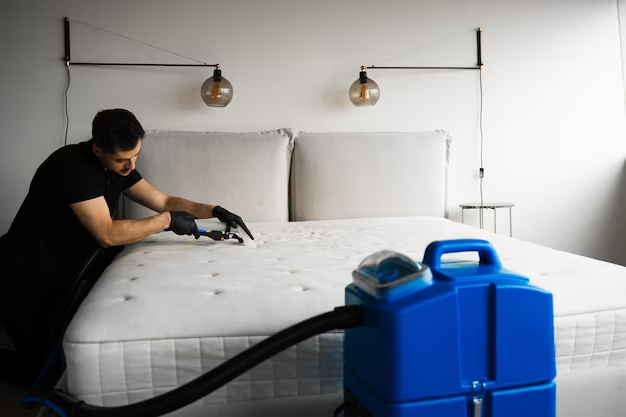
- Vacuum the mattress surface slowly, especially along seams and edges
- Avoid direct skin contact with a mattress that may be contaminated until it has been addressed and enough time has passed
These actions are aimed at removing or reducing the presence of mites on your mattress and bedding.
Can Scabies Eggs Stay in the Mattress Longer?
Scabies eggs are laid in the skin, not in the mattress itself. However, loose skin flakes, hair, or fabric fibers may raise concerns for some people.
Key points to keep in mind:
- Scabies mites are adapted to living on humans, not in fabric
- A mattress may temporarily hold mites that have fallen or transferred, but it is not their natural or preferred environment
- Over time, mites that are not on skin tend to die off
This means that while a mattress can be involved in the short-term environment of an infestation, it doesn’t usually serve as a long-term reservoir once the mites are away from the body.
How Long Should I Avoid Using an Exposed Mattress?
If a mattress has been used by someone with scabies, many people choose to:
- Limit direct, bare-skin contact with the mattress for several days
- Use fresh, clean bedding once items have been laundered
- Consider covering the mattress with a clean mattress protector after cleaning
The exact timing and approach can vary, and any decisions involving treatment or timeframes for re-use of items in the home should be made with the help of a health professional. From a care and maintenance standpoint, giving the mattress time plus basic cleaning can support peace of mind.
How Can I Reduce Worry About Scabies in My Sleep Space?
A scabies concern can make it hard to relax in bed. While only a professional can guide you on treatment decisions, you can focus on mattress and bedding habits that many people find reassuring:
- Keeping regular laundry routines for linens and pillowcases
- Vacuuming the mattress surface and surrounding floor regularly
- Rotating or airing out the mattress periodically
- Using removable, washable protectors on pillows and mattress
These habits support a cleaner, fresher sleep environment overall, whether or not scabies is a concern.
✅ Quick Mattress Takeaways
Key points consumers should understand about How Long Can Scabies Live In a Mattress
- Scabies mites depend on human skin and generally survive only a short time on mattresses and other dry surfaces.
- A mattress is not a long-term home for scabies; it is mainly a temporary contact surface.
- Many people do not need to throw away a mattress after scabies; instead, they focus on washing bedding, cleaning, and allowing time.
- Vacuuming the mattress, washing linens, and avoiding direct bare-skin contact for a period can help reduce concern about lingering mites.
- Any decisions about treatment, timing, and safety should be made with a qualified health professional, while mattress care can focus on cleanliness and comfort.
Understanding How Long Can Scabies Live In a Mattress helps separate fear from practical action. By combining proper health guidance with simple mattress care routines, you can support a cleaner sleep environment and feel more confident about your bed.