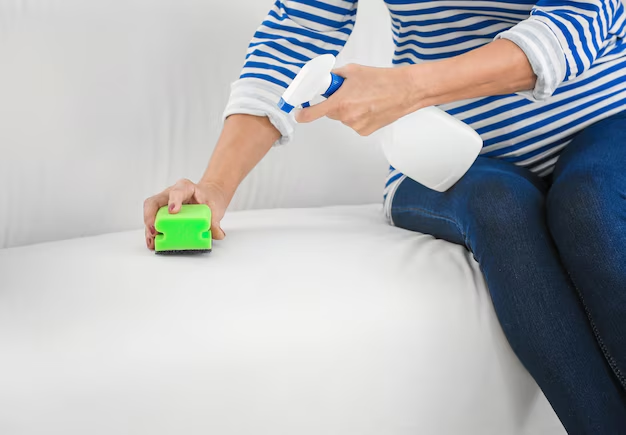
Can You Shampoo a Mattress? Safe Ways to Deep Clean Your Bed
If you’re wondering “Can you shampoo a mattress?”, you’re not alone. Many people look at their carpet cleaner or upholstery shampooer and wonder if it’s a good idea to use it on their bed. This guide explains when shampooing a mattress might work, when it can cause damage, and safer ways to get a deep clean.
Can You Shampoo a Mattress at All?
Technically, you can shampoo a mattress, but it’s usually not recommended.
Mattresses are thick, absorbent, and slow to dry. When you apply liquid shampoo or use a wet-cleaning machine:
- The surface may look clean, but
- Moisture can get trapped deep inside, and
- A mattress that doesn’t dry fully can develop odors or other issues over time.
For most people, spot-cleaning and low-moisture methods are safer and more practical than fully shampooing a mattress.
Why Is Shampooing a Mattress Risky?
1. Mattresses Dry Much More Slowly Than Carpets
Carpets are thin and exposed to air on both sides. A mattress has multiple layers, dense foams, and fabric covers. When you shampoo a mattress, water can sink into layers you can’t reach, making it hard to dry completely.
2. Certain Mattress Materials Don’t Like Water
Some common mattress components can be affected by too much moisture:
- Memory foam and other foams may break down or lose structure if soaked.
- Natural fiber layers can hold onto moisture longer than expected.
- Adhesives and seams might weaken with repeated wet cleaning.
This doesn’t mean a small damp cloth will ruin your bed. It does mean soaking the mattress or using a lot of liquid shampoo is not ideal.
3. Shampoo Residue Can Stay Behind
If the question is “Can you shampoo a mattress with regular carpet or upholstery shampoo?”, the concern is residue. Many liquid shampoos:
- Are designed for materials that rinse more easily
- May leave fragrance or soap traces in the fabric
- Can attract dust if not fully removed
On a mattress, that residue is much harder to rinse away completely.
When Might Shampooing a Mattress Be Acceptable?
There are limited cases where very careful, light shampooing of the surface only might be considered:
- A stubborn stain that does not respond to mild cleaners
- A non-foam mattress with a removable, well-ventilated cover
- Situations where you can allow very long drying time, with good airflow
Even then, it’s safer to:
- Use minimal liquid
- Focus only on the stained area
- Blot, don’t soak
- Ensure thorough drying before putting bedding back on
Safer Alternatives to Shampooing a Mattress
Instead of asking “Can you shampoo a mattress?”, it’s often more helpful to ask: “How can I deep clean my mattress safely?”
1. Regular Surface Cleaning
- Vacuum the mattress using a clean upholstery attachment to remove dust and debris.
- Spot-clean stains with a small amount of mild soap diluted in water, applied with a cloth, and blotted dry.
2. Low-Moisture Stain Treatment
For most stains:
- Lightly dampen a cloth with a mild cleaning solution (not soaking wet).
- Blot the stain, working from the outside inward.
- Follow with a clean, slightly damp cloth to remove any soap.
- Blot with a dry towel and let the area air-dry fully.
3. Freshening and Odor Control
- Lightly sprinkle baking soda on the surface.
- Let it sit for several hours.
- Vacuum thoroughly.
This dry method helps refresh the mattress without introducing excess moisture.
Can You Shampoo a Mattress With a Carpet Cleaner Machine?
Many people mean “Can you shampoo a mattress” using a carpet or upholstery cleaning machine. These devices are often designed to inject water and shampoo, then extract it.
Common concerns include:
- Too much water going into the mattress
- Incomplete extraction, especially on thick or foam-heavy models
- Difficulty drying the mattress core
If someone chooses to use such a machine anyway, they typically:
- Use the lowest possible moisture setting
- Work in small sections
- Avoid repeated passes over the same area with additional water
- Allow extended drying time, possibly a full day or more, before use
Even with that, most mattresses will fare better with spot cleaning and vacuuming rather than full wet extraction.
How Can You Tell If Your Mattress Is Dry Enough?
After any wet cleaning (including mild spot cleaning):
- Press your hand firmly into the cleaned area. It should feel completely dry, not cool-damp.
- Check both the top and sides for any dampness.
- Make sure the room is well-ventilated, and consider airflow from a fan to help speed drying.
If in doubt, give it more time. Putting bedding back on a damp mattress can trap moisture and slow drying even further.
✅ Quick Mattress Takeaways
Key points consumers should understand about “Can You Shampoo a Mattress”
- Can you shampoo a mattress? Technically yes, but it’s usually not the safest method due to drying and material concerns.
- Full wet shampooing is risky, especially for foam or multi-layer mattresses that trap moisture.
- Light spot cleaning with minimal liquid is generally a safer approach than soaking the mattress.
- Carpet or upholstery shampoos can leave residue and may be hard to rinse out of a mattress.
- Dry or low-moisture methods (vacuuming, baking soda, gentle spot cleaning) are usually better long-term options.
- If any liquid is used, the mattress should be completely dry before you sleep on it or cover it with bedding.
Understanding “Can you shampoo a mattress?” comes down to balancing cleanliness with material care. With careful, low-moisture cleaning and good drying habits, you can keep your mattress fresher without the risks that come with full shampooing.