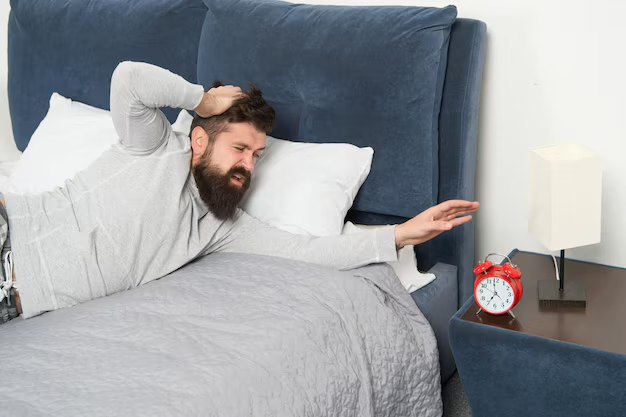
Can a Bad Mattress Cause Headaches? Understanding the Connection
If you’re waking up with a sore head and wondering, “Can a bad mattress cause headaches?”, you’re not alone. Many sleepers notice that their morning headaches seem linked to how — and where — they sleep. While a mattress isn’t the only possible factor, its condition and design can play a meaningful role in how you feel when you wake up.
This FAQ-style guide explains how a mattress may contribute to headaches, what signs to watch for, and how to tell if your bed might be part of the problem.
Can a Bad Mattress Cause Headaches?
A bad mattress can contribute to headaches for some people, mainly through poor support, uncomfortable pressure, and disrupted sleep. It is usually not the sole cause, but it can be one piece of a larger puzzle.
When a mattress is too saggy, too firm, or simply not suited to your body and sleep position, it can:
- Place extra strain on your neck and shoulders
- Encourage awkward sleeping postures
- Lead to restless, low-quality sleep
These issues may leave you waking with tension or discomfort around the head and neck, which some people describe as a headache on waking.
How Can Mattress Support Affect Head and Neck Comfort?
What happens when a mattress doesn’t support you well?
Your spine has a natural curve. A mattress that no longer supports you properly can let your neck and upper back fall out of alignment, especially if:
- The mattress has deep sags or dips
- The surface feels uneven or lumpy
- You sink too far in certain spots
When your neck is bent at an awkward angle for hours, the muscles around your shoulders and head may feel tight or strained by morning.
Does firmness matter?
Yes, mattress firmness can influence neck and head comfort:
- A mattress that is too soft may let your hips and shoulders sink too deeply, leaving your neck at an angle.
- A mattress that is too firm may create pressure points around the shoulders and upper back, which can also affect how your neck rests.
Many people find they feel better on a surface that keeps the spine relatively straight in their usual sleep position, with enough cushioning to reduce pressure.
Can Poor Sleep Quality Lead to Morning Headaches?
Even if your neck feels fine, you might still ask, “Can a bad mattress cause headaches by ruining my sleep?” In some cases, yes, indirectly.
A mattress that is uncomfortable or noisy can:
- Make it harder to fall asleep
- Cause you to wake up frequently
- Encourage tossing and turning
Over time, fragmented or shortened sleep can leave you feeling groggy, heavy-headed, or sensitive to light and sound in the morning. Many people casually refer to this as a “sleep hangover” or a sleep-related headache feeling.
What Signs Suggest Your Mattress Might Be Contributing?
Look for patterns rather than single nights. Your mattress may be playing a role if:
- Headaches are worst right after waking and ease as the day goes on
- You notice neck, shoulder, or upper back stiffness along with head discomfort
- Your mattress shows visible sagging, lumps, or asymmetry
- You wake up often feeling unrested, stiff, or sore, even after a full night in bed
- Sleep elsewhere (such as a guest bed) seems to reduce your morning discomfort
None of these signs prove that the mattress is causing your headaches, but they can suggest that sleep surface and alignment are worth examining.
Are Pillows and Sleeping Position Also Important?
How does your pillow come into play?
Even with a good mattress, an unsuitable pillow can affect how your head and neck rest. Common issues include:
- Pillow too high or too low, tilting the head
- Pillows that flatten quickly, losing support during the night
- A mismatch between pillow loft and your sleep position
Many people find that their head and neck feel better when their pillow fills the space between the neck and mattress without forcing the head up or down.
Does sleep position matter?
Yes. The way you sleep can change how pressure is distributed:
- Back sleepers may need moderate support under the neck.
- Side sleepers often need more loft in the pillow to keep the head level.
- Stomach sleepers may experience more neck rotation, which can feel uncomfortable for some over time.
A mattress that works well with your preferred position and pillow can help promote a more neutral posture overnight.
What Can You Do If You Suspect Your Mattress Is a Factor?
Without making any medical assumptions, there are practical, mattress-related steps you can consider:
- Check for clear signs of wear: dips, broken springs, or sagging
- Rotate or flip (if designed for it) to see if support feels more even
- Experiment with different pillows or slightly adjusting your sleep position
- Note whether your head and neck feel different when you sleep on another bed
If you have ongoing or severe headaches, or if they are new or changing, it’s important to speak with a qualified health professional. They can help you explore all possible causes while you also evaluate your sleep setup.
✅ Quick Mattress Takeaways
Key points consumers should understand about “Can a Bad Mattress Cause Headaches”
- A bad mattress can contribute to headaches indirectly, mainly through poor neck support and disrupted sleep.
- Misalignment of the head, neck, and spine overnight may leave muscles tense and sore by morning.
- Sagging, lumps, and uneven firmness are common mattress issues linked to discomfort around the head and neck.
- Pillows and sleeping position also play a major role in how your head feels when you wake up.
- Repeated morning headaches that improve during the day can be a sign to reassess your sleep surface and posture.
- Any persistent, severe, or worrying headaches should be discussed with a health professional, while you also review your mattress, pillow, and sleep habits.
Understanding the possible link between your mattress and morning headaches can help you make more informed choices about mattress care, replacement, and overall sleep comfort. While a “bad” mattress is rarely the only factor, creating a supportive, comfortable sleep environment is one practical step many people find worthwhile when trying to wake up feeling clearer and more at ease.