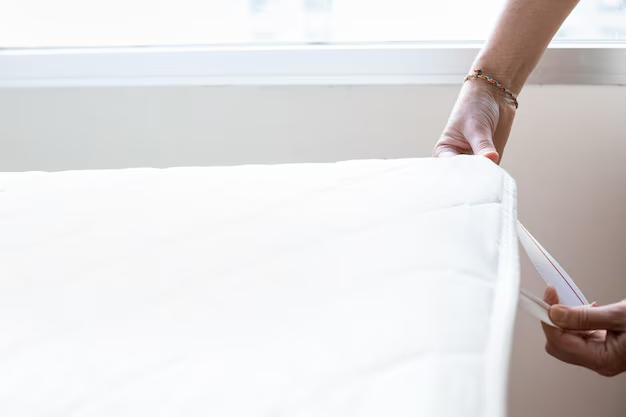
Are You Supposed To Flip Your Mattress? How to Know and What to Do Instead
If you’ve ever wondered “Are You Supposed To Flip Your Mattress?”, you’re not alone. Many people grew up flipping older, double‑sided mattresses and aren’t sure if the same rule still applies. The answer today is: it depends on the type of mattress you have.
Below, you’ll find clear answers about flipping, rotating, and how to tell what’s right for your specific mattress.
Do Modern Mattresses Need To Be Flipped?
In most cases, you are not supposed to flip modern one‑sided mattresses.
Many current mattresses are built with a specific top and bottom:
- A comfort layer on top (plush foams or cushioning materials)
- Support layers underneath (denser foam, coils, or other support systems)
If you flip this type of mattress, you end up sleeping on the support layer, which is usually firmer and less comfortable. It can also put stress on materials that weren’t meant to be on top.
The key point:
- One‑sided, “no‑flip” mattresses → do not flip
- Double‑sided mattresses → flipping may be recommended
Always check the manufacturer’s tag or care instructions. If it doesn’t clearly say the mattress is double‑sided or flippable, it’s usually designed to be used only one way up.
How Do I Know If My Mattress Is Flippable?
Here are some simple ways to tell:
Look at the construction:
- If one side is clearly plusher and the other is flat, rougher, or has a different material, it’s likely one‑sided.
- If both sides feel and look similar, it may be double‑sided.
Check the label:
- Some labels mention “no flip” or “rotation only.”
- Others may show a simple rotation or flipping diagram.
Think about how it was sold:
- Many newer foam, hybrid, and pillow‑top designs are explicitly marketed as no‑flip.
- Traditional older-style innerspring mattresses were more commonly two‑sided and flippable.
If you are unsure, it’s generally safer to rotate only rather than flip.
If You’re Not Supposed to Flip, Should You Rotate Instead?
Even if you don’t flip, rotating your mattress (turning it 180 degrees so the head becomes the foot) is often recommended.
Rotation helps:
- Reduce body impressions in one spot
- Even out wear across the surface
- Potentially extend the comfortable life of the mattress
A common guideline is:
- Every 3–6 months: rotate the mattress 180 degrees
This applies to many types of mattresses, including foam, hybrid, and one‑sided innerspring models. Again, check your care tag for any specific guidance.
Why Did People Use To Flip Mattresses All the Time?
Older mattresses were often fully symmetrical, with similar cushioning on both sides. That meant:
- You could flip and rotate them regularly
- Using both sides helped distribute wear more evenly
- Sagging and impressions were often reduced by alternating sides
As mattress designs became more specialized, with layered comfort systems on top, true two‑sided mattresses became less common.
What Happens If You Flip a Mattress That Shouldn’t Be Flipped?
If you flip a non‑flippable mattress, you might notice:
- The surface feels unusually firm or uncomfortable
- Quilting, foams, or covers are now pressed against the bed base
- Certain layers may compress unevenly over time
This usually doesn’t damage the mattress immediately, but it can reduce comfort and potentially strain materials that were not meant to support direct body weight.
If you’ve accidentally flipped a one‑sided mattress, simply flip it back to the intended top side and use rotation only going forward.
How Often Should You Flip a Mattress That Is Flippable?
If you confirm that your mattress is double‑sided, you can typically:
- Flip and rotate every 3–6 months, or
- Alternate: one time flip, the next time rotate
This pattern helps:
- Spread out wear and body impressions
- Keep each side from softening too quickly in one area
- Maintain a more consistent feel over time
Always follow any timing or handling instructions on the label.
Signs Your Mattress Needs Attention (Flip, Rotate, or Replace)
Even if you’re not sure about the exact rules, your mattress may be telling you it needs adjusting when you notice:
- Visible dips or sagging where you usually sleep
- Rolling toward the center of the bed
- The bed feels much softer or firmer than when new
- You wake feeling like your body has been resting in a groove
For a non‑flippable mattress, try rotating first.
For a flippable mattress, consider flipping and rotating in a regular schedule.
If comfort doesn’t improve, it may be a sign the mattress is simply worn out, rather than just unevenly used.
✅ Quick Mattress Takeaways
Key points to understand about “Are You Supposed To Flip Your Mattress”
- Most modern mattresses are one‑sided and are not meant to be flipped.
- If the mattress has a clear “top” comfort layer and a firmer “bottom,” don’t flip it.
- Double‑sided mattresses can be flipped, usually every 3–6 months, often with rotation.
- Rotation (head-to-foot) is helpful for many mattresses, even when flipping is not.
- Check the care label or manufacturer instructions for flipping and rotation guidance.
- If you feel dips, sagging, or uneven support, start with rotation and see if it helps.
- When in doubt about “Are You Supposed To Flip Your Mattress,” assume rotation only unless it is clearly labeled as flippable.
With a basic understanding of your mattress type and a simple rotation or flipping routine, you can help keep your sleep surface more even and comfortable over time.