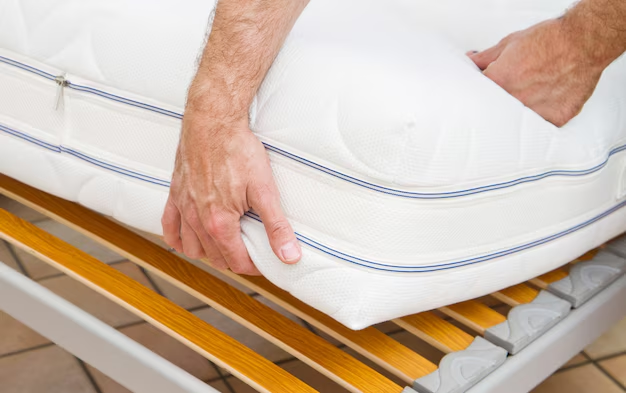
What Is Inner Spring Mattress? A Simple Guide to This Classic Mattress Type
If you’re asking “What Is Inner Spring Mattress?”, you’re likely trying to understand what makes this traditional mattress type different from foam or hybrid options. This FAQ-style guide explains what an innerspring mattress is, how it’s built, and who it typically suits best.
What is an inner spring mattress?
An innerspring mattress (often written as inner spring mattress) is a mattress that uses a system of metal coils or springs as its main support core.
Above the springs, there is usually a layer or several layers of padding and fabric for comfort, but the primary structure and feel come from the coil system underneath.
In short:
What Is Inner Spring Mattress?
It’s a mattress built around a network of metal springs that provide support, bounce, and airflow, topped with comfort layers for softness.
How is an inner spring mattress constructed?
While designs vary, most innerspring mattresses share these main parts:
- Support core: The metal coils or springs
- Insulator layer: A thin layer between the coils and the comfort materials
- Comfort layers: Foams or fibers that soften the surface
- Cover (ticking): The fabric you see and touch
Types of coil systems
Common coil types you may see include:
- Bonnell coils: Hourglass-shaped coils, often connected in a grid
- Continuous coils: A single wire formed into many coils, linked together
- Offset coils: Similar to Bonnell but designed to flex more quietly and evenly
- Pocketed coils: Individual coils wrapped in fabric pockets, allowing more independent movement
Pocketed coils are often used when people want less motion transfer between sleep partners, while interconnected coils can feel more bouncy and uniform.
What does an inner spring mattress feel like?
Many people describe inner spring mattresses as:
- Bouncy or responsive – they push back quickly when you move
- Supportive – especially through the middle of the mattress
- Cooler-feeling – the coil system allows air to circulate more freely
The exact feel depends on:
- Coil gauge (thickness) – thicker coils tend to feel firmer
- Number and arrangement of coils – can affect support and contouring
- Type and thickness of comfort layers – more cushioning usually means a plusher feel
What are the main pros and cons of inner spring mattresses?
Here’s a quick overview:
👍 Potential advantages
- Familiar feel: Many people have grown up sleeping on innersprings and find the bounce comfortable.
- Good airflow: The open coil structure can help heat escape.
- Easier movement: The responsive surface can make it easier to change positions.
👎 Potential drawbacks
- More motion transfer: On many models, movement on one side can be felt on the other, especially with interconnected coils.
- Potential for noise: Springs can sometimes squeak as they age.
- Less contouring: Compared to some foam mattresses, the surface may feel less body-hugging.
Who is an inner spring mattress usually good for?
While comfort is highly personal, an inner spring mattress often suits people who:
- Prefer a traditional, bouncy feel rather than a “sinking in” sensation
- Like a cooler surface, especially those who notice heat build-up in dense foam
- Change positions frequently and want easy movement on the surface
Those who want very close body contouring or a deeply “hugging” feel may lean toward other mattress types or an innerspring with thicker comfort layers.
What should you look for in an inner spring mattress?
When exploring What Is Inner Spring Mattress in more detail and deciding if one is right for you, these features are useful to understand:
- Coil type: Pocketed coils may offer more targeted support and reduced motion transfer.
- Coil gauge: Lower gauge numbers generally mean thicker, firmer coils; higher numbers are thinner and can feel softer.
- Edge support: Reinforced edges can help the mattress feel more stable when you sit or sleep near the perimeter.
- Comfort layers: The thickness and materials above the coils strongly affect softness, pressure relief, and overall feel.
How is an inner spring mattress different from foam or hybrid mattresses?
Versus all-foam:
Inner spring mattresses rely on metal coils for support, while foam mattresses use layers of foam only. Foam often feels more contouring; innersprings often feel more responsive and airy.Versus hybrid:
A hybrid mattress combines a coil support core (like an innerspring) with thicker comfort layers on top, often made of foam or other materials. Hybrids try to blend the bounce and support of coils with the cushioning of foam.
✔️ Quick Mattress Takeaways
Key points consumers should understand about “What Is Inner Spring Mattress”
- Core definition: An inner spring mattress uses metal coils as its main support system, topped with comfort layers.
- Typical feel: Often bouncy, supportive, and relatively cool, with less of a “hugging” sensation than some foams.
- Coil variety matters: Different coil types (Bonnell, continuous, offset, pocketed) can change motion isolation, firmness, and durability.
- Pros: Familiar feel, good airflow, easy movement on the surface.
- Cons: Can transfer more motion, may become noisy over time, and typically offers less deep contouring than thick foam designs.
- Best for: People who like traditional support and responsiveness, and those who prefer a mattress that doesn’t feel too enveloping.
Understanding What Is Inner Spring Mattress—from its coil-based support to its typical feel—can help you quickly decide if this classic mattress type matches your comfort preferences and sleep style.