What Is Hybrid Mattress Mean? A Clear Guide to This Popular Mattress Type
If you’re searching for “What Is Hybrid Mattress Mean”, you’re likely seeing the term everywhere and want a simple, straightforward explanation. You’re in the right place. This FAQ-style guide breaks down what a hybrid mattress is, how it’s built, and whether it might fit your sleep preferences.
What does “hybrid mattress” actually mean?
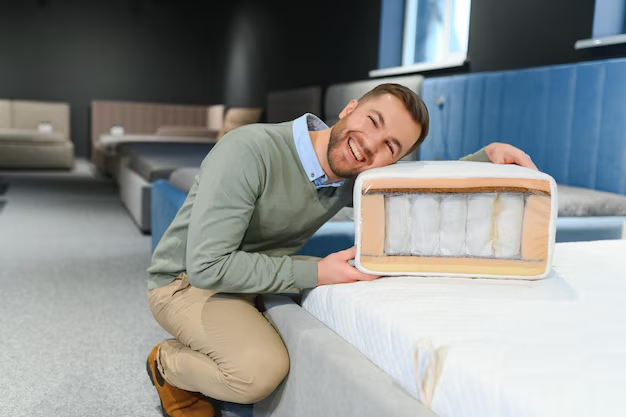
A hybrid mattress is a bed that combines two main types of materials in one design:
- A support core of coils (springs or pocketed coils)
- A comfort system of foam or latex layers on top
So when you ask “What Is Hybrid Mattress Mean”, it essentially means: a mattress that blends innerspring support with foam or latex comfort in a single, integrated construction.
This mix is meant to offer:
- The responsive support and airflow of coils
- The pressure-relieving comfort of foam or similar materials
How is a hybrid mattress different from memory foam or innerspring?
Versus memory foam
A pure memory foam mattress is made entirely of foam layers, with no coil system inside. It often has:
- Deep contouring around the body
- Less bounce and a more “hugging” feel
A hybrid mattress, by contrast:
- Uses coils for the base, which can feel more responsive
- Still includes comfort foams on top, but usually with a slightly firmer, more buoyant feel than all-foam designs
Versus traditional innerspring
A traditional innerspring mattress relies mostly on coils with a thinner comfort layer. It typically feels:
- Bouncy and supportive
- Less contouring around the body
A hybrid mattress generally:
- Has thicker comfort layers (foam or latex) over the coils
- Offers more cushioning and contouring than a basic innerspring
What are the main parts of a hybrid mattress?
While designs vary, most hybrids include these layers:
Comfort layers (top):
One or more layers of memory foam, polyfoam, latex, or a similar material to provide cushioning and pressure relief.Transition layer (middle, optional):
A firmer foam layer that helps gradually shift from the soft top to the supportive coils.Support core (bottom):
A system of individually wrapped coils or springs that provide support, structure, and airflow.Base layer (very bottom):
A thin foam layer beneath the coils to stabilize the mattress.
Why do sleepers choose hybrid mattresses?
People often turn to hybrids when they want a balance of features rather than an extreme feel in one direction.
Common reasons include:
- Balanced feel: Not as “hugging” as full foam, not as “bouncy-only” as a basic spring bed.
- Airflow through coils: The open space around coils can help a mattress feel less enclosed than dense foam alone.
- Edge stability: Many hybrids use reinforced edges that can feel steadier when sitting or sleeping near the side.
These are general tendencies, not guarantees, and the feel varies widely by specific design.
Who might like a hybrid mattress?
Hybrids can suit a wide range of preferences, but they are often considered by:
- Combination sleepers who change positions and appreciate responsive support.
- People used to innerspring beds who want added foam comfort without losing a familiar coil feel.
- Sleepers who prefer a medium or medium-firm sensation, depending on the specific model.
Preferences are highly individual, so these are broad patterns rather than rules.
What should you look for in a hybrid mattress?
When exploring What Is Hybrid Mattress Mean and whether it fits you, consider:
- Firmness level: From plush to firm, choose based on your comfort preference and typical sleep position.
- Type of comfort materials:
- Memory foam for a more contouring feel
- Latex or responsive foam for a slightly bouncier, more lifted feel
- Coil design:
- Individually wrapped coils can help with motion isolation and targeted support
- Coil gauge and count influence feel and support, but there is no single “best” number
- Overall thickness: A thicker comfort system may feel more cushioned, while a thinner one may feel more straightforward and firm.
Are there any common misconceptions about hybrid mattresses?
Yes, a few:
“All hybrids feel the same.”
In reality, hybrids vary widely in firmness, foam type, thickness, and coil design.“Hybrid always means cooler.”
Coils can support airflow, but temperature also depends on the comfort materials and cover design.“Hybrid is always better than foam or springs.”
Hybrid is simply a design approach, not an automatic upgrade. The “best” choice depends on what feels comfortable and supportive to you.
✅ Quick Mattress Takeaways
Key points consumers should understand about What Is Hybrid Mattress Mean
- Definition: A hybrid mattress combines a coil support core with foam or latex comfort layers.
- Purpose: It’s designed to blend the support and bounce of springs with the cushioning of foam.
- Feel: Often described as balanced—more contouring than basic innerspring, often more responsive than all-foam.
- Construction: Typically includes comfort layers, an optional transition layer, a coil core, and a base layer.
- Comparison: Different from all-foam (no coils) and from traditional innerspring (thinner comfort layers).
- Fit: Can work well for people who want mixed benefits rather than a purely springy or deeply contouring feel.
Understanding What Is Hybrid Mattress Mean helps you read mattress descriptions with more confidence. When you see “hybrid” attached to a model, you now know it signals a coils-plus-comfort-layers construction aimed at offering a blend of support, cushioning, and responsiveness—how that feels to you will depend on the specific design and your personal preferences.