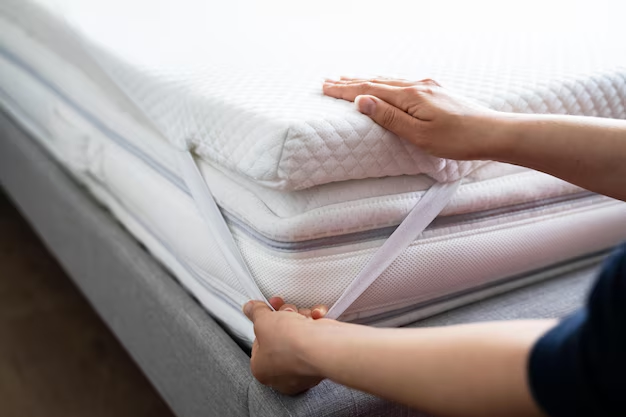
Is Foam Mattress Better Than Spring? Understanding the Differences Before You Decide
If you’re asking “Is foam mattress better than spring?”, you’re really asking which mattress type will feel and perform better for your body, sleep style, and comfort preferences. There is no one-size-fits-all winner, but understanding how foam and spring mattresses differ makes the choice much easier.
Below, you’ll find clear answers to the most common questions people have when comparing foam vs. spring mattresses.
What Is a Foam Mattress vs. a Spring Mattress?
Foam mattress:
Made entirely (or mostly) from layers of foam. This may include memory foam, polyfoam, or other specialty foams. These mattresses usually feel contouring and pressure-relieving, with no metal coils inside.
Spring mattress (innerspring):
Built around a core of metal coils, often topped with foam or fiber padding. These beds tend to feel bouncier, with more airflow through the coil system.
Why it matters:
Understanding the basic construction helps explain differences in support, motion, temperature, and durability—key factors when wondering, “Is foam mattress better than spring?”
Is Foam Mattress Better Than Spring for Comfort?
Comfort is highly personal, but there are some common patterns:
Foam mattresses
- Often feel “hugging” or “cradling” as they contour to your body.
- Many people find them good for pressure relief at the shoulders and hips.
- They tend to offer a more even, cushioned surface with less bounce.
Spring mattresses
- Usually feel more responsive and bouncy.
- The support can feel firmer and more lifted, especially in the center.
- Some sleepers like the traditional, buoyant feel of coils.
For people who want to sink in a bit and feel cushioned, foam often feels better. For those who want to sleep “on” the mattress with more bounce and less contouring, spring can feel better.
Which Is Better for Support and Spinal Alignment?
Both foam and spring mattresses can support the spine well when designed and chosen correctly.
Foam mattresses
- Use different foam densities and firmness levels to distribute weight evenly.
- Can offer zoned support in some models (firmer under the hips, softer under shoulders).
- Work well for many side and back sleepers who need more pressure relief.
Spring mattresses
- Rely on the coil system to provide pushback and structure.
- Can feel especially supportive for heavier bodies or those who like a firmer base.
- Often suit back and stomach sleepers who prefer less sink.
Whether a foam mattress is better than spring for support depends on your body weight, sleeping position, and preferred firmness, rather than the material alone.
How Do Foam and Spring Mattresses Compare for Motion and Noise?
Motion Isolation
If you share a bed, you might wonder which mattress type keeps you from feeling your partner move.
Foam mattresses
- Typically offer strong motion isolation.
- The foam layers absorb movement, helping reduce disturbances when someone turns or gets up.
Spring mattresses
- Traditional innerspring beds with interconnected coils can transfer more motion.
- Designs with individually wrapped coils tend to perform better, but usually not as isolating as dense foam.
Noise
- Foam mattresses are generally very quiet, with no metal parts to creak.
- Spring mattresses can sometimes produce squeaks or creaks over time as coils age.
For light sleepers or couples, this often makes foam feel “better” than spring in everyday use.
Is Foam Mattress Better Than Spring for Temperature and Breathability?
Temperature is a major concern when people ask, “Is foam mattress better than spring?”
Foam mattresses
- Traditional foam can retain more body heat, leading some sleepers to feel warmer.
- Some designs include air channels or cooling materials, but the feel still tends to be less airy than coils.
Spring mattresses
- Coils create natural airflow through the mattress.
- Many people experience them as cooler and more breathable, especially if they sleep hot.
If you tend to overheat easily, a spring mattress often feels more comfortable. If you prioritize contouring over airflow, foam may still be worth it.
Durability and Maintenance: Which Lasts Longer?
Durability depends on materials and construction quality, not just foam vs. spring. In general:
Foam mattresses
- Higher-density foams usually hold their shape longer and resist sagging better than low-density foams.
- Rotating the mattress periodically can help spread out wear.
Spring mattresses
- Coil systems can retain support for many years when well-designed.
- Over time, some models may develop body impressions or areas that feel less supportive.
Neither type is guaranteed to last longer than the other; quality and care matter more than the material alone.
Which Mattress Type Suits Different Sleepers Best?
Here’s a quick comparison of typical preferences:
| Sleeper Preference / Concern | Foam Mattress Tends to Suit… | Spring Mattress Tends to Suit… |
|---|---|---|
| Likes a hugging, contouring feel | ✔ Often a better match | May feel too bouncy or firm |
| Prefers bounce and a “lifted” feel | Might feel too cushy | ✔ Often a better match |
| Shares bed, wants less motion transfer | ✔ Usually performs better | May transfer more motion |
| Sleeps very hot | Can feel warmer | ✔ Often feels cooler and more breathable |
| Wants very firm, traditional support | Possible, depends on design | ✔ Common in many coil-based beds |
✔️ Quick Mattress Takeaways
Key points consumers should understand about “Is Foam Mattress Better Than Spring”
- There is no universal winner — the answer to “Is foam mattress better than spring?” depends on your comfort preferences, sleep position, and temperature needs.
- Foam mattresses typically offer better pressure relief, motion isolation, and a quiet, contouring feel.
- Spring mattresses usually provide more bounce, stronger airflow, and a classic, lifted feel under the body.
- For couples or light sleepers, foam often feels better due to reduced motion and noise.
- For hot sleepers or those who prefer firm, buoyant support, spring often feels better.
- Durability varies widely in both types; material quality and proper care matter more than foam vs. spring alone.
- The best way to decide is to match the mattress type to your body weight, sleep position, and preference for softness, firmness, and temperature.
With a clear understanding of how foam and spring mattresses differ, you can choose the option that feels “better” not in general, but better for you.