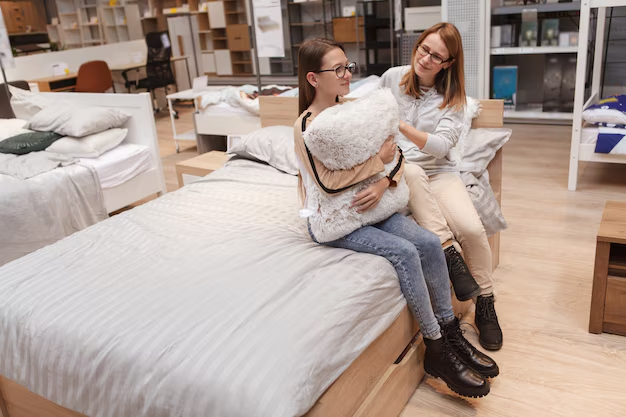
Is a Foam Mattress Better Than a Spring Mattress? Key Differences Explained
If you’re asking “Is a Foam Mattress Better Than a Spring Mattress?”, you’re really asking which type will feel better, support you better, and fit your sleep habits. There isn’t one universal “winner,” but there are clear differences that can help you decide.
Below, you’ll find a straightforward FAQ-style breakdown of how foam and spring mattresses compare in comfort, support, motion isolation, temperature, and durability.
What Is the Main Difference Between Foam and Spring Mattresses?
Foam mattresses are made from layers of foam (such as memory foam or other specialty foams), while spring mattresses use metal coils with comfort layers on top.
- Foam mattresses: Usually feel more body-contouring and “hugging.”
- Spring mattresses: Often feel more bouncy and “on top” of the bed.
When people ask “Is a Foam Mattress Better Than a Spring Mattress?”, they’re often trying to decide between this contouring vs. bounce difference.
How Do Foam and Spring Mattresses Feel to Sleep On?
Foam Mattresses: Contouring and Pressure Relief
Many sleepers choose foam because it tends to:
- Contour closely to the body’s curves
- Offer a more “hugged” or cradled sensation
- Help distribute body weight for gentler pressure on shoulders and hips
Foam can feel especially appealing if you like a mattress that molds around you and reduces sharp pressure points.
Spring Mattresses: Bounce and Responsiveness
Traditional spring mattresses usually:
- Provide more bounce and responsiveness
- Keep you feeling more elevated on the surface
- Make it easier to change positions without sinking in
This can be helpful if you prefer a firmer, more buoyant feel or don’t like the sensation of being “enveloped” by the mattress.
Which Is Better for Support and Spinal Alignment?
Support depends more on overall design and firmness level than on foam vs. springs alone. Both types can be supportive when well-made.
- Foam mattresses may offer more even weight distribution, especially in the comfort layers, which can help reduce pressure.
- Spring mattresses use coils that can provide targeted support and a sturdy base, and some designs use different coil zones to support heavier areas of the body.
For most sleepers, the key is to choose:
- The right firmness for your body weight and sleeping position
- A mattress that doesn’t let your midsection dip too much or keep your spine overly arched
So, “Is a Foam Mattress Better Than a Spring Mattress?” for support? It depends on the specific model and firmness, not just the material.
Which Type Is Better for Motion Isolation?
This is one area where foam often stands out.
Foam mattresses:
- Commonly absorb movement well
- Can help reduce how much you feel a partner getting in and out of bed
Spring mattresses:
- Traditional designs can transfer more motion across the surface
- Some newer designs with individually wrapped coils can improve motion isolation, but usually not to the same level as dense foam
If disturbed sleep from movement is a major concern, many people find foam more suitable.
What About Temperature: Do Foam Mattresses Sleep Hotter?
Temperature is a common concern when considering “Is a Foam Mattress Better Than a Spring Mattress?”.
Foam mattresses:
- Some foams, especially dense varieties, may retain more body heat
- Certain designs include features aimed at improving airflow, but the feel can still be slightly warmer for some sleepers
Spring mattresses:
- The coil structure creates natural air channels, which can help with airflow
- They may feel cooler or more breathable to people who tend to sleep warm
For heat-sensitive sleepers, a spring mattress or a more breathable type of foam may feel more comfortable.
How Do They Compare in Durability?
Durability varies widely by quality and construction, but there are general patterns:
Foam mattresses:
- Higher-density foams can remain supportive for several years
- Lower-quality foams may soften or sag faster, especially under heavier use
Spring mattresses:
- Coils can stay supportive for a long time, but over time they may lose tension
- Comfort layers above the coils can compress, leading to body impressions
Neither type is guaranteed to last longer in every case. Material quality, thickness, and how you use the mattress matter more than foam vs. springs alone.
Which Type Is Better for Different Sleep Positions?
Back sleepers
- Often do well on both types if the mattress offers medium to medium-firm support.
- Foam can provide good lower back cushioning; springs can give a stable, supportive feel.
Side sleepers
- Frequently appreciate foam for its pressure relief on shoulders and hips.
- Spring mattresses with enough cushioning can also work, but may feel a bit firmer on pressure points.
Stomach sleepers
- Typically need firmer support to avoid sagging at the midsection.
- Both foam and spring models are available in firmer options; what matters most is keeping the torso from sinking too deeply.
✔️ Quick Mattress Takeaways
Key points to understand about “Is a Foam Mattress Better Than a Spring Mattress?”
There is no universal “better” – the best choice depends on your body, sleep position, and preferences.
Foam mattresses often excel at:
- Body-contouring and pressure relief
- Motion isolation for couples
- A more “hugged” or cradled feel
Spring mattresses often excel at:
- Bounce and ease of movement
- Airflow and a cooler feel for some sleepers
- A more elevated, traditional mattress feel
For support and spinal alignment, both types can work well if:
- The mattress has the right firmness for your needs
- It doesn’t allow excessive sagging under heavier areas
For hot sleepers, spring designs and more breathable foams may feel more comfortable.
For light sleepers or couples, foam’s motion absorption can be a noticeable benefit.
Choosing between foam and spring is ultimately about matching the mattress’s feel, firmness, and performance to your personal preferences. Understanding these differences can help you move from “Is a Foam Mattress Better Than a Spring Mattress?” to “Which type clearly fits my needs best?”