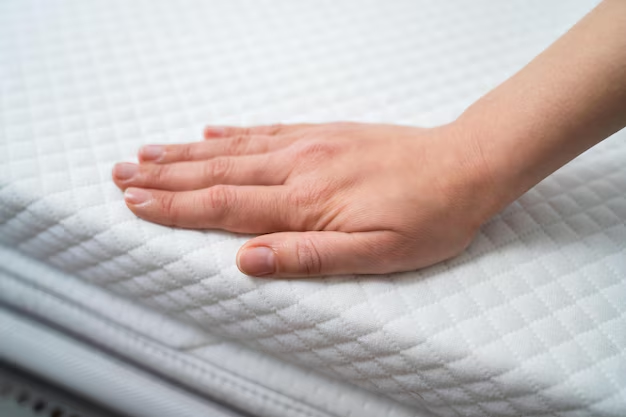
How To Make Memory Foam Mattress Firmer: Practical FAQs and Tips
If you’re wondering how to make memory foam mattress firmer, you’re not alone. Memory foam can feel softer over time, or it may simply be plusher than you prefer. This FAQ-style guide explains why your mattress may feel too soft and walks through safe, practical ways to firm it up without guesswork.
Why Does a Memory Foam Mattress Sometimes Feel Too Soft?
Memory foam is designed to respond to heat and pressure, which creates its signature contouring feel. A few common factors can make it feel softer than you’d like:
- Room temperature – Warmer rooms can make memory foam feel more plush.
- Mattress age – Foams tend to lose some responsiveness over years of use.
- Body weight and sleep position – Heavier bodies and side sleeping can create deeper sink.
- Foundation type – Flexible or sagging bases can make an otherwise firm mattress feel soft.
Understanding the cause helps you choose the most effective way to make your memory foam mattress firmer.
What Are the Easiest Ways To Make a Memory Foam Mattress Firmer?
1. Adjust the Room Temperature
Memory foam usually feels firmer in cooler environments.
- Try lowering your bedroom temperature a few degrees.
- Avoid heating pads or electric blankets directly on the mattress.
This is a simple, no-cost way to slightly change how your mattress feels, especially if it becomes very soft in warm weather.
2. Use a Firm Mattress Topper
It may sound backward, but a firm topper can make a soft mattress feel more supportive.
- Look for a topper described as “firm” or “extra-firm”.
- Denser foams or non-foam toppers (like latex or other resilient materials) usually feel firmer.
- Keep thickness moderate so you don’t add excess plushness.
A topper is a reversible solution: if you do not like the feel, you can remove it and try another approach.
3. Check and Upgrade Your Foundation
Your base plays a major role in how firm your mattress feels.
- Memory foam typically works best on a solid or closely slatted surface.
- Wide gaps between slats or a sagging base can create soft spots and “hammocking.”
Simple foundation checks:
- Press on different areas of the mattress. If it feels firmer in the center and softer toward the edges, the base may be flexing.
- Examine slats for bending or cracks.
- Ensure any adjustable base is fully locked and stable.
If needed, switching to a sturdy, flat platform or adding supportive slats can noticeably firm up the feel.
4. Place a Board or Plywood Under the Mattress
For some sleepers, a sheet of plywood or a bunkie board between the mattress and the frame adds firmness.
- The board should be smooth, flat, and sized to your mattress.
- Consider a thin barrier (like a breathable fabric) between the wood and mattress cover to reduce friction and potential wear.
This can mimic a firmer foundation, but make sure there is still some airflow under the mattress to help manage heat and moisture.
5. Rotate the Mattress
Many all-foam mattresses are one-sided, but they can often be rotated 180 degrees (head to foot).
- This helps distribute wear more evenly.
- Areas that have softened under hips and shoulders may feel firmer after rotation.
Avoid flipping your mattress unless the manufacturer specifies it is flippable—most memory foam designs are not meant to be used upside down.
6. Let the Mattress Fully Expand (For New Mattresses)
If your mattress is new and arrived compressed:
- Give it at least 24–72 hours to expand.
- During this time, the foam can firm up as it reaches its full shape.
If it still feels much softer than expected after a few nights, the other steps in this guide can help.
Will Walking on the Mattress Make It Firmer?
Some people try walking or kneeling on memory foam to “break it in.” This usually has the opposite effect, making it softer rather than firmer.
To keep your mattress feeling supportive for longer:
- Avoid concentrated, heavy pressure on small areas.
- Try gentle, even use over time instead of forceful “breaking in.”
When Is a Mattress Too Soft to Fix?
Even with the best tricks, some mattresses become permanently too soft as the foam wears out.
Signs it may be time to consider replacement rather than adjustment:
- Deep body impressions that do not bounce back after you get up.
- Noticeable sagging even with a good foundation.
- You still feel unsupported after trying a firm topper and base adjustments.
In these cases, temporary fixes may help a little, but they are unlikely to fully restore the original firmness.
✅ Quick Mattress Takeaways
Key points about how to make memory foam mattress firmer:
- Temperature matters: Cooler rooms can make memory foam feel slightly firmer.
- Topper choice is important: A firm, dense topper can add support to a soft mattress.
- Foundation is crucial: A solid, stable base (or board) helps prevent sagging and extra softness.
- Rotation helps wear: Turning the mattress head-to-foot can even out soft spots over time.
- Not all softness is fixable: Persistent sagging and deep impressions often signal foam wear, which can limit how much firmness you can regain.
Adjusting how to make memory foam mattress firmer often takes a mix of small changes—like cooling the room, upgrading the base, and adding a firm topper. By understanding how memory foam responds to temperature, support, and use, you can make more informed choices and create a sleep surface that feels comfortably firm and stable for your needs.