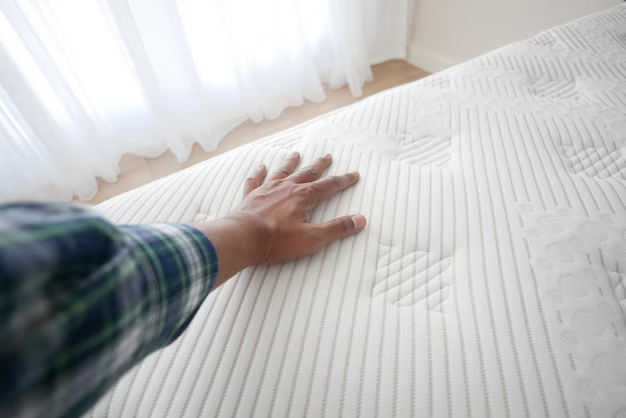
How To Flatten a Memory Foam Mattress: Practical FAQs and Safe Methods
If you’re searching for “How To Flatten a Memory Foam Mattress”, you’re likely dealing with a new mattress that arrived compressed and won’t fully expand, or an older mattress that has lumps, waves, or body impressions. This FAQ-style guide explains what you can realistically fix, what you can’t, and how to flatten a memory foam mattress safely without damaging it.
Why Do Memory Foam Mattresses Become Uneven or Not Flat?
Memory foam responds to heat, weight, and time. Common reasons your mattress isn’t flat include:
- New mattress just out of the box: It may need time to expand after being vacuum-packed.
- Cold room: Foam softens with warmth; in colder environments it can expand more slowly.
- Improper support: Slats that are too far apart or an uneven base can cause dips or waves.
- Long-term use: Over time, foam can develop body impressions where you usually sleep.
- Bent or stored incorrectly: Folding or storing a foam mattress on its side can cause warping.
Understanding the cause helps you decide how to flatten a memory foam mattress and whether the issue is temporary or permanent.
How To Flatten a Memory Foam Mattress After Unboxing
1. Give It Enough Time to Expand
Most memory foam mattresses need at least 24–72 hours to fully expand after being unboxed.
- Place it on a flat, supportive surface.
- Gently remove all packaging (including plastic wrap) so air can circulate.
- Let it rest in a well-ventilated room.
If it’s still not flat after a day, that doesn’t always mean it’s defective. Some foams expand slower than others, especially in cooler conditions.
2. Use Room Temperature to Help Expansion
Memory foam becomes more flexible in mild warmth.
- Keep the room at a comfortable, moderate temperature.
- Avoid extreme heat from heaters or direct sunlight, which may damage or weaken the foam.
A slightly warmer (but still safe and comfortable) room can help the mattress relax into a flatter shape more quickly.
3. Gently Encourage Stubborn Corners or Edges
If corners or sides stay curled:
- Use your hands to lightly smooth and pull the edges outward.
- Avoid bending or folding the mattress sharply.
- Do this carefully over time rather than forcing it all at once.
This can help stubborn areas catch up with the rest of the mattress.
How To Flatten a Memory Foam Mattress That Has Lumps or Impressions
For an older mattress that feels uneven, you may be dealing with temporary impressions or long-term wear.
1. Check the Bed Base or Foundation First
Before assuming the foam is the problem:
- Make sure the base is flat, stable, and not sagging.
- If using slats, they should be close enough together to support the foam.
- Remove or adjust anything that could be pressing unevenly under the mattress.
An uneven base can create the feeling of a lumpy mattress even if the foam is in good condition.
2. Rotate the Mattress (If the Design Allows)
Many memory foam mattresses can be rotated head-to-foot to distribute wear.
- Rotate the mattress every few months to reduce deepening impressions.
- Do not flip it upside down unless it’s specifically designed as double-sided; most aren’t.
Rotation can help even out pressure and make the surface feel flatter over time.
3. Let the Foam “Recover” Without Heavy Weight
If you notice shallow impressions:
- Remove bedding and let the mattress breathe and decompress during the day.
- Avoid sitting or lying in the same spot for long periods when possible.
Memory foam is slow-recovery; giving it time without weight may allow some minor flattening.
4. Use Gentle, Even Pressure (Not Rolling or Bending)
If the mattress has been stored folded or compressed:
- Lay it fully flat on a supportive surface.
- Apply light, even pressure with your hands to help it settle.
- Avoid rolling, tightly folding, or walking on it, which can stress the foam and create permanent damage.
What Not to Do When Trying to Flatten Memory Foam
When learning how to flatten a memory foam mattress, it’s just as important to know what to avoid:
- Do not use high heat (hair dryers, space heaters, hot water bottles).
- Do not fold or crease sharply to “force” flatness.
- Do not jump or walk heavily on the mattress to push out lumps.
- Do not leave it compressed for long periods in storage if you can avoid it.
These actions can break down the internal foam structure, leading to permanent sagging or tearing.
Can a Deep Sag or Old Mattress Be Flattened Back to Like-New?
In many cases, deep, long-standing sags or impressions cannot be fully reversed. Memory foam naturally softens and changes with years of use. While rotation, proper support, and giving the foam time to recover can improve comfort and reduce unevenness, they may not restore a very worn mattress to its original flatness.
If the mattress has:
- Very deep body impressions
- Noticeable soft spots compared to the rest of the surface
- Visible cracks or foam breakdown
then the unevenness is often a sign of age and material fatigue, not something that can be fully “flattened out.”
✅ Quick Mattress Takeaways
Key points consumers should understand about How To Flatten a Memory Foam Mattress
- New mattresses often need 24–72 hours to fully expand and flatten after unboxing.
- A moderately warm, ventilated room can help memory foam expand more easily.
- Always use a flat, supportive base; an uneven foundation can cause dips and waves.
- Rotate, don’t flip (unless specified) to help reduce and prevent body impressions.
- Minor lumps or curl at the corners may improve with gentle smoothing and time.
- Avoid high heat, sharp folding, and heavy impact, which can permanently damage foam.
- Deep, long-term sags are usually signs of wear and may not fully flatten again.
Understanding these basics of how to flatten a memory foam mattress can help you tell the difference between normal foam behavior, temporary unevenness, and signs that your mattress may simply be reaching the end of its usable life.