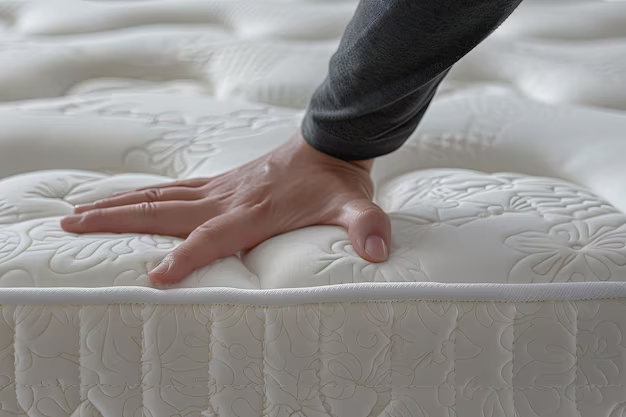
Do Memory Foam Mattresses Last Longer Than Spring? How Lifespan Really Compares
If you’re asking “Do Memory Foam Mattresses Last Longer Than Spring?”, you’re usually trying to figure out which type will stay comfortable and supportive for the longest time before needing to be replaced. This FAQ-style guide walks through how memory foam and spring mattresses age, what affects their durability, and how to tell which might be better for you over the long term.
Do Memory Foam Mattresses Last Longer Than Spring Overall?
In many everyday situations, a well-made memory foam mattress can stay comfortable longer than a basic spring mattress, especially when it comes to resisting sagging and body impressions.
However, the real answer depends on:
- The quality of the materials
- How heavily and how often it’s used
- How well it’s cared for
- The specific type of spring used
So while memory foam often holds its feel longer than lower-end spring designs, a high-quality spring mattress can sometimes match or outlast a low-quality foam one.
How Do Memory Foam and Spring Mattresses Wear Out Differently?
Memory Foam: Slow Softening Over Time
Memory foam is designed to contour to your body and slowly rebound. Over the years, it typically:
- Softens gradually, especially in areas where you sleep most
- May develop shallow body impressions, but often more evenly spread
- Tends to feel less bouncy and more “broken in,” rather than dramatically sagging
Higher-density foams often hold their shape longer than very soft, low-density foams.
Spring Mattresses: Sagging and Coil Fatigue
Spring mattresses use metal coils to provide support. With age, they often:
- Develop visible sags where the coils are most compressed
- Can start to feel uneven, with softer spots or noticeable dips
- May produce more motion transfer as springs wear and lose tension
The durability of a spring mattress is strongly influenced by the coil design, coil gauge, and overall construction.
What Factors Affect How Long Each Type Lasts?
1. Material Quality
For memory foam, durability tends to be better when:
- The foam density is higher in the support layers
- Multiple layers share the pressure rather than one thin comfort layer
For spring mattresses, longer life is more likely when:
- Coils are well-tempered and designed for durability
- There’s solid edge support and quality padding on top
Key idea: A premium spring mattress can outlast a low-end foam mattress, and vice versa. Quality matters more than type.
2. Sleeper Weight and Usage
Heavier body weights and frequent use (such as two adults every night) will wear down any mattress faster.
- Memory foam may soften more quickly under higher weights
- Springs may lose tension faster and show deeper sags under the same conditions
A guest-room mattress that’s rarely used, whether foam or spring, will naturally last longer.
3. Support Base and Setup
A mattress placed on:
- A solid, supportive foundation or platform
- A slatted base with appropriate spacing
is less likely to develop premature sagging or uneven wear, whether it is foam or spring.
Do Memory Foam Mattresses Need to Be Replaced Less Often?
When people ask “Do Memory Foam Mattresses Last Longer Than Spring?” they often want to know if they can wait longer before replacing a memory foam mattress.
In practice:
- Many sleepers find that memory foam maintains consistent comfort for several years before noticeable softening becomes an issue.
- Standard spring mattresses, especially basic models, may show visible dips or a “worn” feel earlier, even if they are still technically usable.
However, both types will eventually need replacing once they no longer support your body comfortably or feel noticeably uneven.
How Can You Tell If a Mattress Is Nearing the End of Its Life?
For memory foam, signs include:
- You feel like you’re sinking too deeply in familiar spots
- The foam takes a long time to recover or feels “tired”
- You notice uneven support or rolling toward the middle
For spring mattresses, watch for:
- Visible sagging you can see even with no one on the bed
- Springs that creak, feel loose, or poke through padding
- A lumpy or wavy surface that’s hard to get comfortable on
What Should You Look For If Longevity Is Your Priority?
If you care most about how long your mattress will last, consider:
- Construction quality rather than just the label “memory foam” or “spring”
- Thicker comfort layers that won’t compress as quickly
- A sturdy base or foundation to support the mattress properly
- Rotating the mattress regularly (if recommended by the manufacturer) to promote even wear
✅ Quick Mattress Takeaways
Key points about “Do Memory Foam Mattresses Last Longer Than Spring?”
- Memory foam often stays comfortable longer than basic spring designs, especially regarding sagging and body impressions.
- Material quality is crucial: a well-built spring mattress can outlast a low-quality memory foam bed.
- Heavier use and higher body weight shorten the usable life of both memory foam and spring mattresses.
- Memory foam tends to soften gradually, while springs often show visible dips and coil fatigue.
- The best way to get a long-lasting mattress is to focus on build quality, proper support, and regular care, not just the type.
With these points in mind, you can better judge whether a memory foam or spring mattress is more likely to give you the long-term comfort and support you’re looking for.