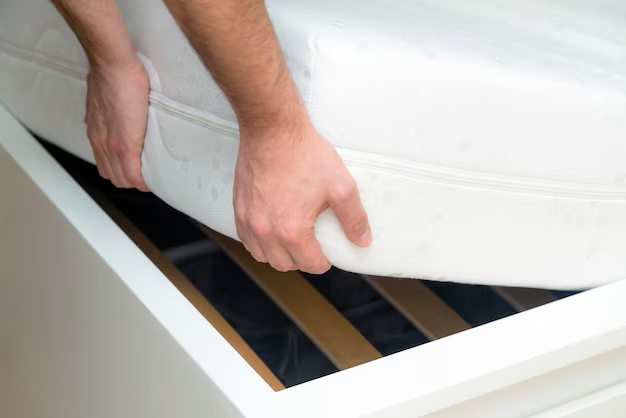
Can You Roll Up a Spring Mattress? What You Need to Know Before You Try
If you’re moving, storing, or trying to transport a bed, you might be wondering: Can you roll up a spring mattress? This is a common question, especially for people who have seen compressed “mattress-in-a-box” products and assume the same can be done at home.
This FAQ-style guide explains when, how, and if a spring mattress can be rolled, and what risks to be aware of.
Can You Roll Up a Spring Mattress at All?
In most cases, you should not roll up a traditional spring mattress at home.
Factory-rolled or boxed spring mattresses are compressed using specialized machines designed to apply even, controlled pressure. At home, it’s almost impossible to replicate this safely. Rolling a spring mattress yourself can:
- Bend or break the springs
- Damage the edge support
- Cause lumps, sagging, or permanent deformities
Some thinner, budget-friendly spring mattresses may tolerate a light fold for very short periods, but rolling is usually much more aggressive and risky.
Why Is Rolling a Spring Mattress a Problem?
How Spring Mattresses Are Built
Spring mattresses are constructed with:
- A metal coil system (innersprings or pocket springs)
- Multiple layers of foam, fiber, or padding
- Often a reinforced border or edge support
These components are designed to work best when the mattress is kept flat. Rolling puts stress on the structure in ways it wasn’t built to handle.
What Can Happen If You Roll It?
If you roll up a spring mattress, you may notice:
- Noisy springs: Creaking or popping as metal parts bend.
- Uneven surface: High spots and dips after unrolling.
- Reduced comfort: The mattress may feel less supportive or more lumpy.
- Shortened lifespan: Damage that shows up as early sagging.
For many sleepers, these changes are noticeable and difficult or impossible to reverse.
Are “Roll-Up” Spring Mattresses Different?
You may have seen spring mattresses that arrive vacuum-sealed and rolled from the factory. These are designed differently:
- The coils and materials are chosen to tolerate compression.
- The rolling process is precisely controlled.
- The mattress is usually compressed for a limited time during shipping and storage.
Even with these designs, manufacturers often do not recommend rolling them again once they’ve fully expanded. So while some spring mattresses are designed to be rolled once in a factory, that does not mean you can safely roll any spring mattress at home.
FAQs About Transporting and Storing Spring Mattresses
How should I move a spring mattress if I can’t roll it?
Instead of asking “Can you roll up a spring mattress?”, it can be more helpful to ask how to move it safely:
- Keep it flat in a truck or van when possible.
- If you must stand it on its side, do so only for a short time.
- Use straps to keep it from bending sharply during transport.
- Consider a mattress bag to protect it from dirt and moisture.
Can I fold a spring mattress in half?
Folding a spring mattress is usually not recommended, especially thicker or higher-end models. A light flex to get around a corner may be unavoidable, but sharp folds can damage coils and materials in a similar way to rolling.
If a manufacturer specifically states a mattress is foldable for transport, follow their time and handling guidelines carefully.
Is it safe to store a spring mattress on its side?
For short-term storage, standing a spring mattress on its side is common. For long-term storage, keeping it flat on a supportive surface tends to be safer for maintaining its shape. Avoid placing heavy items on top, as that can compress or distort the springs.
What Should I Consider Before Trying to Roll a Spring Mattress?
If you’re still tempted to try rolling a spring mattress, keep these points in mind:
- Warranty: Many mattress warranties exclude damage from improper handling, including rolling or folding.
- Mattress age: An older mattress may be more fragile; rolling can accelerate its decline.
- Coil type and thickness: Thicker, more robust coils are often less tolerant of bending.
- Padding layers: Plush or pillow-top layers can crease and form permanent ridges.
In most situations, alternative transport methods (using a larger vehicle, hiring help, or temporarily removing obstacles) are safer options than forcing a spring mattress to roll.
✅ Quick Mattress Takeaways
Key points consumers should understand about “Can You Roll Up a Spring Mattress”
- Most traditional spring mattresses should not be rolled up at home due to the risk of structural damage.
- Factory-rolled spring mattresses are engineered and compressed with specialized equipment, which is different from DIY rolling.
- Rolling or sharply folding a spring mattress can lead to bent coils, sagging, noise, and a shorter usable lifespan.
- When moving a spring mattress, it is generally safer to keep it flat, avoid tight rolls or folds, and minimize time on its side.
- Always check the manufacturer’s care and handling guidelines before attempting any kind of rolling, folding, or long-term storage.
Understanding the limitations of spring mattress construction helps you avoid damage and maintain comfort over time. When you see the question “Can you roll up a spring mattress?”, the safest general answer is: it’s usually better not to and to choose gentler ways to move or store it instead.