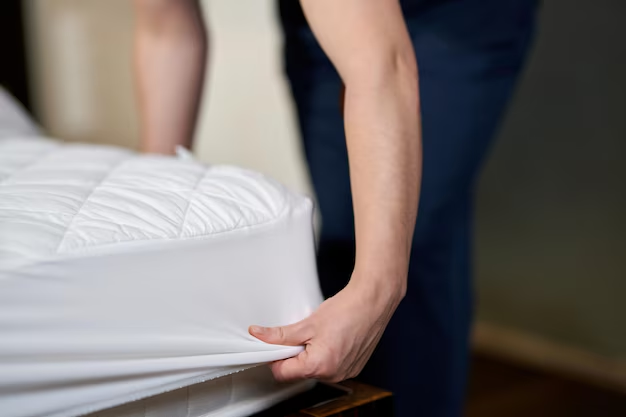
Can You Put a Memory Foam Mattress On Box Spring? What to Know Before You Do
If you’re wondering “Can you put a memory foam mattress on box spring?”, you’re not alone. Many people want to reuse an existing box spring with a new memory foam mattress to save money, adjust height, or keep their current bed frame. The answer is a bit more nuanced than a simple yes or no.
This FAQ-style guide explains when it can work, when it doesn’t, and what alternatives to consider.
What Is a Box Spring, and How Is It Different From a Foundation?
A traditional box spring is a fabric-covered wooden frame with metal springs or flexible supports inside. It was originally designed to:
- Absorb shock from older, thinner innerspring mattresses
- Add height to the bed
- Provide some bounce
By contrast, a modern foundation or platform base usually has:
- Solid or slatted wooden or metal support
- Little to no flex
- A flatter, more even surface
Memory foam mattresses generally do best on a solid, non-flexing surface.
So, Can You Put a Memory Foam Mattress On Box Spring?
You can physically put a memory foam mattress on a box spring, but it is often not recommended unless certain conditions are met.
Most memory foam mattress manufacturers prefer:
- A solid platform
- Or slats spaced closely enough to support the foam evenly
A traditional box spring that flexes or has widely spaced supports can cause:
- Sagging or dipping over time
- Uneven support across the surface
- Possible warranty issues if the manufacturer requires a specific type of base
If you want to use a box spring, it should be sturdy, flat, and non-sagging, and ideally paired with an additional layer (like a bunkie board) to create a more solid surface.
Why Does the Type of Support Matter for Memory Foam?
Memory foam is designed to contour to your body under pressure. For it to work properly, it needs consistent support underneath.
A base that bends or sags can:
- Put extra stress on certain parts of the mattress
- Make the mattress feel softer or uneven
- Potentially shorten its usable lifespan
On a solid foundation, memory foam usually maintains its shape and feels more stable and supportive.
What Are Better Alternatives to a Box Spring for Memory Foam?
If you’re unsure about using a box spring, these options typically work well with memory foam:
- Platform beds with a solid deck or closely spaced slats
- Slatted bases where slats are usually no more than a few inches apart
- Adjustable bases that are compatible with foam mattresses
- Bunkie boards (thin, rigid boards) placed on top of an existing box spring or frame to create a flat surface
These supports are generally designed with foam and hybrid mattresses in mind.
Can I Make My Existing Box Spring Work With a Memory Foam Mattress?
If you want to keep your current box spring, you may be able to modify your setup:
Check the condition
- Is the box spring sagging, creaking, or visibly uneven?
- If yes, it’s usually not a good base for memory foam.
Evaluate the support structure
- If it has springs or significant flex, support may be too bouncy.
- If it’s more like a rigid, wooden foundation, it might be acceptable.
Add a solid layer on top
- A bunkie board, piece of plywood, or solid panel can help create a flatter surface.
- Ensure any added board is smooth and dry to avoid damaging the mattress cover.
Confirm compatibility with the mattress guidelines
- Many manufacturers outline what types of bases are allowed.
- Using an unsupported base can sometimes affect warranty coverage.
✅ Quick Mattress Takeaways
Key points consumers should understand about “Can You Put a Memory Foam Mattress On Box Spring”
- You can place a memory foam mattress on a box spring, but it’s often not ideal without modifications.
- Memory foam generally performs best on a solid, non-flexing surface or closely spaced slats.
- A sagging or springy box spring may lead to dips, uneven feel, and potential wear.
- You can improve an existing box spring by adding a bunkie board or rigid panel on top.
- Always consider manufacturer recommendations, especially regarding acceptable bases and spacing.
- If starting from scratch, a platform, slatted foundation, or compatible adjustable base is usually more suitable than a traditional box spring.
Will Using a Box Spring Change How My Memory Foam Mattress Feels?
Yes, the base can affect how the mattress feels:
- On a solid platform, memory foam often feels more stable and supportive.
- On a flexible box spring, it may feel softer or bouncier, and pressure can be concentrated in certain areas.
If your mattress feels different from what you expected, the support system underneath is one of the first things to review.
How Do I Know If My Setup Is Working Well?
After placing your memory foam mattress (with or without a box spring), take note of:
- Overall flatness: Does the mattress lie evenly, without visible dips?
- Consistency: When you move around, does the support feel the same across the surface?
- Movement and noise: Excessive motion or squeaking can indicate a flexing or unstable base.
If you notice ongoing sagging or discomfort that seems related to the base, it may be worth changing from a box spring to a more solid foundation.
Understanding “Can you put a memory foam mattress on box spring” helps you avoid common setup mistakes and get more consistent performance from your mattress. With the right type of support—whether that’s a modified box spring, a platform bed, or a sturdy slatted base—you give your memory foam mattress a better chance to feel and function as intended.