How To Make a Custom Size Mattress: Step‑By‑Step FAQ Guide
If you’re wondering how to make a custom size mattress for an odd-sized bed frame, RV, camper, or built-in nook, you’re not alone. This FAQ walks through the basics of designing, building, and safely using a custom mattress so it actually fits and feels comfortable.
What does “custom size mattress” really mean?
A custom size mattress is any mattress that doesn’t match standard dimensions like twin, queen, or king. It might be:
- Shorter or longer than usual
- Narrower or wider than a standard size
- Cut with angled corners or a rounded end
- Shaped to fit an RV, boat, or built-in bed
Understanding this helps frame what “making” one involves: accurate measuring, choosing materials, and cutting or assembling to fit that unique space.
How do I measure correctly before making a custom mattress?
Accurate measuring is the foundation of how to make a custom size mattress.
Measure the interior space
- Measure the length, width, and if relevant, height of the bed frame, platform, or alcove.
- Take measurements in at least two places for both length and width in case walls or frames are not perfectly square.
Account for clearance
- Leave a small gap (often around 0.5–1 inch total) so the mattress can be placed without forcing it in.
- In tight spaces like RVs or built-ins, check for obstructions such as trim, handles, or sloping walls.
Note special shapes
- If one side is angled or curved, sketch the area and measure each segment.
- Mark where corners need cutting or rounding.
Tip: Write the final, target mattress dimensions clearly and keep them nearby when choosing materials.
What materials can I use to make a custom size mattress?
Most home projects use foam because it’s easier to cut and shape than other constructions.
Common options include:
- Polyurethane foam: Often used for basic mattresses and cushions.
- Memory foam: Known for its contouring feel and pressure relief.
- Latex foam: Often chosen for a more resilient, springy feel.
- Quilted or padded cover materials: Knit fabrics, woven ticking, or mattress encasements.
When planning how to make a custom size mattress, consider:
- Thickness: Many sleepers are comfortable in the 6–12 inch range, but needs vary by body type, sleeping position, and support preference.
- Layers: Some people prefer two or more layers (for example, a firmer base layer with a softer top layer) to adjust comfort.
How do I actually build the custom mattress?
1. Cut the foam to size
- Mark your measured length and width on the foam.
- Use a sharp knife, electric carving knife, or specialized foam saw to cut.
- Cut slowly and as straight as possible; small irregularities can usually be smoothed or covered.
For special shapes:
- Trace a template made from cardboard or heavy paper.
- Cut along the traced line for angles, curves, or notched corners.
2. Layer the foam (if using multiple layers)
- Place the firmest foam on the bottom for support.
- Add softer comfort layers on top if desired.
- Some people use spray adhesive designed for foam to help keep layers from shifting, while others rely on a snug cover.
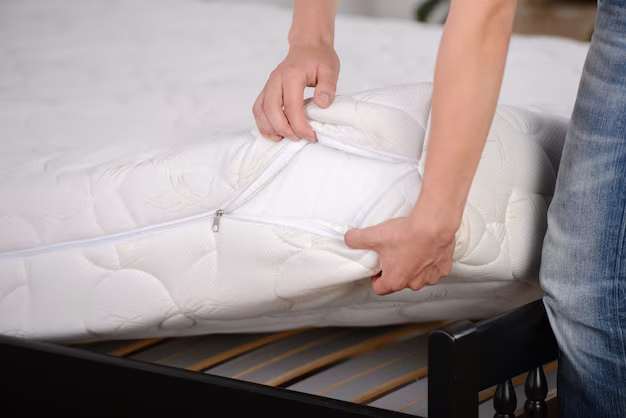
3. Add a cover or encasement
A cover protects the foam and helps the mattress feel finished.
Options include:
- A fitted fabric cover sewn to size
- A zippered encasement sized to your custom dimensions
- A DIY cover, made by measuring, cutting, and sewing upholstery or ticking fabric
When sewing your own:
- Add seam allowances to your measurements.
- Consider a zipper on one side so you can remove the cover later.
Is it safe and practical to make your own custom mattress?
Many people successfully create DIY mattresses, but it’s important to think about:
- Support: The base or frame should support the entire underside of the mattress, especially for foam.
- Ventilation: Solid platforms may need ventilation slots or gaps to reduce trapped moisture.
- Material safety: Some consumers look for foams labeled as low in certain emissions or tested against specific standards.
- Durability: Foam can soften over time, especially in thinner or heavily used areas.
If unsure, starting with a simpler project, like a custom-size daybed or guest mattress, can be a helpful trial run.
Can I adjust firmness after making a custom size mattress?
You often can, especially if you designed it with layers:
- Add or swap a top comfort layer (such as a softer or firmer foam topper cut to size).
- Change layer order (for example, putting a firmer layer closer to the surface).
- Use a thicker or thinner base to alter overall feel and support.
Planning for this possibility when you first think about how to make a custom size mattress can make later adjustments easier.
✔️ Quick Mattress Takeaways
Key points about how to make a custom size mattress
- Start with precise measurements of the interior bed space, checking in multiple spots and allowing slight clearance.
- Choose foam type and thickness based on comfort preference, support needs, and how the mattress will be used (daily vs. occasional).
- Cut carefully using a sharp tool, and use templates for angled or curved shapes.
- Layer thoughtfully: firmer support on the bottom, softer comfort on top when desired.
- Use a protective cover or encasement to keep the foam cleaner and give a finished look.
- Plan for ventilation and support underneath the mattress, especially in enclosed or built-in areas.
- Design with flexibility so you can adjust firmness later by swapping or adding layers.
Designing and building your own mattress can be a practical way to fit unusual spaces while tailoring feel and thickness to your preferences. By focusing on accurate measurements, appropriate materials, and thoughtful layering, you can approach how to make a custom size mattress with clarity and confidence.