What Is The Most Comfortable Mattress? How To Find Your Best Feel
If you’re searching “What Is The Most Comfortable Mattress”, you’re usually not looking for technical specs—you want to know what will actually feel good to sleep on. Comfort is personal, but there are clear patterns that can help you narrow down your best match.
Below, you’ll find straightforward answers to the most common questions about mattress comfort, so you can understand what “comfortable” really means for you.
What does “the most comfortable mattress” actually mean?
When people ask “What Is The Most Comfortable Mattress”, they’re usually talking about a bed that:
- Feels supportive (no sagging or sinking in the wrong places)
- Feels cushioned where the body presses into the surface
- Helps them stay in one position without tossing and turning
- Lets them wake up feeling reasonably rested and not sore
Because body type, sleep position, and preferences vary, there is no single mattress that is objectively the most comfortable for everyone. Instead, comfort comes from matching the right firmness level, materials, and support to your needs.
Which mattress type feels most comfortable for most people?
Different mattress types create different comfort sensations. Many sleepers tend to describe these patterns:
Memory foam:
- Contours closely around the body
- Often described as “hugging” or pressure-relieving
- Can feel especially comfortable for side sleepers who want cushioning at the shoulders and hips
Latex foam:
- More buoyant and responsive
- Often feels slightly firmer at the surface but still cushioned
- Commonly liked by those who prefer not to feel “stuck” in the bed
Innerspring (coil-based):
- Traditional, bouncy feel
- Comfort depends heavily on the top comfort layers above the coils
- Can feel very comfortable for those who enjoy a springy, lifted sensation
Hybrid (coils + foam or latex):
- Aims to combine supportive coils with plush comfort layers
- Often described as balanced: not too “sinking,” not too hard
No type is automatically “the most comfortable.” Many sleepers prefer memory foam or hybrid mattresses for their combination of pressure relief and support, but your experience may be different.
How important is firmness in finding the most comfortable mattress?
Firmness is one of the biggest factors behind comfort. A mattress that is too firm or too soft for your body and sleep position will often feel uncomfortable, no matter the quality.
General guidelines by sleep position
Side sleepers
Often find comfort in medium to medium-soft surfaces. This allows the shoulders and hips to sink in enough to reduce pressure.Back sleepers
Commonly prefer medium to medium-firm. This supports the natural curve of the spine without excessive sinking at the hips.Stomach sleepers
Often feel better on medium-firm to firm mattresses to keep the midsection from dipping too much.
Body weight matters too. Heavier individuals may find softer mattresses too compressible, while lighter individuals may feel that very firm mattresses never properly “give” under their body.
What should I look for if I wake up with discomfort?
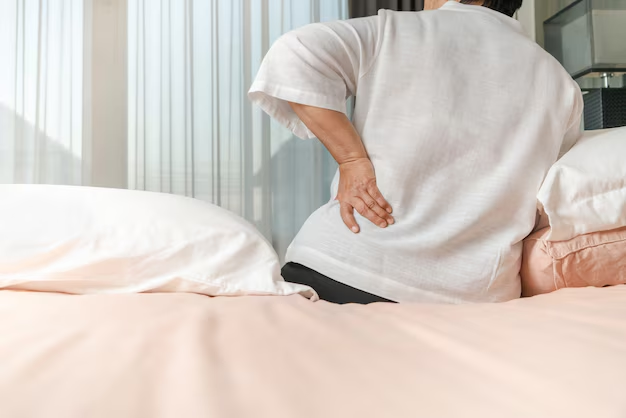
If your main reason for searching “What Is The Most Comfortable Mattress” is morning discomfort, you may want to focus on pressure relief and spinal alignment.
Look for:
- Even support: Your body should feel aligned, not bent or sagging
- Pressure relief at typical trouble spots (shoulders, hips, lower back)
- Stable surface: You shouldn’t feel like you’re rolling to the middle or fighting the bed
While a mattress alone cannot resolve health or pain conditions, a poorly matched mattress can contribute to discomfort. Choosing the right firmness and material mix often reduces many common pressure-related complaints.
Key comfort features to consider
Here are comfort-related features that many sleepers pay attention to:
- Firmness level appropriate for your position and body type
- Support system (coils or foam core) that feels stable
- Comfort layers (foam, latex, or fiber) thick enough for cushioning
- Motion isolation if you share the bed
- Temperature feel: some materials feel warmer or cooler to different sleepers
- Edge support if you sit or sleep near the edge
✅ Quick Mattress Takeaways
Key points consumers should understand about What Is The Most Comfortable Mattress
- There is no single universal answer to What Is The Most Comfortable Mattress—comfort is highly personal.
- Your sleep position (side, back, stomach) strongly influences the ideal firmness.
- Memory foam often feels most comfortable to those who like deep contouring; latex and hybrids appeal to those who prefer a more lifted, responsive feel.
- A comfortable mattress generally combines adequate support with enough cushioning to reduce pressure on shoulders, hips, and back.
- Body weight and shape affect how firm or soft a mattress actually feels to you.
- If you wake up stiff or sore, your mattress may be too soft, too firm, or unevenly supportive for your body.
- Focusing on fit rather than labels like “plush” or “luxury” leads to a more reliably comfortable choice.
How do I know if a mattress feels comfortable enough?
When you lie on a mattress, check for:
- Neutral alignment: Your spine should feel relatively straight in your usual sleep position.
- No sharp pressure points: You shouldn’t feel intense pressure at the shoulders, hips, or lower back.
- Ease of movement: You can change positions without too much effort.
- Overall relaxation: You feel like your muscles can let go rather than tense up.
If a mattress meets these points for you personally, it may be your own answer to What Is The Most Comfortable Mattress—even if it’s different from what friends, family, or reviews prefer.
Finding the most comfortable mattress is less about chasing a single “best” model and more about understanding your body, sleep style, and comfort priorities. With those in mind, you can evaluate any mattress through a clear, personal lens and choose the one that genuinely feels right for you.