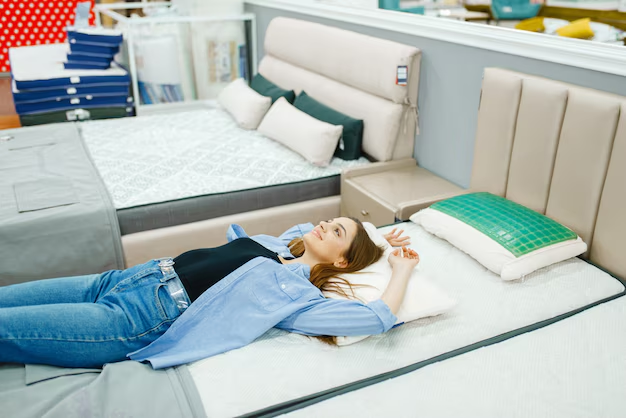
Is a Firm Mattress Good For Side Sleepers? How to Know What Really Works
If you sleep on your side and are wondering “Is a Firm Mattress Good For Side Sleepers?”, you’re not alone. Many people are told that a firm bed is “better for your back,” but side sleeping has its own comfort and pressure-relief needs. This FAQ-style guide walks through what firmness means, how it affects side sleepers, and how to choose the right feel for your body.
What Does “Firm” Actually Mean in Mattresses?
When people ask “Is a Firm Mattress Good For Side Sleepers?”, they often picture something very hard and unyielding. In mattress terms:
- Soft: Lots of cushioning and sink-in feel
- Medium / Medium-Soft: Balanced contouring and support
- Firm / Medium-Firm: Less give on the surface, more support underneath
Firmness is about how the surface feels, not whether the mattress is well-made or supportive. A softer mattress can still support your spine, and a firmer mattress can still feel comfortable—if it matches your body and sleep position.
Why Firmness Matters More for Side Sleepers
Side sleepers put most of their weight on shoulders and hips. This creates pressure points that a mattress has to cushion.
If the surface is too firm for your body:
- Your shoulder may not sink in enough, causing pressure and tingling.
- Your hip may stay too high, which can tilt your spine.
- You might wake up with stiffness or soreness along the side you slept on.
If the surface is too soft:
- Your midsection may sink deeper than your shoulders and hips.
- Your spine can sag into a curved “C” shape.
- You may feel “stuck” or notice lower back discomfort over time.
For many side sleepers, a medium or medium-soft feel provides the mix of contouring and support that keeps the spine more neutral while taking pressure off the joints.
So, Is a Firm Mattress Good For Side Sleepers?
The short answer: often not ideal, unless it’s only moderately firm and your body type suits it.
When a firm mattress may be too much
A very firm mattress can sometimes:
- Create sharp pressure at the shoulder and hip
- Lead to restlessness from constant position changes
- Make side sleeping feel like you’re lying “on” the bed, not “in” it
Many side sleepers describe this as numb arms, sore hips, or a jammed shoulder after a night on a very firm surface.
When a firmer feel might still work
Some side sleepers are comfortable on the firmer end of medium if:
- They have a heavier body weight, which compresses the surface more
- The mattress has firm support but a plush comfort layer on top
- They switch between side and back sleeping and enjoy a flatter feel
In these cases, the mattress might be labeled “firm,” but it still needs enough cushioning at the top to let the shoulders and hips sink in slightly.
How Do Body Type and Sleeping Style Change the Answer?
When asking “Is a Firm Mattress Good For Side Sleepers?”, it helps to consider your body and habits, not just the label on the bed.
Body weight and shape
- Lighter side sleepers often feel that firm mattresses are too unyielding, since they don’t sink in enough to activate the comfort layers.
- Average-weight side sleepers frequently do well on medium or medium-soft beds that gently contour around curves.
- Heavier side sleepers may prefer medium-firm to prevent sinking too deeply, as long as there’s pressure-relieving foam or padding on top.
Side-only vs. combination sleepers
- Strict side sleepers usually benefit from more cushioning, especially for the shoulder.
- Combination sleepers who move between back and side might choose a balanced medium feel so both positions feel acceptable.
What Should Side Sleepers Look For in a Mattress?
Focus less on the “firm” label and more on how the mattress behaves under your body:
- Pressure relief at shoulders and hips: You should feel cushioned, not jammed.
- Even spinal alignment: Your neck, mid-back, and lower back should feel supported in a mostly straight line when viewed from the side.
- Responsive comfort layers: A top layer that gently hugs curves without letting you sink too far.
- Stable support core: The bottom layers should keep you from dipping or hammocking.
✅ Quick Mattress Takeaways
Key points consumers should understand about “Is a Firm Mattress Good For Side Sleepers”
- Very firm mattresses are often too hard for most side sleepers, especially at the shoulders and hips.
- Medium to medium-soft feels are commonly more comfortable for dedicated side sleepers.
- Body weight matters: lighter sleepers generally need more softness; heavier sleepers may prefer slightly firmer with a cushioned top.
- Look for a mattress that combines pressure relief on top with steady support underneath.
- The best choice is not about the label “firm” but about how well your spine stays aligned and your joints feel in the morning.
How Can You Tell If Your Current Mattress Is Too Firm for Side Sleeping?
Common signs your bed may be too firm for side sleeping include:
- You wake up with sore or numb shoulders or arms
- Your hips or outer thighs feel bruised or tender
- You sleep better on a softer guest bed, topper, or couch
- You feel pressure the moment you lie on your side, before you even fall asleep
If you recognize several of these, your mattress may be firmer than your body prefers for side sleeping, even if it’s considered “healthy” or “supportive.”
Final Thoughts: Finding Your Side-Sleep Comfort Zone
The real answer to “Is a Firm Mattress Good For Side Sleepers?” is that it depends on how firm, which materials, and who is sleeping on it. Many side sleepers find that a very firm surface creates more pressure than comfort, while a balanced medium feel with good cushioning supports the spine and eases tension.
Pay attention to your shoulders, hips, and morning comfort. If those feel well-supported but not sore, you’re likely close to the right firmness—even if the tag doesn’t match what you expected.