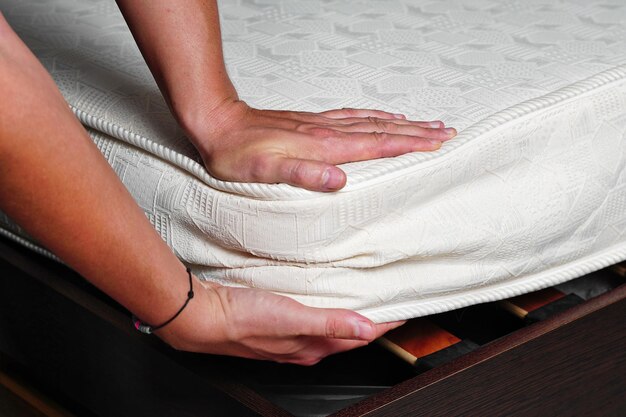
Can a Sinking Mattress Cause Back Pain? Understanding the Connection
If you’re wondering “Can a Sinking Mattress Cause Back Pain”, you’re not alone. Many people start to notice new or worsening back discomfort and suspect their mattress might be part of the problem. This FAQ-style guide explains how a sagging or sinking mattress can affect your body, what to watch for, and how to tell if it’s time to make a change.
What Does It Mean When a Mattress Is “Sinking”?
A sinking mattress is one that has lost its original support and now:
- Dips in the middle or where you usually sleep
- Feels uneven or “hammock-like”
- Lets your hips or shoulders drop too far compared to the rest of your body
Sometimes this looks like a visible valley or indent. Other times, you simply feel your body rolling into a dip or struggling to find a comfortable, level position.
Can a Sinking Mattress Cause Back Pain?
Yes, a sinking mattress can contribute to back pain for many sleepers.
A mattress that sags no longer supports your spine in a neutral position. Instead, certain areas of your body may sink more deeply, which can:
- Put extra pressure on your lower or upper back
- Encourage awkward twisting or bending during the night
- Make your muscles work harder to “hold you up” while you sleep
Over time, this lack of support can increase stiffness, soreness, or general discomfort on waking, especially around the lower back and hips. While not every case of back pain is caused by a mattress, a clearly sinking bed can be a significant factor for some people.
How Does Mattress Support Affect Spinal Alignment?
Your spine has a natural curve. A supportive mattress usually helps keep:
- Your head, shoulders, hips, and heels in a fairly straight line
- Your back muscles more relaxed through the night
- Pressure more evenly distributed across your body
A sagging mattress can interrupt this balance by:
- Allowing your hips to drop too low
- Letting your shoulders collapse inward
- Tilting your pelvis or midsection out of alignment
Over hours of sleep, this can lead to tension and strain in the back muscles and surrounding areas.
Signs Your Sinking Mattress Might Be Affecting Your Back
If you’re asking “Can a Sinking Mattress Cause Back Pain,” look for these common clues:
- You wake up stiff or sore, especially in the lower back.
- Your pain improves during the day after moving around.
- You sleep better and feel better on another bed, such as in a guest room.
- You can see or feel a dip when you lie in the center or on your usual side.
- You often roll toward the middle of the bed without meaning to.
These patterns don’t diagnose the cause of your pain, but they suggest that mattress condition might be playing a role.
Is a Slight Sag Always a Problem?
Not necessarily. Many mattresses develop minor body impressions over time where you usually lie. A small, shallow impression that doesn’t pull your body out of alignment may not cause issues for everyone.
Concerns usually arise when:
- The dip is deep or obviously uneven
- You feel like you’re sleeping “in a hole”
- You struggle to change positions because of the sag
In these cases, the sinking surface can make it harder for your body to rest in a comfortable, supported posture.
What Can You Do If Your Mattress Is Sinking?
If you suspect a sinking mattress is affecting your comfort:
1. Check the Surface and Foundation
Make sure:
- The bed frame or base is stable and not broken or bowed.
- Slats are close enough together, if your bed uses slats.
- The mattress is used on a compatible, supportive foundation.
Sometimes, improving the underlying support can reduce the effect of a mild sag.
2. Rotate or Reposition the Mattress
For some mattresses, rotating head-to-foot may:
- Spread out wear
- Reduce pressure on the deepest sagging area
This won’t fix severe sinking but can provide temporary relief for minor dips.
3. Consider a Mattress Topper (Short-Term Help)
A mattress topper can create a more even-feeling surface and improve comfort. This may:
- Soften sharp pressure points
- Smooth mild unevenness
However, a topper won’t restore lost internal support in a very worn mattress.
4. Evaluate Whether It’s Time to Replace
If:
- The sag is clearly visible
- You’ve tried simple fixes
- Your back feels worse after nights on this mattress
then it may be a sign the mattress has outlived its comfortable lifespan for you.
When Should You Talk to a Professional?
If your back pain is severe, persistent, or getting worse, consider speaking with a qualified health professional. A sinking mattress can be one factor among many, but only a professional can help you understand the broader picture of your back health.
✅ Quick Mattress Takeaways
Key points consumers should understand about “Can a Sinking Mattress Cause Back Pain”:
- Yes, a sinking mattress can contribute to back pain by disrupting spinal alignment and increasing strain on back muscles.
- Visible dips, a “hammock” feel, and rolling to the middle are common signs your mattress is no longer supportive.
- Morning stiffness that eases during the day can be a clue that your sleep surface is part of the problem.
- Mild impressions are normal; deeper, uneven sagging is more likely to affect comfort.
- Checking the foundation, rotating the mattress, or using a topper can help in the short term for minor sinking.
- If the mattress is significantly sagging and your back consistently feels worse after sleeping on it, it may be time to consider a replacement.
- For ongoing or serious back pain, it’s wise to discuss symptoms with a health professional, since a mattress is only one part of the overall picture.
Understanding how your mattress supports your body can make a noticeable difference in how you feel each morning. Paying attention to signs of sinking and how your back responds can help you make more informed choices about your sleep setup.