How To Clean Mould Off Mattress: Safe Steps and Practical Answers
If you’re searching for How To Clean Mould Off Mattress, you’re likely dealing with dark spots, a musty smell, or visible patches on your bed. This guide walks through what mould on a mattress is, when it’s safe to attempt cleaning, and the step‑by‑step methods people commonly use, all in one place.
What does mould on a mattress look and smell like?
Mould on a mattress often appears as:
- Black, green, grey, or brown spots or patches
- Speckled clusters that may spread over time
- A persistent musty or damp odour, even after airing the room
You may notice it more clearly on lighter fabrics or along seams, edges, and the underside of the mattress where air circulation is poor.
Is it always safe to clean mould off a mattress?
Not always. The extent and depth of the mould matter.
Consider these general guidelines:
- Surface-level mould: Light spots on the cover or just under the surface may be cleaned by many people using gentle methods.
- Deep or widespread mould: Large areas, multiple sides affected, or mould that returns quickly are often signs the mattress may be too affected to salvage.
- Visible dampness or structural damage: If the mattress feels wet or has a sagging, damaged core, cleaning the surface alone is unlikely to solve the problem.
If there are concerns about personal sensitivity, or the mould is extensive, some people choose to stop using the mattress and look for professional or alternative solutions instead of attempting DIY cleaning.
How To Clean Mould Off Mattress: Step-by-step approach
1. Prepare the area
Before starting any cleaning:
- Move the mattress to a well-ventilated area, ideally outside under cover or near open windows.
- Wear simple protective items like gloves and, if desired, a basic face covering to avoid breathing in dust and spores.
- Make sure the room is dry and airy so the mattress can fully dry afterwards.
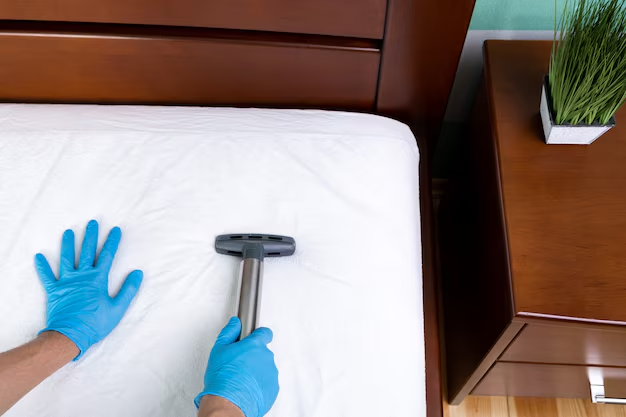
2. Vacuum the surface
Use a vacuum cleaner with an upholstery attachment to:
- Gently vacuum the entire surface, paying attention to seams, tufts, and edges.
- Empty or clean the vacuum afterwards to avoid spreading mould spores.
This helps remove loose spores, dust, and debris before you apply any cleaning solution.
3. Use a mild cleaning solution
People commonly use simple, mild cleaning mixes for surface mould:
- Option 1: A small amount of gentle liquid soap mixed with warm water
- Option 2: A light mixture of white vinegar and water
- Option 3: A diluted hydrogen peroxide solution used cautiously on colourfast fabrics
Always test your chosen solution on a small, hidden area first to check for discolouration or fabric damage.
How to apply the solution
- Lightly dampen a clean cloth with your solution (do not soak it).
- Blot the mouldy areas, gently working from the outside of the stain inward.
- Avoid saturating the mattress; too much moisture can make mould problems worse.
- Use a second, clean damp cloth with plain water to blot and remove residue.
- Finally, blot with a dry towel to remove as much moisture as possible.
4. Dry the mattress thoroughly
Complete drying is one of the most important parts of How To Clean Mould Off Mattress successfully.
- Place the mattress in direct airflow, using fans if available.
- If possible, position it where it can receive indirect sunlight, which many people find helpful against odours and surface mould.
- Allow many hours, or even a full day, before putting any bedding back on.
- Only use the mattress again once it feels completely dry to the touch.
What if the mould stain or smell doesn’t go away?
Sometimes, after cleaning:
- Stains may fade but not disappear completely.
- A faint musty smell can linger, especially in thick or multi-layered mattresses.
- Spots can reappear over time if moisture or humidity remains high.
If repeated gentle cleaning does not help, or the mould returns, it can be a sign that mould has penetrated deeper inside the mattress, beyond what surface cleaning can reach.
How can I prevent mould from coming back on my mattress?
Prevention usually comes down to moisture control and airflow:
- Keep the bedroom well-ventilated, with fresh air when possible.
- Avoid placing the mattress directly on the floor; use a slatted base or foundation that allows air to circulate underneath.
- Use a removable, washable mattress protector and wash it regularly.
- Allow the mattress to air out occasionally by stripping the bedding during the day.
- Wipe up any spills quickly and ensure the mattress dries fully before covering it again.
✔️ Quick Mattress Takeaways
Key points consumers should understand about How To Clean Mould Off Mattress
- Check the extent first: Light surface mould may be cleaned; large, deep, or recurring growth often indicates a more serious problem.
- Work in fresh air: Move the mattress to a ventilated space and vacuum gently to remove loose spores before wet cleaning.
- Use mild cleaners: Lightly blot with a gentle soap solution, diluted vinegar, or similar mild mixture—avoid soaking the mattress.
- Dry completely: Thorough, extended drying in airflow (and indirect sunlight if possible) is essential to discourage mould from returning.
- Watch for recurrence: Persistent stains, odours, or new spots over time suggest that cleaning alone may not be enough.
- Control moisture long term: Good ventilation, a suitable bed base, and quick response to spills can all help reduce future mould growth.
By understanding How To Clean Mould Off Mattress and why mould appears in the first place, you can make more informed choices about cleaning, ongoing care, and when a mattress may no longer be suitable for continued use.