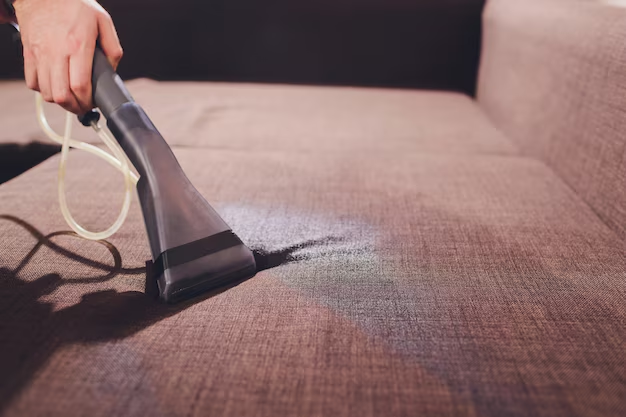
Can You Clean a Mattress With a Carpet Shampooer? What to Know Before You Try
If you’re wondering “Can you clean a mattress with a carpet shampooer?”, you’re not alone. Many people look at a carpet machine and think it might be a quick way to deep clean a mattress. It can sometimes be used, but there are important limits, risks, and alternatives to understand first.
Can You Clean a Mattress With a Carpet Shampooer at All?
In some cases, yes, you can clean a mattress with a carpet shampooer, but it’s rarely the first or best option.
A carpet shampooer is designed to push water and cleaning solution into thick carpeting and then extract it. Mattresses are different:
- They are thicker and denser than carpet.
- They dry more slowly.
- Many contain foams and layers that do not handle heavy moisture well.
Because of this, using a carpet shampooer on a mattress can lead to over-wetting, slow drying, odor, and even potential mold growth if not handled carefully.
When Might a Carpet Shampooer Be Reasonable for a Mattress?
Light, Controlled Cleaning Only
If you decide to try, a carpet shampooer should only be used for light, surface-level cleaning, not a full soak. It may be reasonable when:
- You have stains on the surface (like spilled drinks).
- The mattress is relatively new and in good shape.
- You can ensure excellent airflow and drying conditions afterward.
- You can use minimal water and solution and make repeated passes to extract as much moisture as possible.
In these cases, a carpet shampooer can help refresh the fabric and lift some stains, as long as the mattress does not become saturated.
When Should You Avoid Using a Carpet Shampooer on a Mattress?
There are several situations where the answer to “Can you clean a mattress with a carpet shampooer?” is effectively no:
- Memory foam or latex mattresses: These materials soak up water and dry very slowly. Too much moisture can damage the structure and trap odors.
- Very thick or pillow-top mattresses: It’s hard for a shampooer to remove enough water from deep layers.
- Old or fragile mattresses: Extra moisture can weaken already worn materials or stitching.
- Mattresses with strong odors or heavy contamination: These often require more specialized cleaning or replacement rather than shampooing.
If your mattress has significant staining, long-term odors, or biological contamination, surface shampooing usually doesn’t solve the underlying issue and may make it harder to dry properly.
How to Use a Carpet Shampooer on a Mattress More Safely
If you still choose to proceed, careful technique matters more than the machine itself.
Step-by-step guidelines
Vacuum thoroughly first
Remove dust, hair, and debris using a vacuum with an upholstery attachment.Check the mattress label
Look for any cleaning symbols or instructions. If the tag advises against wet cleaning, do not use a carpet shampooer.Use the upholstery attachment
If available, always use the upholstery tool, not the main carpet head. It’s smaller and applies less moisture.Dilute and use minimal solution
Use a mild cleaner suitable for fabrics, mixed as directed, and apply the smallest effective amount.Work in small sections
Lightly spray and immediately extract. Do extra dry passes (no added water) to pull up as much moisture as possible.Focus on spot cleaning
Rather than shampooing the entire surface, treat specific stained areas only. This limits moisture and speeds drying.Dry thoroughly
- Keep the mattress in a well-ventilated room.
- Use fans and, if possible, open windows.
- Do not put bedding back on until the mattress is completely dry to the touch on all sides.
Better Alternatives to a Carpet Shampooer for Mattress Cleaning
In many cases, alternatives are simpler and safer than using a carpet shampooer on a mattress:
- Vacuuming regularly to remove dust and debris.
- Spot cleaning stains with a lightly damp cloth and a small amount of gentle detergent.
- Baking soda sprinkled on the surface and vacuumed later to help with mild odors.
- Using a mattress protector to prevent spills from reaching the mattress in the first place.
For severe staining or odor, some people turn to professional upholstery or mattress cleaning services, which typically use methods and equipment designed for thick, layered fabrics rather than carpets.
Common Follow-Up Questions
Will a carpet shampooer ruin my mattress?
It can, especially if it over-wets the materials or if the mattress doesn’t dry quickly and completely. Foam layers are particularly vulnerable to water retention. Damage might show up as lingering smells, sagging spots, or a musty feel.
Can I clean both sides of the mattress with a shampooer?
If you wet-clean one side, you can technically clean the other, but it doubles the drying challenge. Most people only clean the sleeping surface and edges and then focus heavily on drying.
How long does it take a shampooed mattress to dry?
Drying time varies, but it’s often much longer than carpet. Even with good airflow and fans, it may take many hours or longer. A mattress that still feels cool or damp should be allowed more time before use.
✔️ Quick Mattress Takeaways
Key points about “Can You Clean a Mattress With a Carpet Shampooer?”
- Yes, but with caution: A carpet shampooer can sometimes be used for light, surface cleaning only.
- Avoid for foam-heavy mattresses: Memory foam and other thick foams do not handle heavy moisture well.
- Biggest risk is moisture: Over-wetting can lead to slow drying, musty odors, and potential damage.
- Use minimal water: Spot clean with the upholstery tool, mild solution, and extra dry passes.
- Drying is critical: Ensure strong airflow and complete dryness before putting bedding back on.
- Alternatives are often better: Regular vacuuming, gentle spot cleaning, baking soda, and protectors are usually safer long-term strategies.
Understanding these points helps you decide whether using a carpet shampooer on your mattress is a practical option—or whether gentler cleaning methods are a better fit for your situation.