Will a Mattress Protector Stop Bed Bugs? What It Can (and Can’t) Do
If you’re wondering “Will a mattress protector stop bed bugs?”, you’re likely worried about protecting a new mattress or dealing with an infestation. This guide breaks down what mattress protectors can realistically do, what they can’t, and how they fit into a broader bed bug prevention strategy.
What Is a Mattress Protector, Exactly?
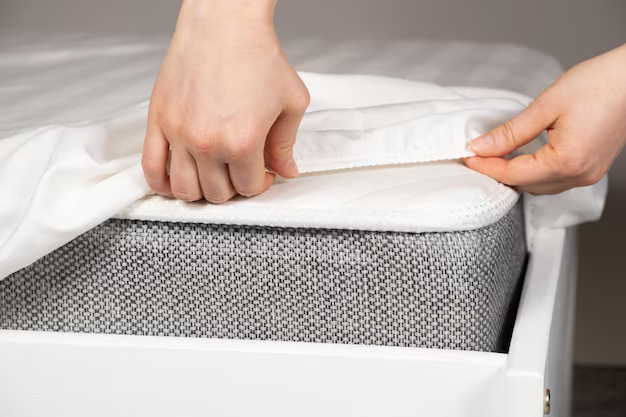
A mattress protector is a removable cover that fits over your mattress to shield it from spills, sweat, dust, and general wear. It usually comes in two main styles:
- Fitted protector – slips over the mattress like a fitted sheet
- Encasement protector – fully zips around the mattress on all sides
Most people buy mattress protectors for stain and moisture protection, but many also hope they will help with bed bugs.
So…Will a Mattress Protector Stop Bed Bugs?
The short answer: a standard mattress protector alone will not completely stop bed bugs, but a fully zippered encasement can help limit where they live and make them easier to control.
Here’s the key difference:
Regular (fitted) mattress protectors
These cover only the top and sides, leaving gaps where bed bugs can still enter or exit. They may reduce exposure to allergens and spills, but they do not reliably block or trap bed bugs.Encasement-style mattress protectors
These surround the entire mattress and close with a zipper, creating a more complete barrier. When designed for this purpose, they can:- Help trap bed bugs already inside a mattress
- Limit new bed bugs from burrowing into the mattress itself
However, even with an encasement, bed bugs can still live on:
- Bed frames
- Headboards
- Box springs
- Nearby furniture
- Cracks and crevices in walls and floors
So the answer to “Will a mattress protector stop bed bugs?” is:
It can protect the mattress surface and help with management, but it will not stop bed bugs from being in the room or biting you if they are present elsewhere.
How Do Bed Bug–Resistant Encasements Work?
Some encasement-style protectors are designed with bed bugs in mind. Common features include:
- Tight-weave fabric: Small pore size that makes it difficult for bugs to move through the material
- Full encasement design: Covers all six sides of the mattress
- Secure zipper: Often with small teeth and a zipper “stop” to reduce gaps
These features can seal bed bugs inside the mattress so they can no longer hide in it, and prevent new bugs from nesting in the mattress itself. This helps protect your mattress as an investment and simplifies inspection, since bugs can’t disappear into the interior.
Still, this does not eliminate bed bugs from a room. It is a protective step, not a complete solution.
Common Questions About Mattress Protectors and Bed Bugs
Can a mattress protector prevent bed bugs from biting me?
Not entirely. Even with an encasement, bed bugs can:
- Hide in other parts of the bed
- Climb up bed frames, walls, or bedding
- Bite exposed skin while you sleep
A protector may reduce hiding spots in the mattress, but it does not act like armor for your body.
Will an encasement kill existing bed bugs?
It may eventually trap them inside the mattress, where they can no longer reach you or move easily. Over time, this can reduce the number of active bed bugs in the mattress itself. However:
- Bugs can survive inside for extended periods
- They may still be present elsewhere in the room
Is a mattress protector enough to get rid of bed bugs?
No. A mattress protector is a supportive tool, not a full treatment. Effective control usually involves:
- Thorough cleaning and vacuuming
- Careful inspection of nearby furniture and seams
- Additional professional or specialized methods, if needed
What Should I Look For in a Mattress Protector If I’m Worried About Bed Bugs?
If bed bugs are a concern, consider these features:
- Full encasement: A protector that zips fully around the mattress is more useful than a fitted style.
- Fine zipper: Look for small teeth and a tight closure to reduce gaps.
- Durable fabric: Tear-resistant material helps maintain the barrier over time.
- Easy inspection: Light-colored fabric makes it easier to spot signs of bed bugs on the surface.
📝 Tip: Even the best encasement works best as part of an overall prevention or treatment plan, not as your only line of defense.
Can I Use a Mattress Protector to Protect a New Mattress From Bed Bugs?
A mattress protector—especially an encasement style—can:
- Help keep a new mattress free of stains and moisture
- Make it harder for bed bugs to hide inside the mattress
- Simplify inspections by giving you a smooth, light surface to check
However, it cannot guarantee your mattress will never encounter bed bugs, especially if they are introduced through luggage, used furniture, or neighboring units in a building.
✔️ Quick Mattress Takeaways
Key points consumers should understand about “Will a Mattress Protector Stop Bed Bugs”
- Standard fitted protectors: Good for spills and dust, but not reliable barriers against bed bugs.
- Encasement protectors: Fully zip around the mattress and can trap bugs inside and keep new ones out of the mattress interior.
- Not a full solution: Even with an encasement, bed bugs can still live and bite from other areas of the bed or room.
- Best use: Mattress protectors are most helpful for protecting the mattress itself and simplifying inspection, not for completely stopping bed bugs.
- Selection tip: For bed bug concerns, look for full encasement, sturdy fabric, and a secure zipper design.
Understanding “Will a mattress protector stop bed bugs” helps set realistic expectations. A protector—especially a fully encased one—can be a useful layer of defense for your mattress, but it works best alongside other careful prevention and control steps.