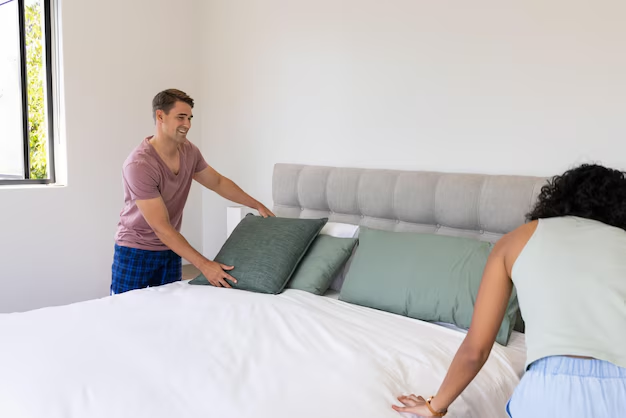
Which Is The Best Mattress To Buy? How To Choose What’s Right For You
If you’re asking “Which Is The Best Mattress To Buy”, you’re really asking a bigger question: Which mattress will actually help me sleep comfortably, night after night, for years?
There is no single “best” mattress for everyone, but there is a best mattress for your body, budget, and sleep style.
Below, you’ll find clear answers to the most common questions people have when deciding which mattress to buy.
Is There Really One “Best” Mattress To Buy?
In short, no. When people search for “Which Is The Best Mattress To Buy”, they often hope for one simple winner. In reality, the “best” mattress depends on:
- Your body weight and shape
- Whether you sleep on your back, side, stomach, or a mix
- How firm or soft you like your bed
- Whether you sleep hot or cold
- Whether you share the bed with a partner or pet
Instead of looking for a universal “best,” it’s more useful to look for the mattress that best matches your needs and preferences.
What Types of Mattresses Should I Consider?
Memory Foam
Memory foam mattresses are known for their contouring feel. Many sleepers like how the foam hugs the body and helps reduce pressure on shoulders and hips.
They may be a good choice if you:
- Prefer a “hugged” or cradled feel
- Want strong motion isolation (useful if your partner moves a lot)
They may feel too soft or warm for some people, especially those who prefer a more “on top of the bed” feel.
Innerspring
Innerspring mattresses use coils for support and often have a thinner comfort layer on top. They generally feel bouncier and more responsive.
They may be a good fit if you:
- Like a traditional, springy feel
- Prefer easier movement on the surface
Some may find thinner comfort layers less cushioning for pressure points.
Hybrid
Hybrid mattresses combine coils with thicker foam or other comfort layers on top. They aim to blend support, bounce, and contouring.
They may work well if you:
- Want a mix of firmness and pressure relief
- Like a balance of bounce and cushioning
Latex
Latex mattresses (natural or synthetic) tend to feel springy yet conforming, with a more “lifted” sensation than memory foam.
They’re often chosen by people who:
- Like a responsive, buoyant feel
- Want a mattress that doesn’t feel too slow or sinking
How Firm Should the “Best” Mattress Be?
When people ask “Which Is The Best Mattress To Buy”, firmness is one of the biggest hidden factors.
A general guideline:
- Side sleepers often prefer medium to medium-soft to cushion shoulders and hips.
- Back sleepers often prefer medium to medium-firm for balanced support.
- Stomach sleepers often prefer medium-firm to firm to help keep the midsection from sinking too far.
Body weight also plays a role:
- Heavier individuals may feel more supported on slightly firmer options.
- Lighter individuals may experience mattresses as firmer than advertised and might prefer softer comfort layers.
What Else Should I Look For Before Buying?
When deciding which is the best mattress to buy for you, consider these key features:
- Support: A good mattress should keep your spine in a neutral, comfortable alignment for your preferred sleep position.
- Pressure relief: Look for enough cushioning so that shoulders, hips, and lower back don’t feel strained.
- Temperature feel: Some materials feel warmer or cooler. If you often feel hot at night, you may want more breathable construction.
- Motion isolation: Important if you share a bed and are easily disturbed by movement.
- Edge feel: Some people like stronger edges to sit on or to feel stable sleeping near the side.
- Durability expectations: Denser foams and well-built coil systems are generally associated with longer-lasting support.
How Do I Decide My Budget Without Overpaying?
Price doesn’t always equal comfort. When figuring out which is the best mattress to buy, it can help to think in ranges:
- Very low-cost options may be thinner and feel comfortable for a shorter period.
- Mid-range options often provide a good balance of materials, comfort, and durability expectations.
- Higher-priced models may add extra comfort layers, special materials, or design features that some sleepers value.
Focus on value, not just price: how well the mattress matches your needs and how long you realistically expect it to feel supportive and comfortable.
✔️ Quick Mattress Takeaways
Key points consumers should understand about “Which Is The Best Mattress To Buy”
- There is no single best mattress for everyone; the best choice is the one that fits your body, position, and preferences.
- Memory foam offers strong contouring and motion isolation; innerspring feels bouncier and more traditional; hybrid blends the two; latex feels buoyant and responsive.
- Match firmness to how you sleep: softer for many side sleepers, medium for many back sleepers, firmer for many stomach sleepers.
- Look for support, pressure relief, temperature comfort, motion isolation, edge feel, and durability rather than focusing on one feature alone.
- A higher price does not automatically mean a better night’s sleep; aim for a balanced combination of comfort, quality, and budget.
- The best way to answer “Which Is The Best Mattress To Buy” for yourself is to clearly identify what you like (and dislike) in your current mattress, then use that as a guide when comparing types and firmness levels.
By understanding how type, firmness, and features interact, you can move beyond the idea of a single “perfect” mattress and instead identify which is the best mattress to buy for your unique sleep needs with much more confidence.