What To Look For In a Mattress Topper: A Practical FAQ Guide
If you’re wondering what to look for in a mattress topper, you’re likely trying to make a too-firm, too-soft, or aging mattress more comfortable without replacing it. This guide walks through the key decisions step by step so you can choose a topper that actually fits your body, sleep style, and budget.
What is a mattress topper and why does it matter?
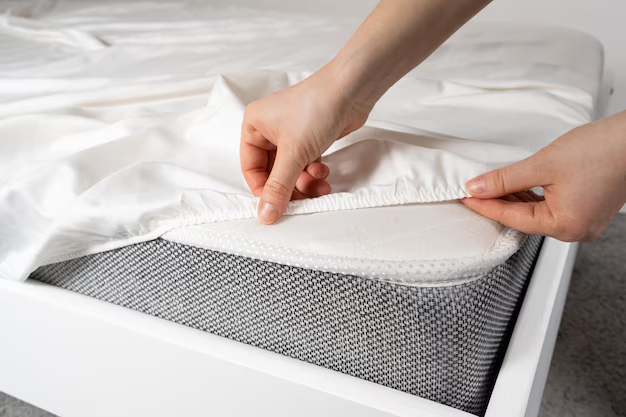
A mattress topper is a separate layer, usually 1–4 inches thick, that lies on top of your mattress under the fitted sheet. It’s designed to change the feel of your bed by adding softness, cushioning, or support.
Understanding what to look for in a mattress topper matters because:
- The same topper won’t work for every sleeper.
- The wrong thickness or material can trap heat, sag, or feel unsupportive.
- A topper can slightly improve comfort, but it won’t fully fix a severely worn-out mattress.
How thick should a mattress topper be?
Thickness is one of the first things to decide.
- 1–2 inches: Subtle change, good if your mattress is close to how you like it.
- 2–3 inches: Noticeable change in comfort for most people.
- 3–4 inches: Deeper cushioning; often chosen for very firm mattresses.
What to look for:
- If your mattress is slightly too firm, a 2-inch topper often adds enough pressure relief.
- If your mattress feels very hard, consider 3 inches or more for a softer, more cushioned feel.
- If your mattress is sagging or lumpy, a topper may help short term, but it usually can’t correct deep dips.
Which mattress topper materials should I consider?
Different materials feel and perform differently. When deciding what to look for in a mattress topper, focus on how you like your bed to feel and how warm you tend to sleep.
Common topper materials
Memory foam
- Contours closely around the body.
- Many sleepers like it for pressure relief and a “hugging” feel.
- Some foams can feel warmer, though designs vary.
Polyfoam (regular foam)
- Often lighter and a bit bouncier than memory foam.
- Can be more budget-friendly.
- May feel less contouring and slightly less durable at lower densities.
Latex foam
- Generally more responsive and springy.
- Many people find it cooler and easier to move around on.
- Often feels more “on” the bed than “in” it.
Down, feather, or fiber-filled toppers
- Add a plush, pillowy surface.
- Can soften a firm mattress but usually don’t add much support.
- Often need regular fluffing to maintain loft.
How firm or soft should my mattress topper be?
When thinking about what to look for in a mattress topper, firmness is just as important as thickness.
- Side sleepers often prefer a softer surface to reduce pressure around shoulders and hips.
- Back sleepers usually do well with a medium feel that allows some contouring without sagging.
- Stomach sleepers often need a firmer surface to help keep the midsection from sinking too much.
In general, if:
- Your mattress is too firm → look for a topper labeled soft or medium.
- Your mattress is too soft → a firmer foam or latex topper may add some surface stability.
What about heat, movement, and allergies?
Will the topper sleep hot?
Some materials and constructions hold more warmth than others.
- Thick, dense foam can feel warmer for some people.
- More open, airy materials and ventilated designs can help air move more freely.
- Breathable covers and natural-fiber fabrics may improve surface comfort.
How does a topper affect motion transfer?
- Memory foam and some polyfoams generally absorb movement well, which many couples appreciate.
- Latex and fiber-filled toppers tend to feel bouncier and may transfer a bit more motion.
Are there allergy considerations?
If you have sensitivities:
- Look for materials described as hypoallergenic or resistant to common household allergens.
- A removable, washable cover can make it easier to keep the sleep surface clean.
How do I choose the right size and fit?
To get the benefits you want, your topper should:
- Match your mattress size (Twin, Full, Queen, King, etc.).
- Lie flat and even without overhang.
- Ideally include corner straps, a fitted-skirt style, or a grippy underside to help keep it in place, if movement is a concern.
If you use deep pocket sheets, check that they can stretch over both the mattress and topper together.
What else should I look for in a mattress topper?
When comparing options, these details can make everyday use easier:
- Cover: Soft, breathable fabrics can improve comfort. Removable, washable covers simplify cleaning.
- Density and durability:
- Higher-density foam may feel more substantial and can keep its shape longer.
- Very low-density foams may compress more quickly.
- Care instructions:
- Some toppers can be spot-cleaned only.
- Others allow the cover to be machine washed but not the inner foam.
✔️ Quick Mattress Takeaways
Key points consumers should understand about What To Look For In a Mattress Topper
- Know your goal first: Are you trying to soften a firm bed, add support, or refresh an older mattress?
- Match thickness to need: Around 2 inches for mild changes, 3–4 inches for a much softer feel.
- Choose material by feel and temperature:
- Memory foam for close contouring
- Latex for bounce and airflow
- Fiber/down for plushness
- Align firmness with your sleep position: Softer for side sleepers, medium for back sleepers, firmer for stomach sleepers.
- Check size and attachment: Get the right mattress size and consider straps or fitted-style toppers to reduce shifting.
- Consider maintenance: A removable, washable cover and simple care instructions make upkeep easier.
- Remember limitations: A topper can improve comfort, but it usually cannot fully fix a heavily sagging or damaged mattress.
When you understand what to look for in a mattress topper—thickness, material, firmness, temperature behavior, and practical details like size and care—you can narrow down your choices to options that truly match your comfort preferences and sleep habits.