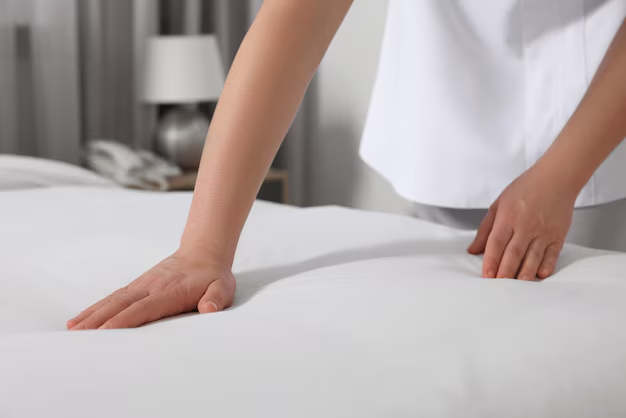
What Is The Best Mattress For Back Pain? How To Choose With Confidence
If you’re searching for “What Is The Best Mattress For Back Pain”, you’re usually trying to find one thing: a mattress that feels comfortable and supports your back so you’re not waking up sore or stiff. While there’s no single perfect mattress for everyone, there are clear features that many people with back discomfort tend to find helpful.
Below, you’ll find straightforward answers to the most common questions about choosing a mattress when back pain is a concern.
Does One “Best” Mattress For Back Pain Really Exist?
In short, no single mattress type is best for every back. People differ in body weight, shape, sleep position, and what feels comfortable.
However, many sleepers with back issues look for:
- Balanced firmness (not too soft, not extremely hard)
- Even support, so the spine isn’t sagging or overarched
- Good pressure relief at shoulders, hips, and lower back
Instead of one perfect model, think in terms of mattress qualities that help keep your spine aligned while still feeling cushioned.
What Mattress Firmness Is Usually Best For Back Pain?
Many people wondering “What Is The Best Mattress For Back Pain” are really asking about firmness.
As a general guide:
- Too soft:
Your hips and torso may sink in too deeply, which can make your lower back feel strained. - Too firm:
Your body may not sink in enough at pressure points, leading to tension in the back and joints. - Medium to medium-firm:
Often preferred by many back and combination sleepers because it offers a mix of support and contouring.
Your body weight and sleep position influence this:
- Side sleepers: Often like medium with more pressure relief.
- Back sleepers: Commonly prefer medium-firm for steady lumbar support.
- Stomach sleepers: Often lean toward firmer to avoid the midsection dipping too low.
Which Mattress Types Are Commonly Considered For Back Pain?
Here’s a simple comparison of common mattress types and how they tend to feel for back support:
| Mattress Type | Typical Feel & Back Support Notes |
|---|---|
| Memory foam | Contours closely, can relieve pressure; support depends on density |
| Latex | Buoyant, responsive, often supportive with gentle contouring |
| Innerspring | Bouncy, supportive; comfort depends on top padding |
| Hybrid | Coil support + foam or latex comfort; often aims for “best of both” |
Many people concerned about back pain look for hybrid or supportive foam/latex designs because they often combine sturdy support with pressure-relieving comfort layers.
How Do I Know If a Mattress Supports My Back Properly?
A mattress that supports your back well usually helps your spine stay in a neutral, natural curve in your usual sleep position.
You can check this by noticing:
- Alignment:
When you lie on your side, your spine should look relatively straight from neck to tailbone. On your back, it should follow its gentle S-curve without exaggerated arching. - Even contact:
Your body should feel evenly supported, not like your hips or shoulders are sinking much deeper than the rest. - Morning feel:
You should ideally wake up without new soreness or stiffness that consistently appears after sleeping on that mattress.
If you feel like you’re sleeping in a “hammock” shape or fighting the mattress to get comfortable, it may not be the right support level for you.
What Features Should I Look For When Back Pain Is a Concern?
When deciding what is the best mattress for back pain for your specific needs, focus on these key features:
- Zoned or targeted support:
Some mattresses are designed with firmer support under the lower back and softer comfort at the shoulders and hips. - Quality support core:
Look for sturdy coils or high-density foam that help resist sagging over time. - Comfort layers that contour:
A top layer that gently adapts to your body can reduce pressure around the shoulders, hips, and lower back. - Edge stability:
If you sit or sleep near the edge, a stable perimeter can help you feel more supported. - Thickness and construction:
Multiple supportive layers can help distribute weight more evenly than a very thin or overly simple design.
Does Sleep Position Change What Mattress Is Best For Back Pain?
Yes, your usual sleep position matters:
- Back sleepers:
Often do well with a medium-firm feel and gentle contouring around the lumbar region. - Side sleepers:
Generally need more pressure relief at shoulders and hips, so a medium feel with thicker comfort layers can help. - Stomach sleepers:
Frequently need a firmer, flatter surface to help keep the midsection from sinking too deeply.
If you change positions often, a responsive mattress (that you can move on without feeling stuck) can feel more comfortable and supportive throughout the night.
✔️ Quick Mattress Takeaways
Key points consumers should understand about What Is The Best Mattress For Back Pain
- There is no single universal best mattress for back pain; focus on support, alignment, and comfort.
- Many sleepers with back concerns prefer a medium to medium-firm feel.
- Hybrid, latex, and supportive foam mattresses are frequently chosen for back support.
- The best mattress for you keeps your spine in a neutral position in your usual sleep posture.
- Consider your sleep position and body weight when choosing firmness.
- Look for quality materials and a solid support core to help resist sagging over time.
- Prioritize how you feel overnight and in the morning over labels or marketing terms.
Finding the answer to “What Is The Best Mattress For Back Pain” is really about understanding your own body and sleep habits, then matching them with a mattress that offers balanced support, steady alignment, and pressure relief. With those principles in mind, you can narrow your options and choose a mattress that feels more supportive and comfortable night after night.