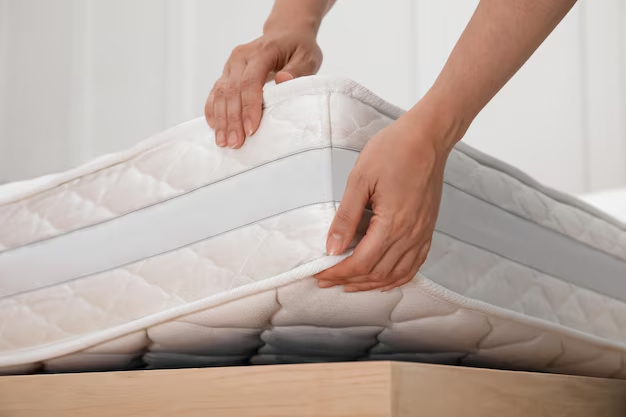
What Is Best Firm Mattress? How to Choose the Right Firm Feel for You
If you’re searching “What Is Best Firm Mattress”, you’re likely trying to figure out what “firm” really means and whether a firm mattress is the right choice for your body and sleep style. This FAQ-style guide walks through what counts as firm, who it often suits, and the key features to look for.
What does “firm mattress” actually mean?
In the mattress world, “firm” usually refers to how hard or soft a mattress feels when you lie on it. Most brands use a 1–10 scale:
- 1–3: Very soft
- 4–6: Medium to medium-firm
- 7–10: Firm to extra-firm
A firm mattress is typically in the 7–8 range, with very little sink and a more supportive, “on-the-bed” feel rather than a “in-the-bed” hug.
When people ask “What Is Best Firm Mattress”, they’re usually trying to understand:
- What firmness level counts as “firm”
- Whether firm is good for their body type and position
- Which materials and designs create a truly supportive firm feel
Why do some sleepers prefer a firm mattress?
Many sleepers like firm beds because they provide a stable, even surface. Common reasons include:
- Less sinkage: The body doesn’t drop deeply into the mattress.
- More support under the hips and lower back: Especially when sleeping on the back or stomach.
- Easier movement: Firm surfaces can make it easier to change positions without feeling stuck.
However, firm does not mean hard or uncomfortable. The best firm mattresses usually combine a strong support core with thin comfort layers that soften sharp pressure points without losing overall firmness.
Who might find a firm mattress most comfortable?
Everyone’s preferences are different, but these general patterns often apply:
Back sleepers
Back sleepers often do well on medium-firm to firm mattresses. A supportive surface can help keep the spine more aligned, especially under the lower back and hips.
Stomach sleepers
Stomach sleepers frequently prefer a firmer surface so the hips don’t sink too far, which can cause the body to bow.
Heavier body types
People with a higher body weight may feel that soft mattresses sag too much. A firmer mattress can offer more noticeable support and help prevent bottoming out on the bed’s core.
Combination sleepers
Those who change positions during the night may like a responsive, firm surface that makes it easier to turn, roll, and move.
On the other hand, some side sleepers or very light sleepers may find a very firm mattress too rigid on the shoulders and hips and instead prefer medium or medium-firm.
What features define the best firm mattress?
When you’re asking “What Is Best Firm Mattress”, it helps to focus on construction details more than labels alone.
1. Support core
The support core is the base of the mattress. For firm options, common cores include:
- Coils (innerspring or hybrid): Feel bouncy and supportive, often with stronger coils around the edges.
- High-density foam cores: Offer a more stable, solid feel with less bounce.
A quality firm mattress usually has a robust, non-sagging core that resists dipping over time.
2. Comfort layers
Even a firm bed should have some cushioning on top:
- Thin layers of foam, latex, or quilted fibers
- Enough softness to relieve pressure at shoulders, hips, and knees
- Not so thick that it turns the mattress into a medium or soft feel
Look for a balance of support and gentle cushioning, not just extreme hardness.
3. Edge and surface stability
The best firm mattresses often provide:
- Consistent firmness across the surface
- Stable edges that don’t collapse when you sit or lie near the side
This can be especially helpful if you use the full width of the bed or sit on the edge frequently.
How can I tell if a firm mattress is too firm for me?
A mattress can be supportive yet still feel too rigid. Possible signs it’s too firm include:
- Persistent pressure or soreness at shoulders, hips, or knees
- Feeling like you can’t sink in at all, even a little
- Waking up with stiffness that improves when you sleep elsewhere
If this happens, you may do better with a medium-firm feel, or a firm mattress with slightly plusher comfort layers.
What should I consider before choosing a firm mattress?
When deciding “What Is Best Firm Mattress” for your needs, think through these factors:
- Sleep position: Back and stomach sleepers tend to like firmer; many side sleepers lean medium.
- Body weight: Higher weights often benefit from firmer support; lighter sleepers may prefer more cushioning.
- Material preference: Some like the bounce of coils; others prefer the more stable feel of foam or latex.
- Room temperature: Foam can feel warmer to some; coil-heavy designs may feel more breathable.
- Sensitivity to pressure: If you’re easily bothered by hard surfaces, you may want a firm core with a slightly softer top.
✅ Quick Mattress Takeaways
Key points consumers should understand about “What Is Best Firm Mattress”
- “Firm” usually means a 7–8 out of 10 on the common mattress firmness scale.
- The best firm mattress balances strong support with enough top comfort to avoid sharp pressure points.
- Back and stomach sleepers, and some heavier individuals, often feel most supported on firm beds.
- A quality support core (coils or dense foam) is essential for a true, lasting firm feel.
- If a bed feels uncomfortably rigid or creates soreness, it may be too firm for your body and sleeping style.
- Your sleep position, body type, and comfort preferences matter more than the firmness label alone.
Understanding “What Is Best Firm Mattress” comes down to knowing how firm you actually want your bed to feel, how you sleep, and which materials you prefer. By focusing on support, comfort layers, and your personal comfort signals, you can narrow in on the firm mattress that feels stable, comfortable, and well-suited to your nights.