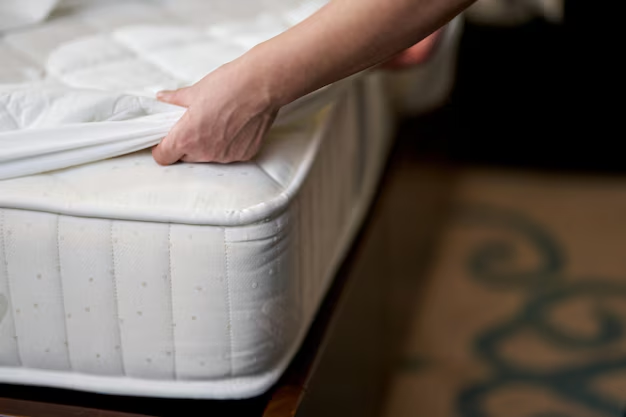
How To Stop Your Mattress From Sliding: Practical Fixes That Work
If you’re searching for “How To Stop Your Mattress From Sliding,” you’re likely tired of pushing your bed back into place every morning. This FAQ-style guide explains why mattresses slide, how to fix it, and what to look for when choosing a new mattress or base to avoid the problem in the future.
Why does my mattress keep sliding?
Mattress sliding is usually caused by one or more of these factors:
- Smooth or incompatible bed base – A very smooth wood, metal, or laminate surface gives your mattress nothing to “grip.”
- No edge or rails on the frame – Platform frames without side rails or a headboard/footboard give the mattress room to move.
- Mismatched sizes – A queen mattress on a king frame, or any noticeable size gap, encourages shifting.
- Low-friction mattress cover – Some mattress fabrics are slick, especially when combined with a smooth base.
- Frequent movement – Restless sleep, kids jumping, or sitting on the edge often can slowly shift the mattress.
Understanding the cause helps you choose the simplest and most effective fix for your setup.
How To Stop Your Mattress From Sliding: What should I try first?
Start with low-effort, non-damaging options and only move to more involved solutions if needed.
1. Check your frame and foundation
Before adding anything new, make sure the basics are right:
- Confirm the size matches (twin on twin, queen on queen, etc.).
- Tighten all screws and bolts so the frame doesn’t flex or wobble.
- Check slats for spacing and sturdiness. Wide gaps or bending slats can cause uneven support and sliding.
If the foundation is unstable or the wrong size, no anti-slip product will fully solve the problem until that’s addressed.
2. Add friction between the mattress and base
This is one of the most common and straightforward ways to stop sliding:
- Use a non-slip mat or pad between the mattress and platform or box foundation.
- In a pinch, some people use rug pads, shelf liners, or similar grippy materials cut to size.
The idea is simple: more friction = less movement. This option is often enough for smooth platform beds.
3. Use fitted bedding correctly
Sometimes the issue is partially caused by loose or overly tight bedding:
- Make sure fitted sheets are the correct size and not pulling the mattress out of place.
- Try deep-pocket fitted sheets if you have a tall or pillow-top mattress.
- Avoid tucking heavy blankets under the mattress so tightly that they drag it across the base.
Are there long-term solutions to keep a mattress from sliding?
If basic fixes don’t work, there are more structural options to consider.
4. Add rails, a headboard, or a footboard
Frames with at least one barrier (like a headboard or footboard) help keep the mattress aligned. Side rails further limit side-to-side movement. Some platform bases also have slight lips or raised edges to keep the mattress in place.
5. Consider the mattress cover and base material
When buying or replacing components, think about how surfaces interact:
- Mattress covers: Extremely smooth, slick fabrics tend to move more on smooth bases.
- Base surfaces: Textured or fabric-covered foundations usually offer more grip than plain wood, metal, or laminate.
If you’re choosing a new base, look for a stable, flat surface that isn’t overly slick, or plan to use a grippy layer between the two.
6. Evaluate frame height and flooring
For some setups, the combination of lightweight frame + hard flooring (like wood or tile) means the entire bed shifts, not just the mattress. In this case:
- Add non-slip pads under the legs of the bed frame.
- Ensure the frame is centered on a rug if possible.
Stabilizing the frame often reduces mattress movement too.
Can sliding damage my mattress?
Occasional small shifts usually aren’t a big concern. However, constant sliding or partial “hanging off” the frame can create:
- Uneven support under the mattress
- More wear along the edges
- Discomfort from an off-center sleep surface
Keeping the mattress fully supported and aligned helps maintain its feel and structural integrity over time.
What should I look for when buying a mattress or base to prevent sliding?
When shopping within the mattress buying & selection category, consider:
- Correct sizing: Make sure mattress and frame sizes match exactly.
- Support style: Platform, slats, or box foundation — all can work if stable and flat.
- Surface texture: Fabric or lightly textured tops usually grip better than very smooth finishes.
- Frame design: Rails, headboards, or low-profile lips around the edge help hold the mattress in place.
- Weight and build: Heavier, well-built bases are less likely to shift on the floor.
These details don’t always stand out at first, but they make a real difference in daily use.
✔️ Quick Mattress Takeaways
Key points to understand about How To Stop Your Mattress From Sliding
- Match the sizes of mattress and frame to minimize gaps and movement.
- Stabilize the base first by tightening hardware and checking slats or platforms.
- Increase friction with a non-slip mat or similar grippy layer between mattress and base.
- Use properly fitted bedding so sheets and blankets aren’t pulling the mattress out of place.
- Consider frame design — rails, headboards, and footboards help keep mattresses centered.
- Think ahead when buying: choose a stable, non-slick base and a mattress that sits securely on it.
With a few simple adjustments, you can address how to stop your mattress from sliding and enjoy a bed that stays comfortably in place night after night.