How To Stop Mattress From Squeaking: Practical Fixes You Can Try Today
If you’re searching for “How To Stop Mattress From Squeaking,” you’re likely tired of every toss and turn being announced by an annoying noise. This FAQ-style guide walks through why mattresses squeak, how to track down the real source, and what you can realistically do to reduce or eliminate the sound.
Why is my mattress squeaking in the first place?
A squeak usually means two parts rubbing or shifting against each other. While it’s easy to blame the mattress, the sound often comes from:
- The bed frame or foundation
- Loose screws, bolts, or joints
- Wood slats flexing or rubbing
- Old or damaged springs in an innerspring mattress
Many all-foam and hybrid mattresses themselves are fairly quiet; the support system underneath is often the real culprit.
How do I know if the squeak is from the mattress or the frame?
To figure out how to stop mattress from squeaking, you first need to test each component.
Remove the mattress
Place the mattress directly on the floor and gently move or sit on it.- If it squeaks: the noise is likely from the mattress.
- If it’s quiet: the squeak probably comes from the frame, foundation, or slats.
Test the frame or base
With the mattress off, push on the frame, headboard, and footboard.- Listen for metal-on-metal or wood-on-wood sounds.
- Rock the frame slightly to see which area makes the noise.
Check the floor contact points
Sometimes squeaks come from the legs rubbing on the floor, especially on hard surfaces.
This simple testing helps you target your efforts instead of guessing.
How To Stop Mattress From Squeaking: What are the most effective fixes?
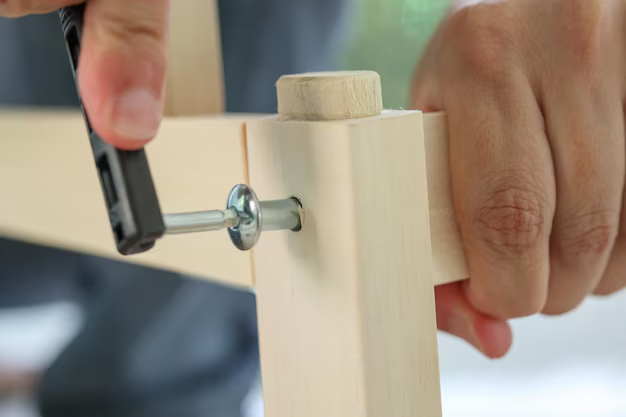
1. Tighten all screws, bolts, and joints
For many people, the fastest way to stop a squeaking bed is to:
- Go over every connection point on the frame or foundation with the right tool.
- Tighten loose bolts, nuts, and brackets.
- Check any center support bars and their fittings.
Over time, normal movement can loosen connections, especially on metal frames and wooden bed rails.
2. Cushion rubbing surfaces
If the squeak sounds like two hard surfaces rubbing:
- Place thin fabric, felt pads, or rubber washers between metal parts that touch.
- Use felt pads where wood slats rest on a metal ledge or wooden rail.
- Add rubber or cork pads under the legs to reduce noise at floor contact points.
This adds a soft buffer that can significantly reduce friction noises.
3. Stabilize slats and foundations
If your bed uses slats or a separate foundation:
- Make sure slats are evenly spaced and fully supported.
- If slats move easily, secure them with non-permanent tape or strips designed for furniture.
- Check that the foundation or box-style base is sitting level and not flexing excessively.
A wobbly base can exaggerate small noises.
What if the squeak is actually coming from the mattress?
If you’ve confirmed the sound is inside the mattress itself, the cause is often:
- Aging springs in an innerspring mattress
- Broken or bent coils
- Internal components shifting after long-term use
Here are a few steps that may help, depending on the mattress type:
- Rotate the mattress head-to-foot (if the design allows). This can redistribute pressure and reduce noisy stress points.
- Check for uneven support under the mattress. A sagging frame can force the mattress into positions that make noises more likely.
- Place a thin, sturdy board (such as a flat panel) between the mattress and the foundation to create a more uniform surface, if appropriate for your mattress type.
If the mattress is older and the springs are worn, there may be limited ways to fully remove the squeak, but these steps can sometimes lessen it.
Could my floor or room setup be adding to the noise?
Yes. Even if the squeak starts in the bed setup, the room environment can make it more noticeable:
- Uneven floors can cause the frame to rock slightly. Using shims or pads under shorter legs can help level the bed.
- Hard flooring (like wood or tile) can amplify vibration and noise.
- Loose headboards attached to walls can rattle if not firmly secured.
Securing the bed so it doesn’t shift when you move often reduces squeaks and rattles.
Is it better to fix the squeak or replace the mattress or frame?
This depends on what you find:
- If the structure is sound and only a few connections are loose, simple adjustments can be enough.
- If the frame is warped, cracked, or heavily rusted, it may keep squeaking even after tightening.
- If an older innerspring mattress squeaks loudly even on the floor, the internal coils may be worn, and long-term noise reduction may be difficult.
Many people start with low-effort fixes (tightening, padding, leveling) before considering a new support system or mattress.
✅ Quick Mattress Takeaways
Key points to understand about How To Stop Mattress From Squeaking
- Identify the source first: Test the mattress on the floor and the frame separately to see where the sound really comes from.
- Most squeaks come from the support system: Frames, foundations, slats, and loose hardware are frequent culprits.
- Simple tools can help: Tightening screws and bolts, adding felt or rubber pads, and stabilizing slats often make a big difference.
- Check the environment: Level the bed, add pads under legs, and secure headboards to reduce extra movement and noise.
- Mattress squeaks are usually a wear sign: Rotating the mattress and improving support may help, but older coil mattresses may remain noisy.
A squeaky bed is rarely a mystery once you break it down into mattress, frame, and floor. By methodically testing each part and making a few straightforward adjustments, most people can significantly reduce or eliminate the noise and enjoy a quieter night’s rest.