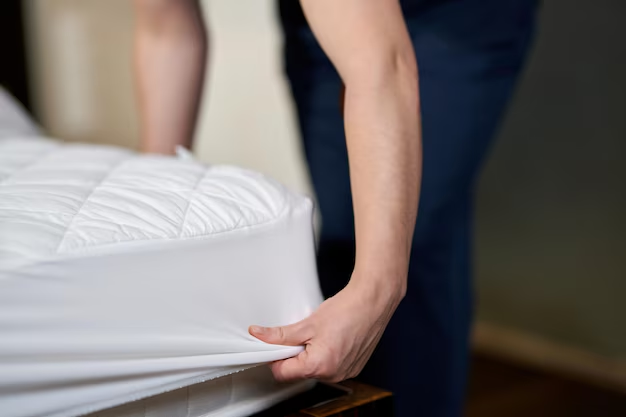
How To Stop a Mattress From Sagging: Practical FAQ Guide
If you’re searching for “How To Stop a Mattress From Sagging,” you’re probably feeling dips, soft spots, or a “roll-toward-the-middle” effect in your bed. This guide walks through why mattresses sag, what you can realistically fix, and how to slow down future sagging.
What does it mean when a mattress is “sagging”?
Sagging usually means visible dips, impressions, or low spots where your body tends to rest. You might notice:
- Your body rolling toward the center
- A “hammock” feeling instead of even support
- Needing to climb out of a groove in the morning
Mild body impressions can be normal as materials settle. Deeper, uneven sagging is more likely to cause discomfort and signal that something needs attention.
What causes a mattress to sag in the first place?
Several common factors can lead to sagging:
- Age and wear: Foams and fibers soften and lose resilience over time.
- Inadequate support: A weak frame, missing center support, or widely spaced slats allow the mattress to bow.
- Consistent pressure spots: Sleeping in the same position nightly compresses materials in those areas.
- Improper foundation type: Some mattresses are not designed for certain bases, like old box springs or flexible slats.
Understanding the cause will help you decide how to stop a mattress from sagging or whether it’s simply worn out.
How To Stop a Mattress From Sagging: What can I do right now?
Here are non-permanent but practical steps that may reduce sagging or make it less noticeable:
1. Rotate your mattress regularly
If your mattress is designed to be one-sided (most modern ones are), you can still:
- Rotate head-to-foot every few months
- Even out wear so one section doesn’t soften dramatically faster than another
Flipping is only an option if the mattress is two-sided and meant for that use.
2. Check the bed frame and slats
A mattress that sags in the middle often sits on a weak or unsupportive base. Check for:
- Missing or broken slats
- Slats spaced too far apart
- Lack of a center support beam, especially on larger sizes
Adding a solid center support or extra slats can reduce bowing in the middle and help redistribute weight more evenly.
3. Try a mattress topper (with realistic expectations)
A topper will not fix internal sagging, but it can:
- Smooth out minor dips
- Make the surface feel more even
- Add comfort on top of a slightly uneven mattress
For significant sagging, a topper is usually just a temporary comfort adjustment, not a true structural fix.
4. Use a bunkie board or solid platform
Placing a thin, solid board (often called a bunkie board) or a flat platform under your mattress can:
- Provide a more uniform foundation
- Reduce the feeling of sag between slats
The board should be sturdy, flat, and appropriately sized so it doesn’t flex.
Can I fix a sagging mattress with DIY tricks?
You may see suggestions like folding towels or blankets under sagging spots. These can sometimes help in the very short term, but:
- They often create new uneven pressure points
- They may shift during the night
- They don’t address the underlying material breakdown
DIY fixes are best thought of as short-term patches while you assess whether rotation, better support, or replacement is needed.
When is sagging covered by a mattress warranty?
Many mattress warranties mention body impressions and sagging, but coverage depends on:
How sag is measured
- Warranties often specify a minimum depth (for example, a certain number of inches of visible sag without weight on the bed).
- If the sag doesn’t meet that measurement, it’s usually considered normal wear.
What’s usually not covered
- Sagging caused by improper foundations or frames
- Stains or damage, which can void coverage
- Normal softening over time
If you’re wondering how to stop a mattress from sagging under warranty, start by checking the warranty document and foundation requirements, then take clear photos of the sag with no one on the bed.
How can I prevent future mattress sagging?
You can’t stop all wear, but you can slow sagging with simple habits:
- Use proper support: Follow the manufacturer’s guidance on slats, box springs, or platforms.
- Rotate consistently: Especially during the first couple of years.
- Avoid sitting on the edges in the same spot daily.
- Keep weight evenly distributed where possible by not piling heavy objects in one area.
These small steps can help the mattress materials break in more evenly.
How do I know when the sagging means it’s time to replace the mattress?
Even with good care, every mattress eventually wears out. It may be time to consider a new one if:
- You see deep, permanent dips that rotation and support changes don’t help
- You feel uncomfortable pressure points or poor spinal alignment
- Your sleep feels consistently worse on your bed than on other surfaces
At that stage, focusing on how to stop a mattress from sagging may not be enough, and choosing a new mattress with suitable support becomes the more practical solution.
��� Quick Mattress Takeaways
Key points consumers should understand about How To Stop a Mattress From Sagging
- Rotation helps: Rotating head-to-foot can reduce uneven wear and delay sagging.
- Support matters: A solid, well‑supported frame with proper slats or center support is essential.
- Toppers are temporary: A topper can mask mild sagging but doesn’t repair internal breakdown.
- DIY fixes are short-term: Towels or boards may help briefly but are not long-term solutions.
- Warranties have limits: Only certain depths of sagging and conditions are usually covered.
- Prevention is key: Proper support, rotation, and everyday habits can slow, but not eliminate, natural sagging over time.
With realistic expectations and a few simple adjustments, you can often improve comfort and extend the usable life of a mattress that’s beginning to sag.