How To Pick The Best Mattress: A Practical FAQ Guide
If you’re searching for “How To Pick The Best Mattress”, you’re usually trying to cut through confusing marketing and find something that actually feels good and supports your body. This FAQ-style guide walks through the key decisions, in plain language, so you can choose with more confidence.
What does “the best mattress” really mean?
There is no single best mattress for everyone.
“The best mattress” is the one that:
- Fits your body type and sleep position
- Feels comfortable for you (not for someone else)
- Provides steady support without obvious pressure points
- Works with your budget and space
Thinking this way helps you focus on personal fit, not buzzwords or trends.
How To Pick The Best Mattress for my sleep position?
Your sleep position is one of the most useful starting points.
Back sleepers
- Often do well on medium to medium-firm beds
- Need a surface that keeps the spine fairly level without sinking too deeply
- Light contouring can help the lower back feel supported
Side sleepers
- Usually prefer softer to medium beds
- Extra cushioning around the shoulders and hips can reduce pressure
- Look for clear pressure relief rather than a very hard surface
Stomach sleepers
- Often need firmer support so the midsection doesn’t sink too far
- A too-soft mattress can make the lower back feel strained
- Flatter, more supportive surfaces typically work best
Combination sleepers
- Tend to move between positions
- Often like a medium feel that balances support and comfort
- A mattress that is easy to move on can make changes in position feel smoother
What firmness level should I choose?
Firmness is about how hard or soft a mattress feels, not how supportive it is. Support comes from the internal structure; firmness is simply feel.
As a general guide:
- Softer: More “hug” and cushioning, often preferred by lighter and side sleepers
- Medium: A middle ground that suits many back and combination sleepers
- Firmer: Flatter, sturdier feel, often favored by stomach sleepers and some heavier sleepers
Whenever possible, try multiple firmness levels side by side. Your body’s first instinct—what feels naturally comfortable—tends to be a good indicator.
How do mattress materials compare?
Understanding the basic types can help narrow things down.
| Type | Typical Feel & Benefits |
|---|---|
| Foam | Contouring, pressure relief, quieter movement |
| Innerspring | Bouncier, more airflow, classic “springy” feel |
| Hybrid | Mix of springs + foam for balance of support/comfort |
| Latex | Responsive, slightly bouncy, supportive contour |
No one type is “best.” How it feels to you is more important than the material label.
What else should I consider besides comfort?
1. Motion and partners
If you share a bed, motion isolation matters. Some materials reduce how much you feel your partner moving. Foam and many hybrids tend to limit motion more than very bouncy designs.
2. Temperature comfort
If you sleep warm, look for:
- More breathable covers or coil systems
- Less of a “deep hug” feel if that makes you feel hot
- Comfort layers that don’t trap too much warmth
3. Mattress size and room space
Check both your room dimensions and body needs:
- Singles or smaller rooms: twin or full sizes
- Couples: queen or larger
- Taller people: consider length and space at the feet
How To Pick The Best Mattress for my body type?
Body weight and shape affect how far you sink into a mattress.
- Lighter sleepers often feel mattresses as firmer; they may prefer a bit more cushioning.
- Heavier sleepers tend to sink more; they may need sturdier support and may find some very soft mattresses feel less supportive.
- People with broader shoulders or hips often appreciate zoned support or extra cushioning in those areas.
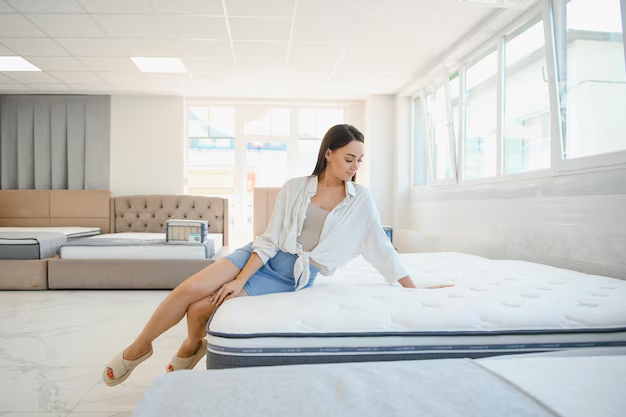
When possible, lie in your usual sleep position for several minutes in the store or during a home trial. Notice:
- Does your body feel evenly supported?
- Are any areas (shoulders, hips, lower back) taking too much pressure?
How long should I test a mattress before deciding?
Whether in-store or during a home trial:
- Spend at least 10–15 minutes lying on each model you’re considering.
- Try your primary sleep position and any secondary ones.
- Pay attention to early signs of discomfort, not just the initial “wow” factor.
Comfort can change slightly as you adjust, but clear, immediate pressure or misalignment is usually a sign that model isn’t right for you.
What about warranties and durability?
A warranty explains how the manufacturer handles defects, not how long the mattress will feel good to you. When reading the fine print, note:
- What counts as a defect (such as deep indentations)
- How long the coverage lasts
- Any conditions (like required support bases)
For durability, look for:
- Solid overall construction
- Materials that don’t feel flimsy or overly thin
- A design that matches your body type and use (sleeping vs. frequent sitting on the edge, etc.)
✔️ Quick Mattress Takeaways
Key points to understand about How To Pick The Best Mattress:
- There is no universal best—focus on your body, position, and comfort.
- Match firmness to sleep position: softer for many side sleepers, medium for many back/combination sleepers, firmer for many stomach sleepers.
- Try different materials (foam, innerspring, hybrid, latex) to see what feel you prefer.
- Consider partners, motion, and room size so the mattress fits your real-life setup.
- Test in your usual position, watching for pressure points and alignment.
- Read warranty details, but remember comfort life and warranty length are not the same thing.
Taking a calm, step-by-step approach to How To Pick The Best Mattress—rather than chasing one “perfect” model—usually leads to a choice that feels better, supports you more consistently, and fits how you actually sleep.